


Grey can disappear into the background or become the strongest surface in a room, depending on the shade and finish. Pale grey can make white trim feel sharper, charcoal can pull attention toward brass or warm wood, and textured finishes can add interest even when the palette stays almost monochrome.
These grey walls room decor ideas show how different shades, textures, and finishes can completely change the way a space feels. Some walls support colorful furniture, some frame fireplaces or headboards, and others rely on paneling, shiplap, wallpaper, or concrete-like texture instead of extra artwork. The useful part is seeing how each wall treatment interacts with everything around it.
Slate Grey Behind a Beige Sofa
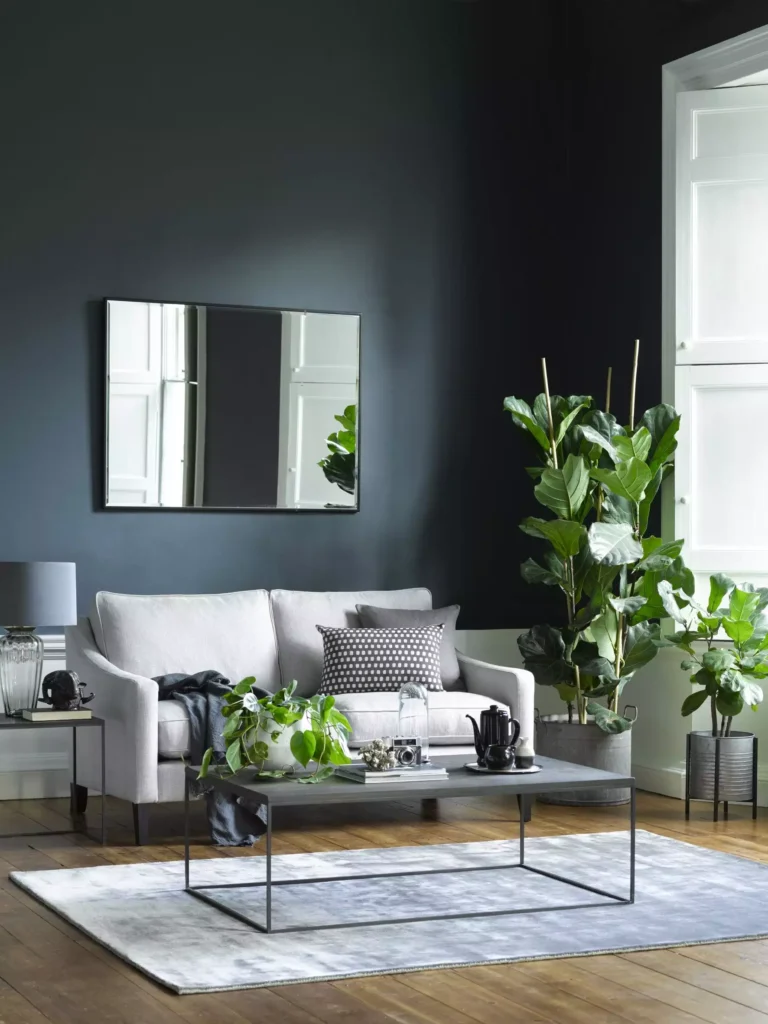
A beige sofa immediately softens the weight of the dark slate wall behind it. The contrast is strong enough to separate the seating from the background without adding another bold color. Above the sofa, a large mirror occupies most of the open wall while plants and patterned cushions add smaller variations. The darker paint works because the lighter upholstery keeps the lower half from feeling too dense.
Grey Floral Wallpaper Behind Velvet Seating
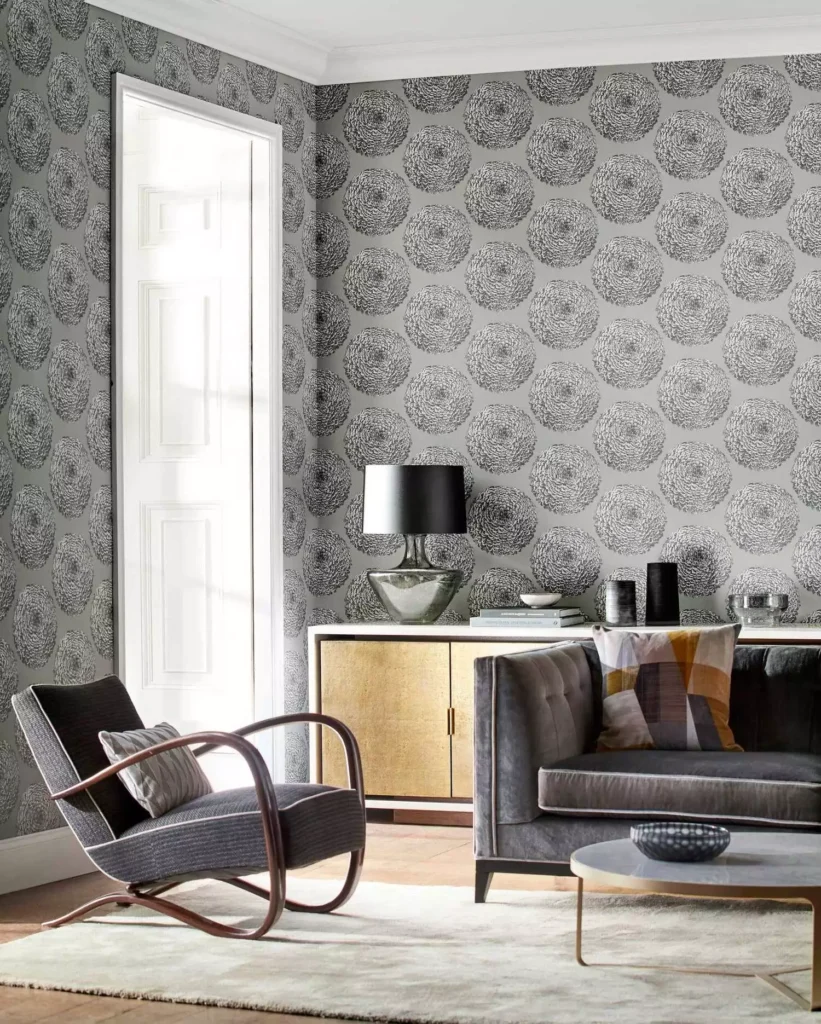
Pattern does most of the work here. Instead of one flat grey surface, the floral wallpaper adds movement while staying within a restrained palette. The richer velvet seating stands forward against that softer patterned background. Using grey in the wallpaper rather than as plain paint gives the wall more detail without introducing a completely different color scheme.
Concrete-Effect Grey with Charcoal Furniture
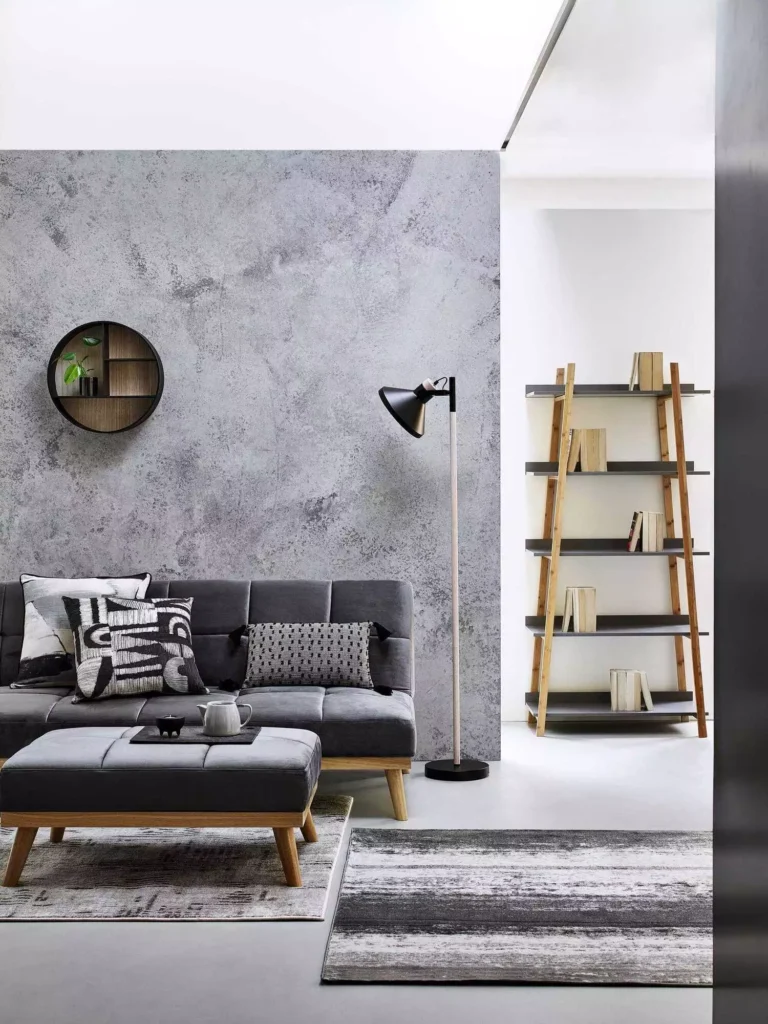
Uneven marks across the wall create a finish that feels closer to concrete than ordinary paint. The charcoal sofa continues the darker palette, but wood, patterned rugs, and lighter textiles prevent the surfaces from blending together.
What makes this idea useful is the contrast in texture rather than color. Rough-looking walls beside soft fabrics give the room more depth without relying on bright accents.
Double-Height Grey Walls with a Stone Fireplace

The height of the wall changes everything here. A small painting would disappear against so much vertical space, so the fireplace takes over as the main architectural feature.
Grey surrounds the stone without competing with it, while the sofas stay low and symmetrical below. Large windows and long curtains help divide the height so the wall does not feel empty above the furniture.
Two-Tone Grey Behind a Black Headboard
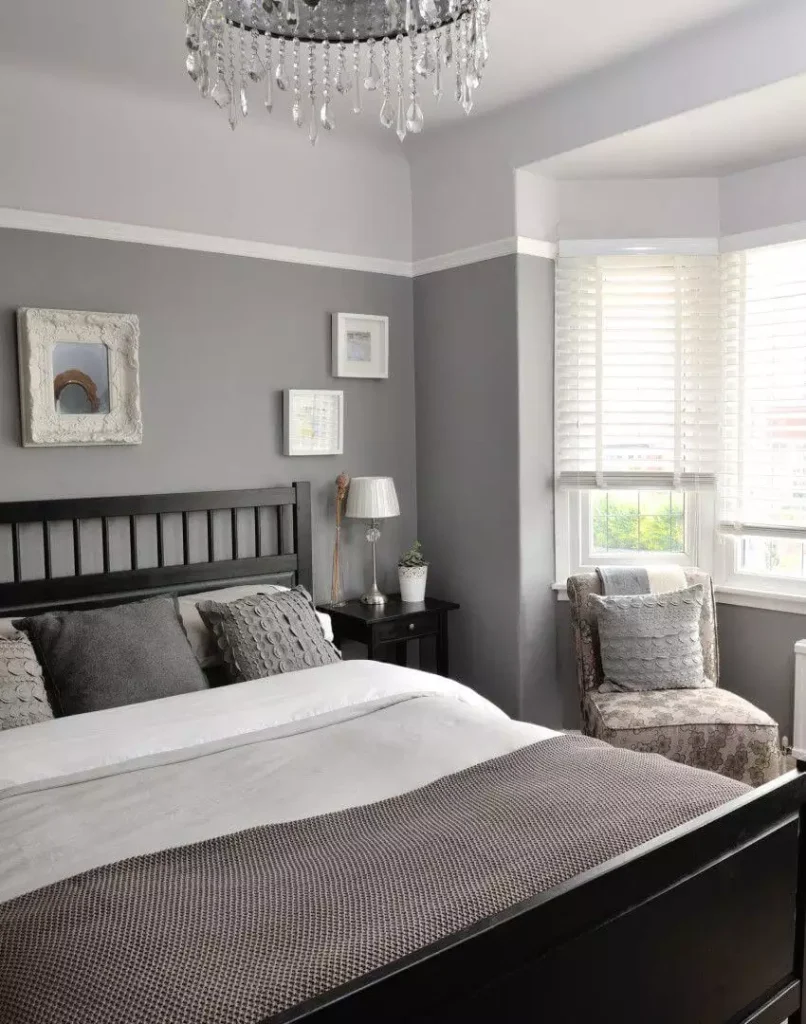
A darker grey below and a lighter grey above split the wall horizontally without introducing a second color family. The black headboard strengthens the lower band, while the chandelier and bright bay-window area keep attention from sitting entirely at bed level.
The paint division works best because it relates to the furniture height rather than cutting randomly across the wall.
Soft Grey with a Green Patterned Chair

One green chair changes the mood of an otherwise quiet grey scheme. The sofa and walls stay understated, giving the patterned upholstery enough room to become the focal point. Small green details elsewhere echo the chair without repeating the exact same shade everywhere. That restraint keeps the accent from turning into a full green theme.
Grey Paneling Around Built-In Shelves
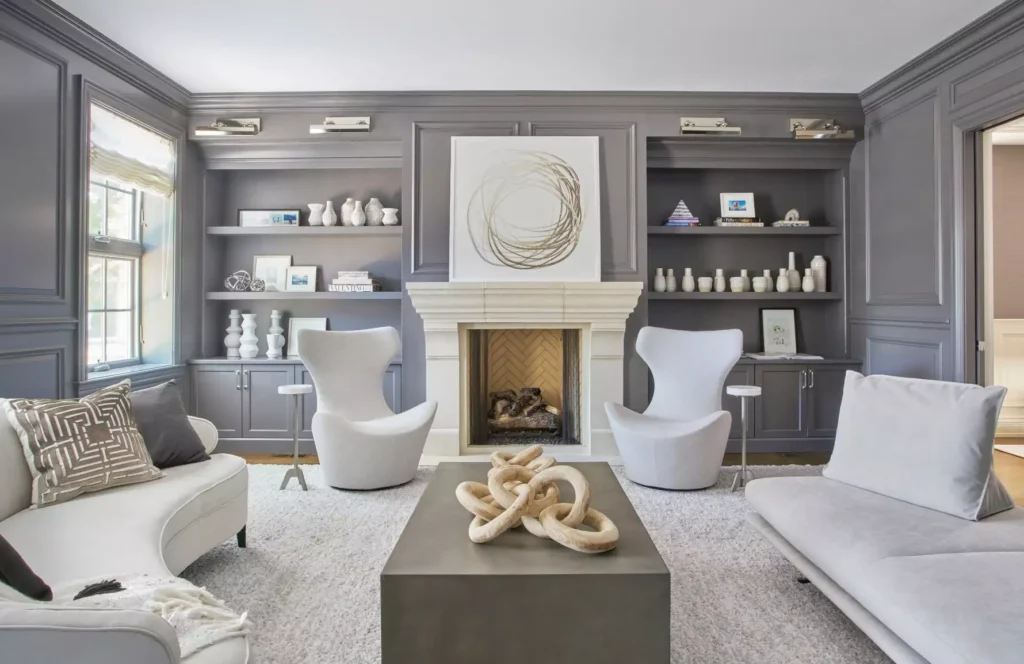
Paneling gives the wall structure before a single accessory is added. Built-ins on both sides of the white fireplace create a strong symmetrical frame.
Books and pale objects sit inside the shelves, but the molding remains visible between them. Here, the architecture is already decorative enough that the shelving does not need to be packed.
Charcoal Behind a Mirrored Console
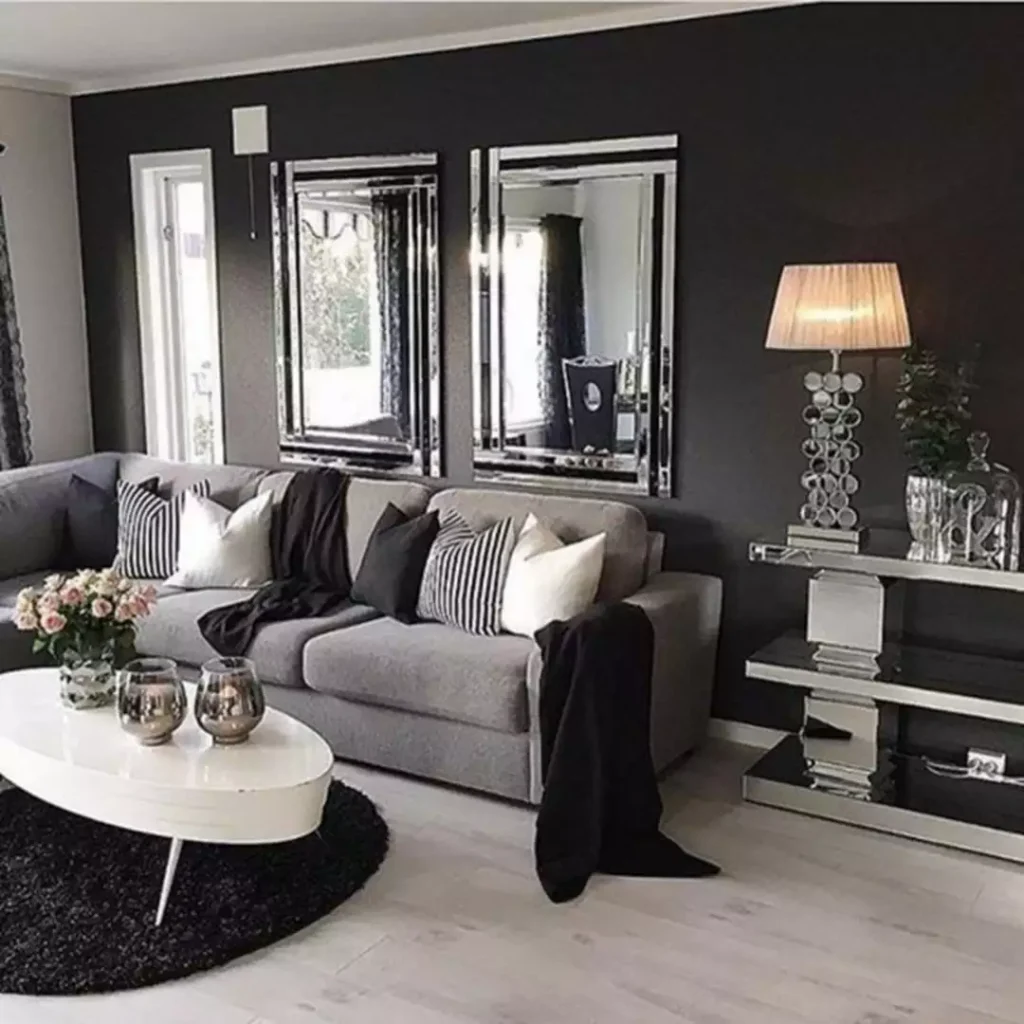
Matte charcoal and a reflective console create a sharp material contrast. One surface absorbs light while the other catches it.
A round wall shelf above introduces a softer shape among the rectangles of the console and sofa. The darker background makes the mirrored furniture feel far more deliberate than it would against pale paint.
A Quiet Grey Bay-Window Corner

Nothing here is trying to become a dramatic focal point. Grey walls, grey upholstery, shutters, and soft textiles stay close together in tone.
The interest comes from texture instead: chunky throws, cushions, upholstery, and the window architecture. It is a calmer use of grey, where comfort matters more than contrast.
Monochrome Grey with a Herringbone Rug
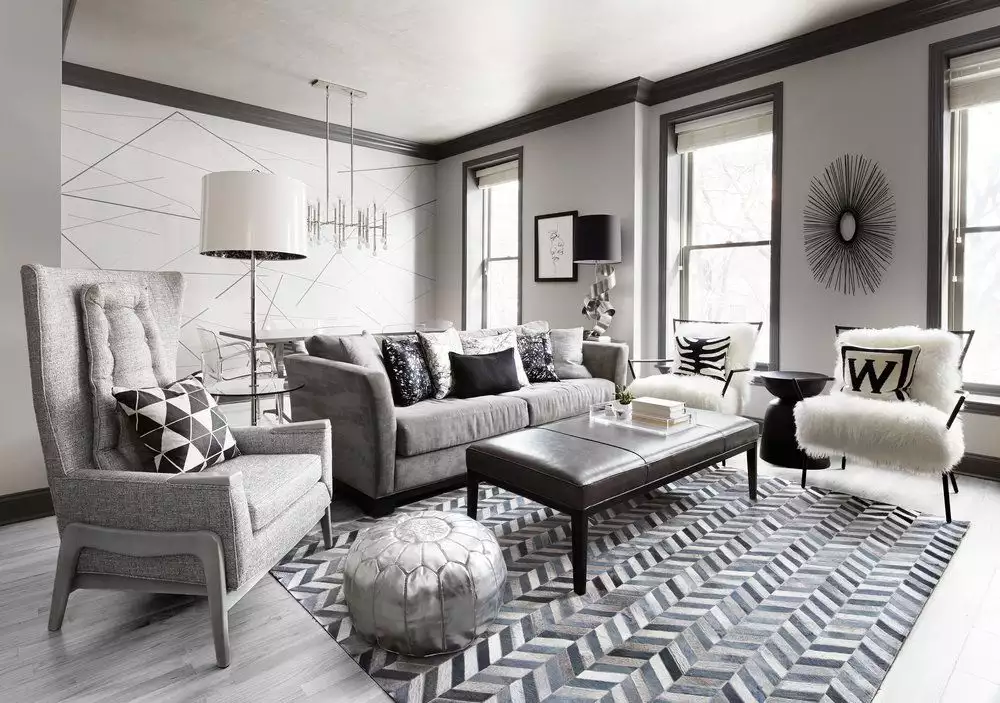
Several shades of grey overlap across the seating, walls, rug, and trim, but the herringbone pattern stops the floor from disappearing into the rest of the palette. A room this tonal depends on differences in texture and pattern. Without them, the surfaces would read as one flat field of grey.
Dark Grey Around a Vintage Fireplace
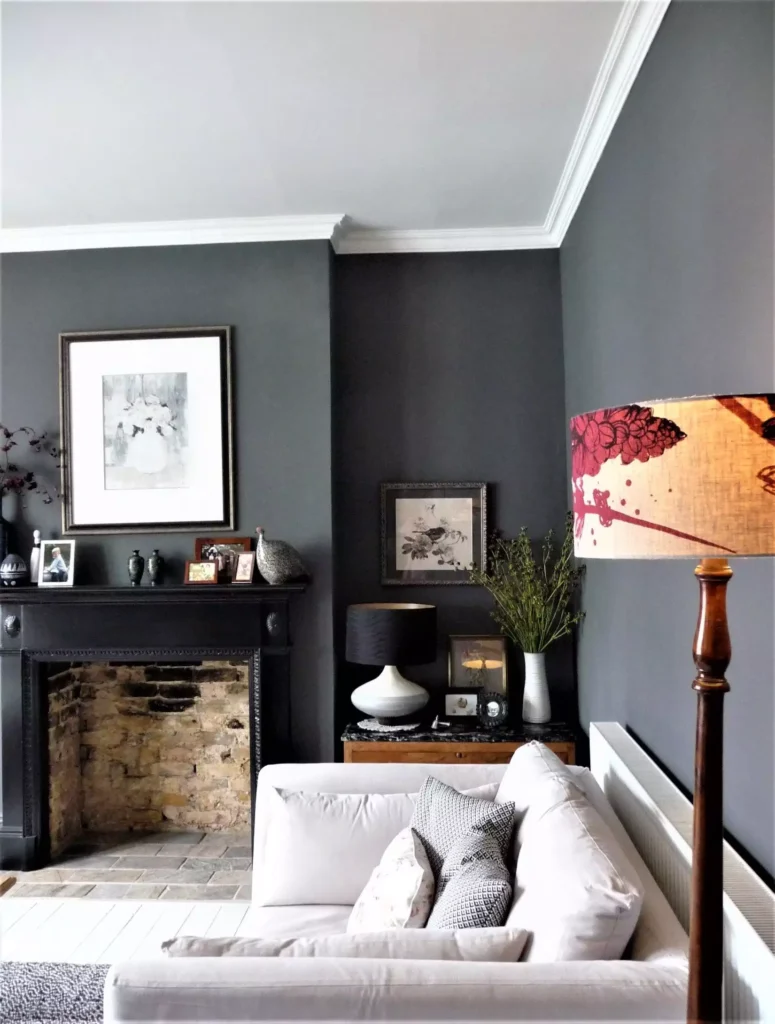
Older architectural detail becomes more visible against the darker paint. The fireplace stays central while small framed pieces and mantel objects add character around it.
Rather than forcing the room into a completely traditional or completely modern direction, the dark grey lets both periods sit together comfortably.
Open-Plan Grey with Soft Rounded Furniture

Grey acts as a linking color between the living area and the rest of the open plan instead of creating a hard visual boundary.
A tufted sofa, rounded pouf, and simple abstract art soften the cleaner architectural lines. The palette stays restrained so the open layout feels connected rather than divided into competing zones.
Charcoal Walls with a Neon Sign

Bright lettering has much more impact against charcoal than it would on a pale wall. The glow stays clearly visible even with the TV, shelving, and fireplace nearby.
Below, the cowhide rug and wood add irregular shapes and warmer surfaces. The contrast between playful lighting and a dark neutral background gives the room its personality.
Grey Walls Framing a White Fireplace
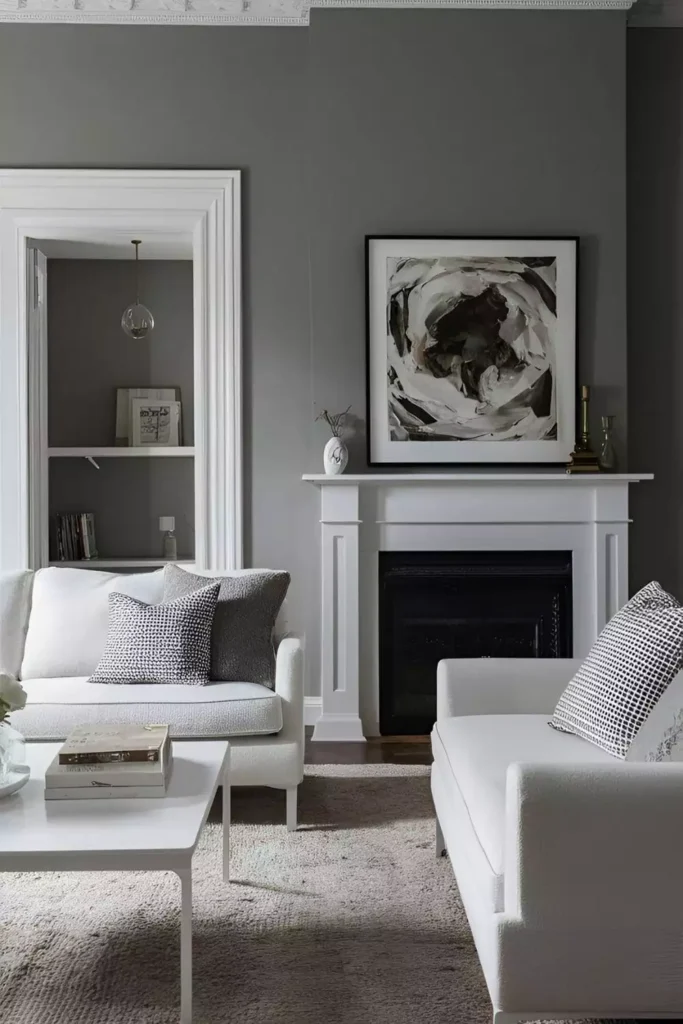
The white fireplace becomes the clearest shape in the room because grey surrounds it on every side. Black-and-white artwork continues the limited palette instead of adding another color. That makes the fireplace feel integrated into the wall treatment rather than simply placed against it.
Grey Bedroom Wall with a White Dresser
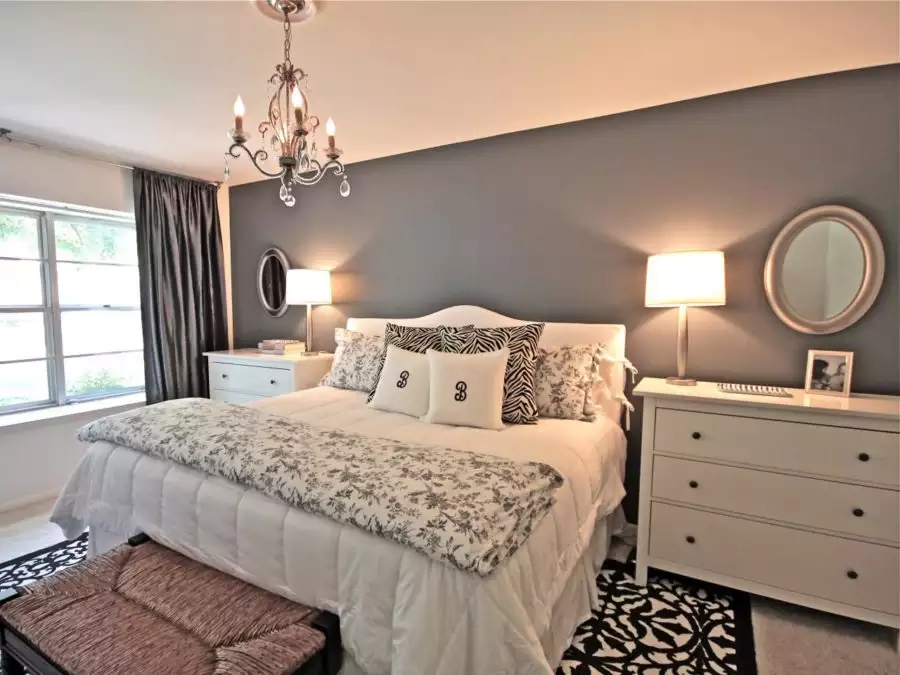
A white dresser stands sharply against the grey accent wall, giving the room one clean contrast near the bed.
The round mirror breaks the straight edges around it, while floral bedding carries most of the pattern. Keeping the wall relatively simple lets the furniture and textiles handle the decorative detail.
Grand Grey Walls Under a Crystal Chandelier
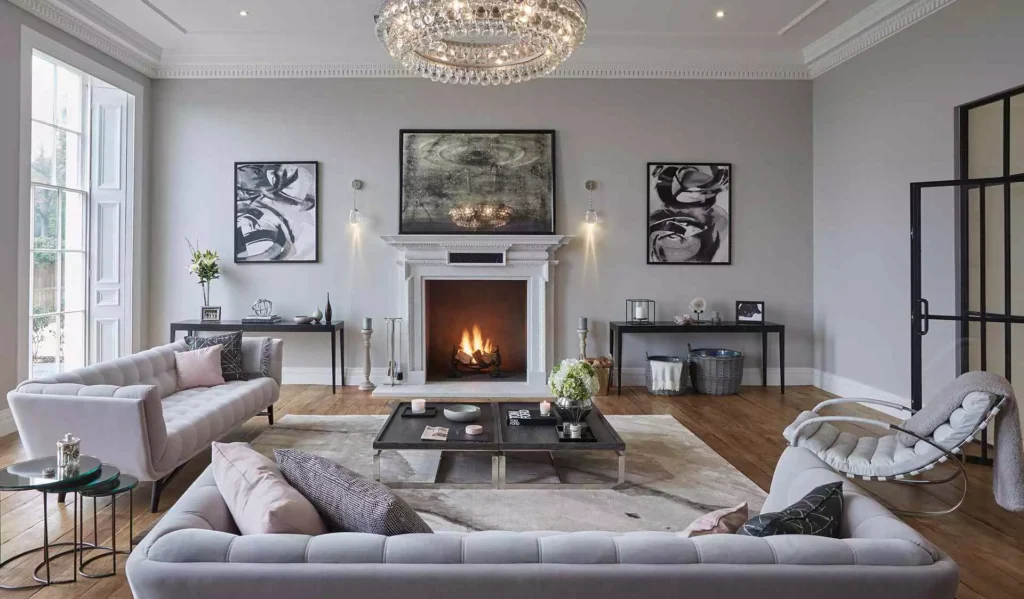
The chandelier, fireplace, and paired artwork already give the room several large focal points. Grey allows those elements to stand out without another competing wall color.
Symmetry reinforces the formal feel, especially around the fireplace. The wall succeeds by staying controlled rather than demanding attention for itself.
Grey Walls with an Arched Alcove
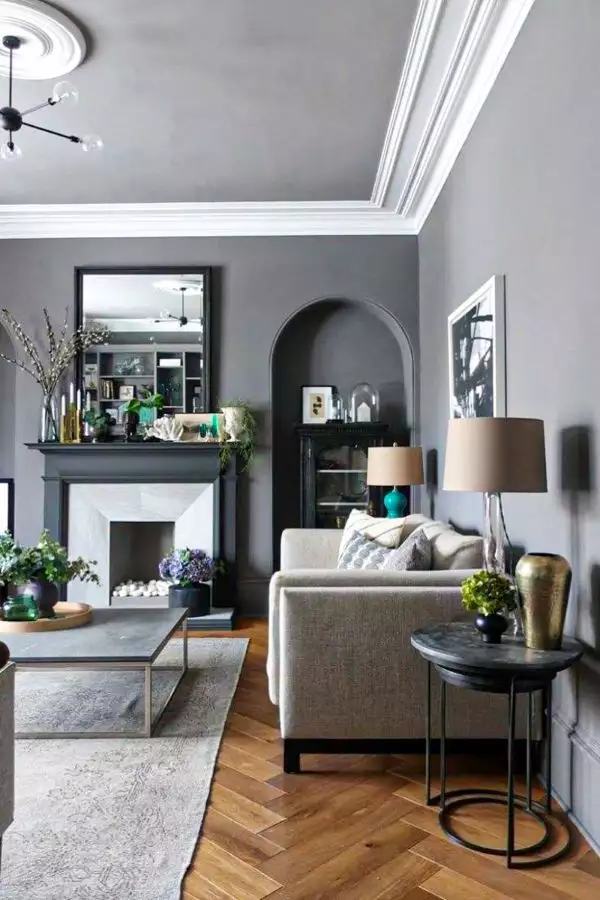
An arched recess changes the wall through shape and shadow alone. Because the same grey continues into the alcove, the curve is emphasized without needing contrasting paint.
The dark fireplace beneath it adds another strong form. Depth, not decoration, becomes the main feature.
Grey Sectional with Layers of Faux Fur
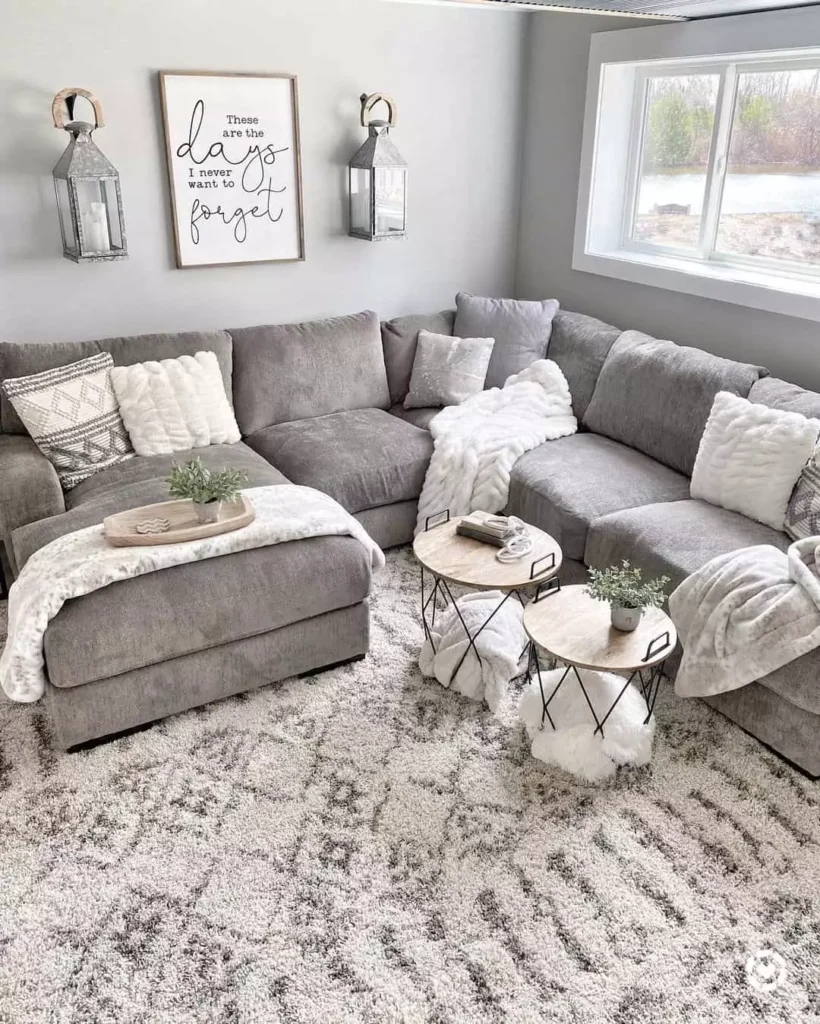
Most of the visual variation sits on the sofa rather than the wall. Faux-fur throws, cushions, and the patterned rug bring in softness and texture. Leaving the grey wall relatively quiet prevents the seating area from becoming overloaded. The furniture already has enough surface detail to carry the room.
White and Grey with a Black-and-White Gallery
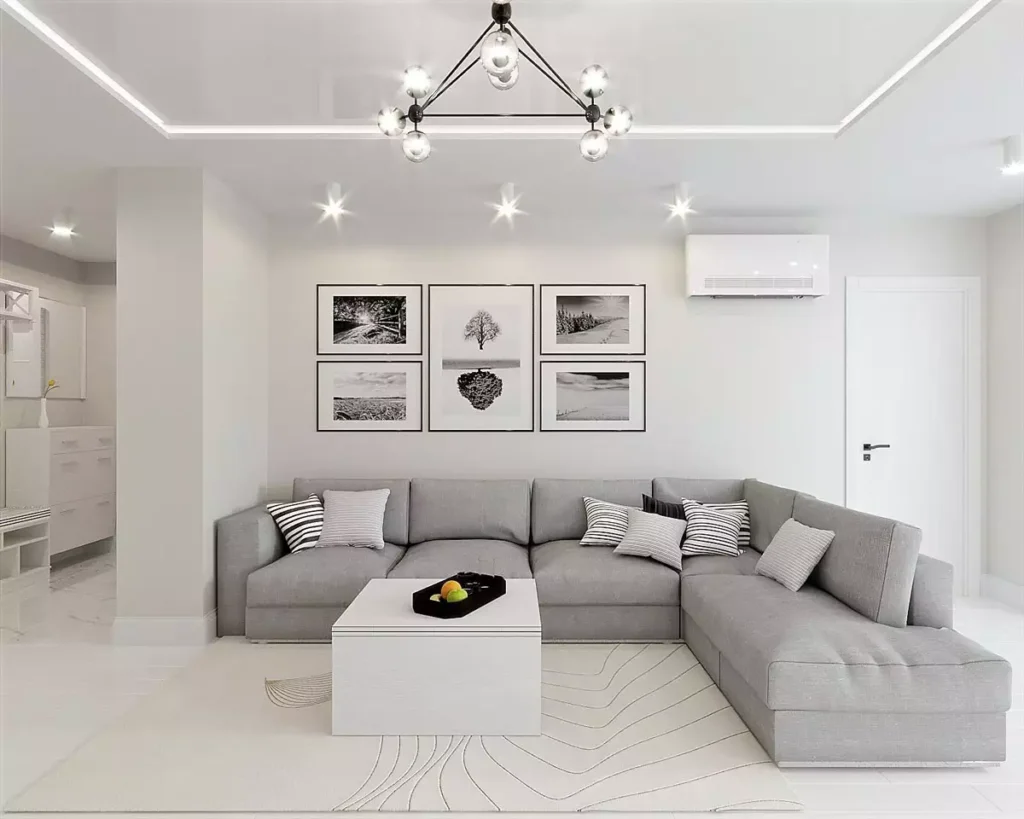
Black frames introduce the strongest lines in an otherwise pale room. The gallery stays contained above part of the L-shaped sofa instead of spreading across every available wall. That concentration helps the arrangement feel intentional and keeps the long seating area from becoming visually crowded.
Feather Prints Above a Charcoal Corner Sofa

Three matching feather prints form one calm horizontal line above the dark sectional.
Their pale backgrounds create enough separation from the grey wall and charcoal sofa to keep the upper wall from becoming too heavy. Repetition works well here because the furniture below is already large and visually dominant.
Vaulted Grey Walls with a Full-Height Fireplace
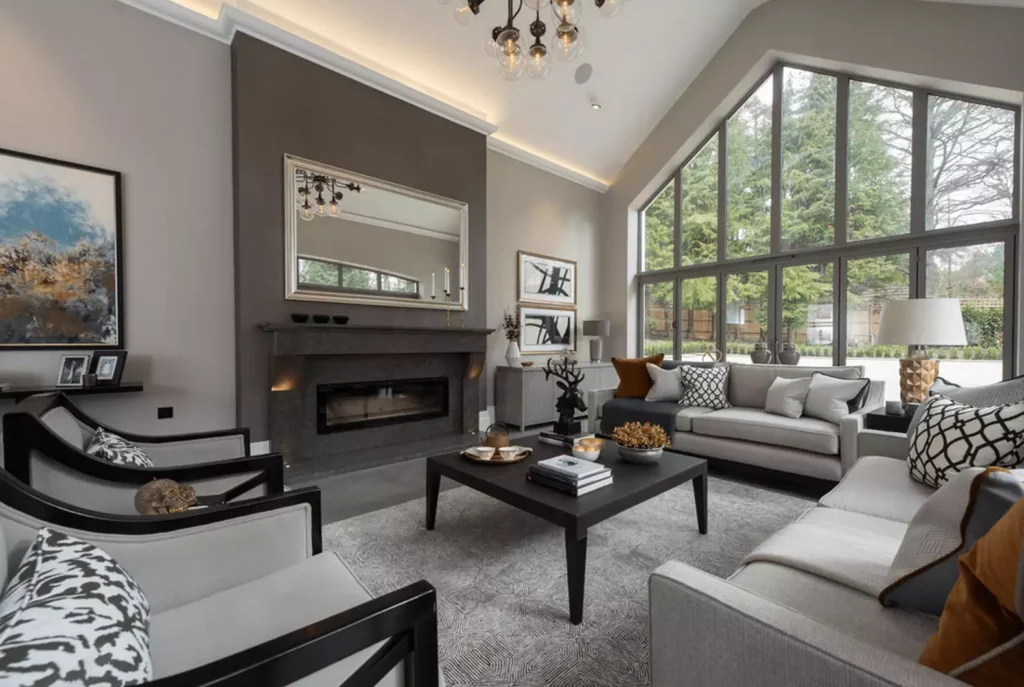
Vaulted ceilings demand a different scale of decoration. The stone fireplace rises through much of the wall, giving the room a vertical feature strong enough to match the architecture.
Floor-to-ceiling windows create another tall line nearby. With elements this large, smaller wall decor becomes unnecessary.
Stone Fireplace Beside a Photo Gallery

Stone occupies one section of the wall while a framed photo arrangement fills another. Those two treatments have very different textures, but the grey background helps them belong to the same room. Dividing the wall into separate areas works better here than forcing one gallery to stretch around the fireplace.
Pale Grey with Layered Soft Textures
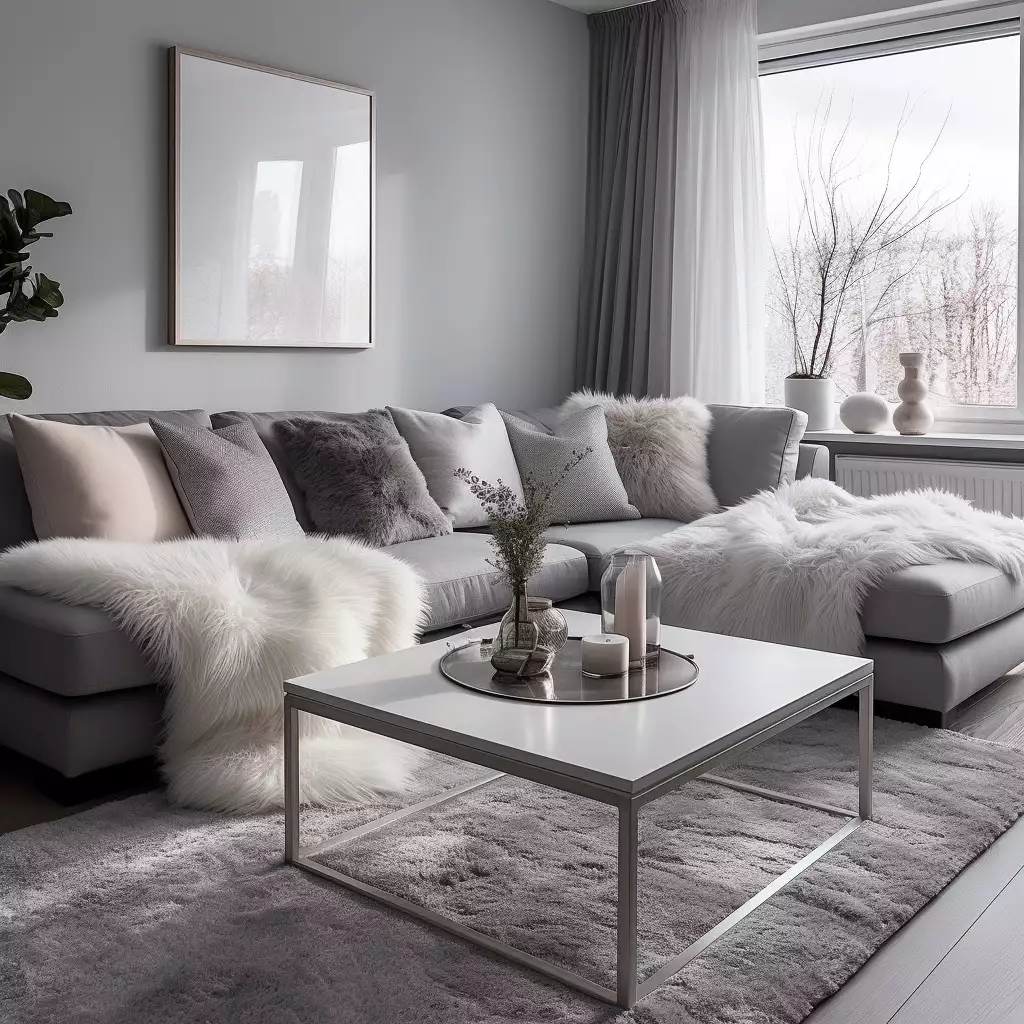
Color variation is minimal, so texture becomes the main source of interest.
Smooth upholstery, fluffy cushions, woven textiles, a soft rug, and metal furniture all respond to light differently. The room stays calm without becoming visually empty.
Leaning Gallery Frames Against Grey
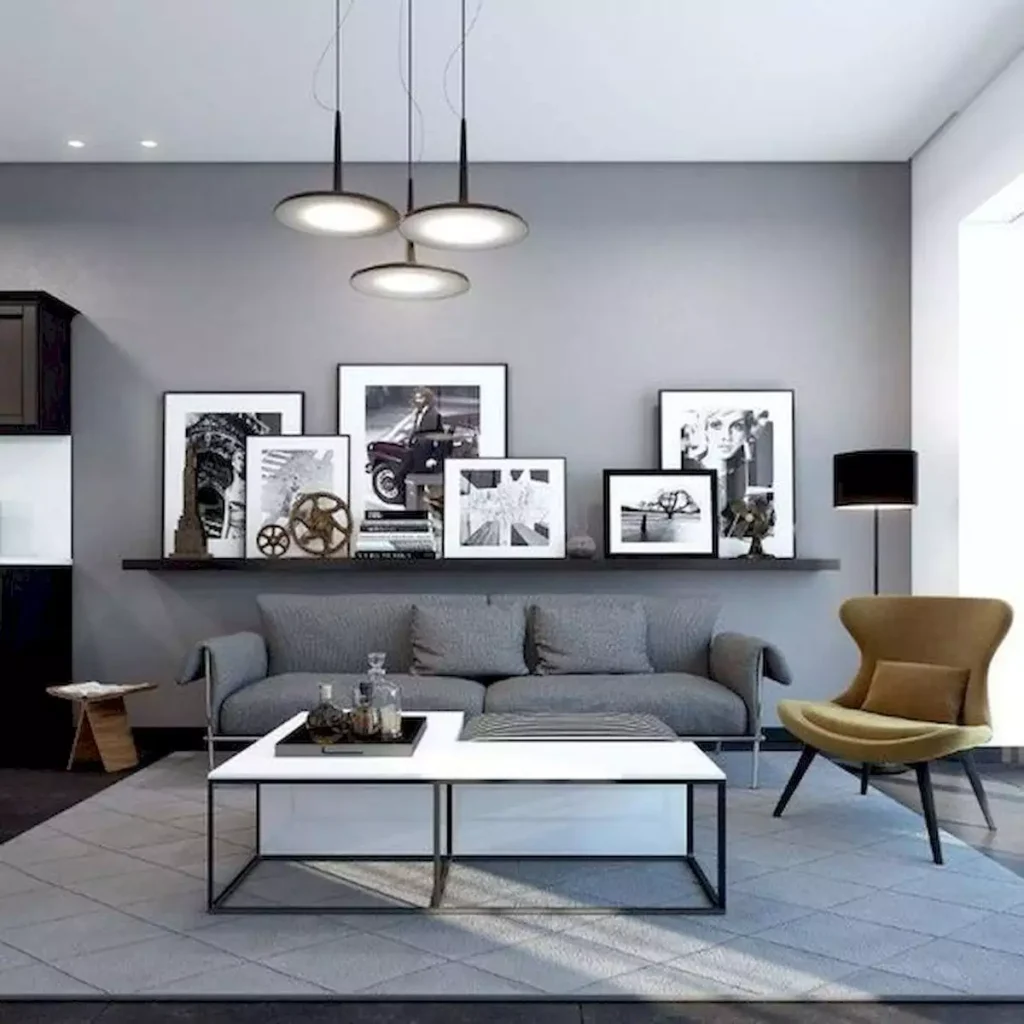
The artwork is layered rather than arranged in a strict wall grid. Larger frames sit behind smaller ones, creating overlaps and uneven heights.
A mustard chair introduces the strongest color nearby, so the frames can remain mostly neutral. The leaning arrangement also feels easier to change than a fully fixed gallery.
Black and Grey Bedroom with a Round Mirror

Dark walls, a tufted bed, and darker bedding create a more enclosed feeling than the pale grey bedrooms in the article.
The round mirror is important because it interrupts the many rectangular forms around the bed. Its shape creates contrast without introducing another bright color.
Charcoal Bedroom with Brass Sconces
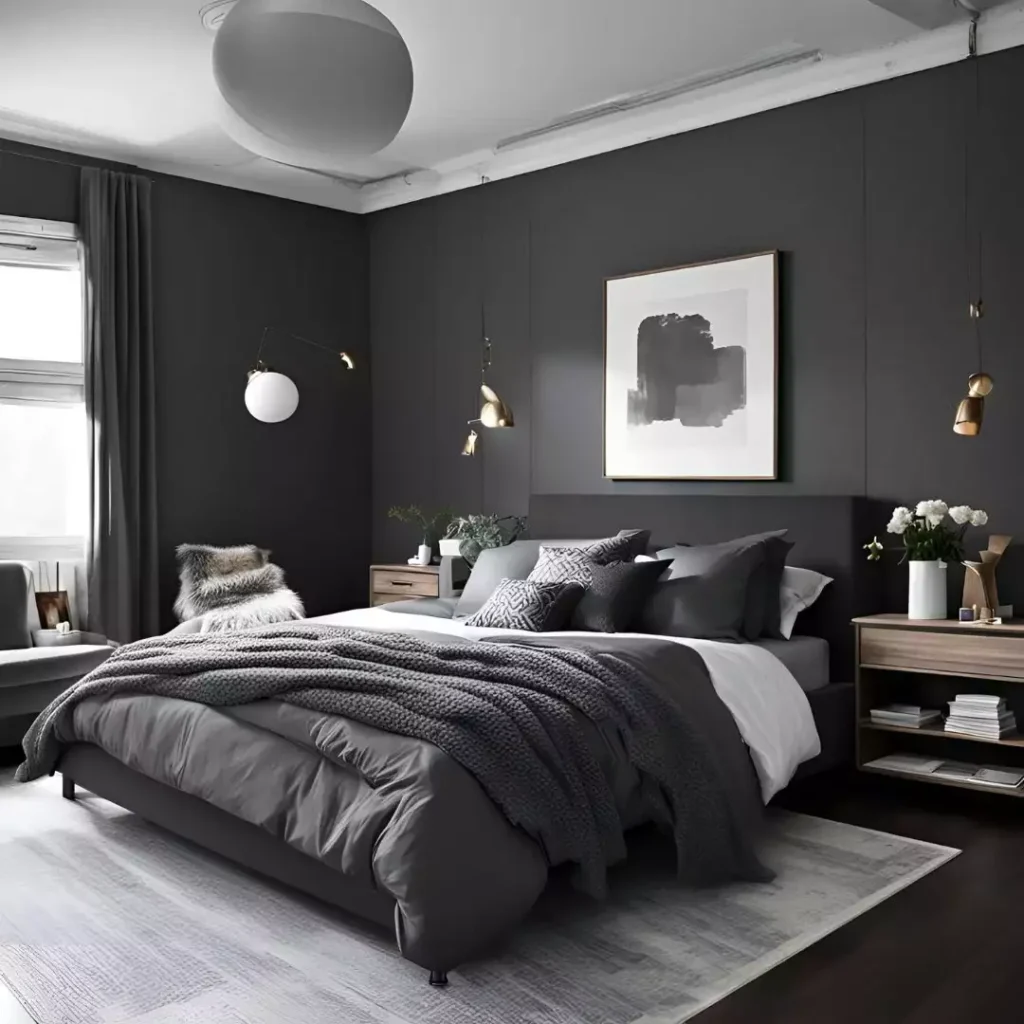
Warm brass sconces stand out immediately against the charcoal wall. Placed on either side of the artwork, they create small pools of light around the bed while keeping the center simple. The dark background makes those few metallic accents feel more noticeable than a larger collection would.
Grey Wall with Framed Art and an Arc Lamp

The arc lamp reaches into the wall area even though it stands on the floor, giving the arrangement more height than framed art alone.
A large plant fills another vertical gap nearby. Combining floor-standing pieces with wall decor helps avoid the usual straight line of objects sitting just above the sofa.
Floating Wood Shelves Above a Grey Sofa
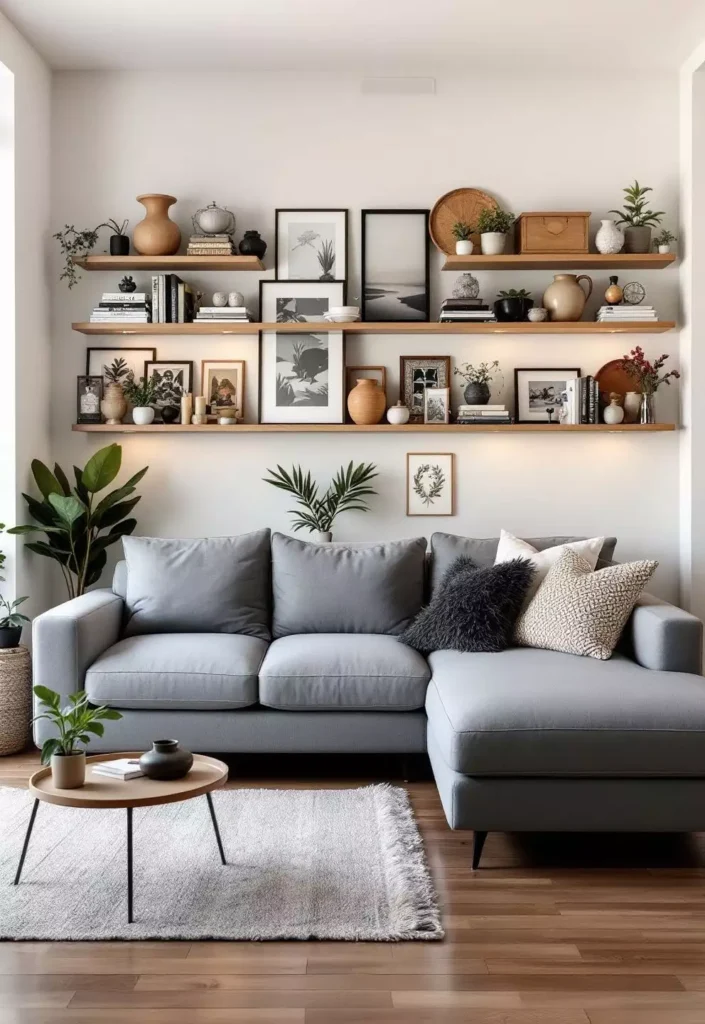
Warm wood shelves break away from the cooler grey wall and grey upholstery. Books, plants, and framed pieces sit at different heights, but the shelves keep everything within two clear horizontal bands. The wood itself provides much of the contrast before any accessories are added.
An All-Grey Room with Exposed Brick

The exposed brick creates a rough, uneven surface within an otherwise grey palette.
Abstract art and a round mirror add other shapes, but the brick is what keeps the room from feeling too smooth or uniform. Different wall materials can create more depth than another accent color would.
Dark Grey Bedroom with a Red Cabinet

A single red cabinet becomes the strongest color in the bedroom because the surrounding wall, headboard, and bedding stay muted. Nothing else tries to repeat that red aggressively. Letting one object carry the contrast makes the accent feel deliberate instead of scattered.
Mustard Floral Panel Against Soft Grey
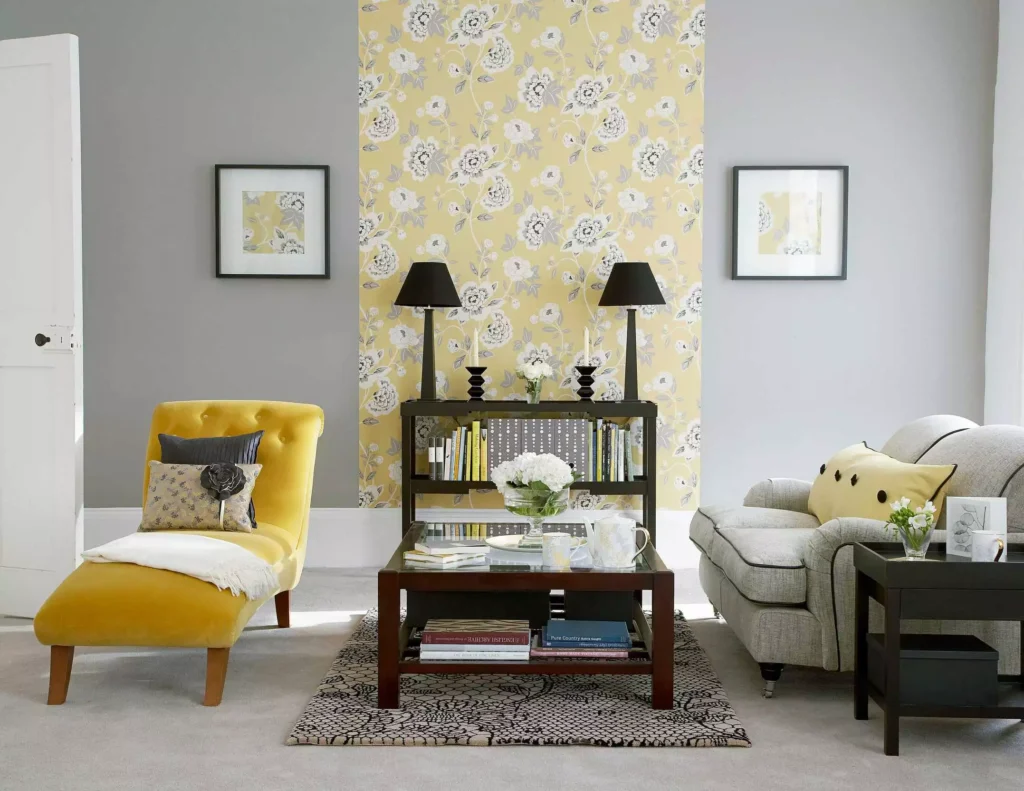
The floral panel covers only a narrow section of the wall, making it feel closer to oversized artwork than full wallpaper.
Soft grey around it gives the pattern a clear border. Concentrating the mustard print in one area adds color without changing the whole room.
Metallic Accents Against Grey Walls
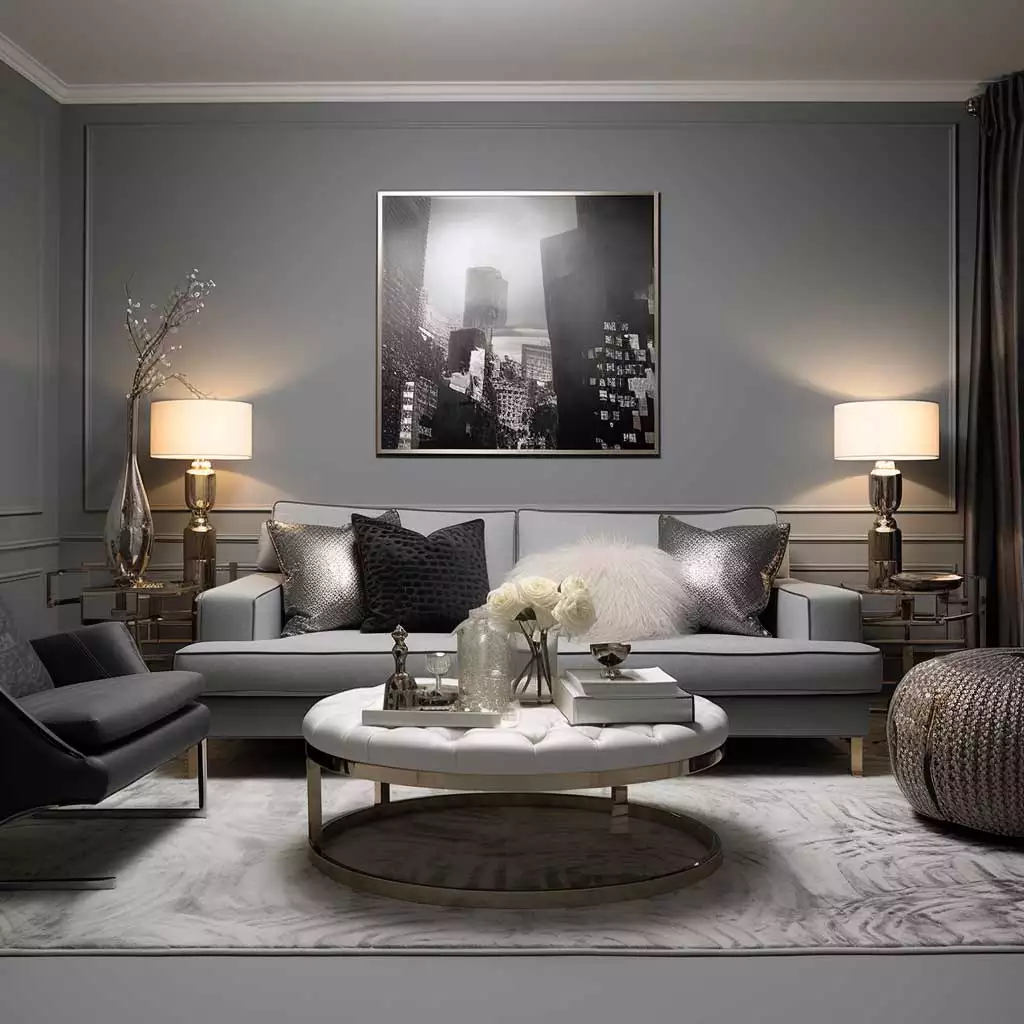
Black-and-white city artwork gives the wall a graphic focal point while metallic lamps and table details introduce shine around it.
The palette changes through finish rather than hue: matte walls, reflective metal, glass, soft fabric, and monochrome photography. That variety is what keeps the grey base from feeling flat.
Warm Grey Behind an Eclectic Gallery

The wall leans warmer than charcoal, making it a softer background for mixed frame styles and sizes.
No single frame finish dominates the collection. The gallery feels connected because the pieces stay grouped tightly rather than because everything matches.
Dark Grey with a Fireplace and Leather Chair

Warm leather creates a stronger contrast with dark grey than the cooler furnishings seen in several other examples. The fireplace, patterned lamp, and portrait introduce character without turning the wall into a busy gallery. The mix feels more collected and less formal than the other dark-fireplace room.
Grey Shiplap with Open Shelving

Horizontal shiplap adds repeated lines across the wall before the shelving is considered.
Wood shelves introduce another layer without hiding the wall completely. Leaving visible stretches of shiplap between objects lets the texture continue to matter.
Grey Bedroom with White Pintuck Bedding
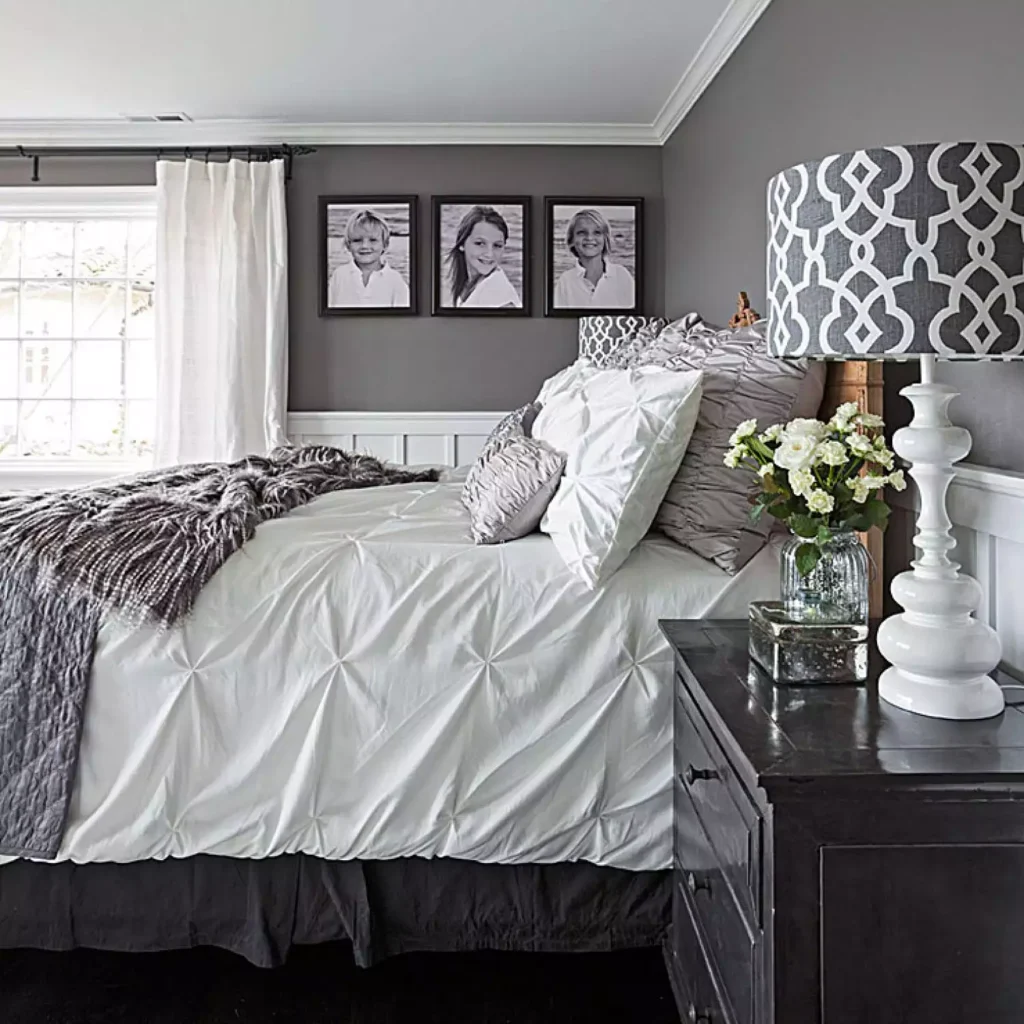
Bright white bedding becomes the largest light element against the grey background.
Above the headboard, a small portrait gallery adds detail without competing with the scale of the bed. The bedding carries texture, the wall provides contrast, and the framed photographs supply the smaller visual interest.
Deep Grey Paneling Behind a Tufted Headboard

Square paneling creates a repeated grid, but because the molding and wall share the same color, the pattern appears mostly through shadow. The tufted headboard introduces another softer pattern below. Warm bedside lighting breaks through the dark surfaces without changing the palette.
Light Grey with a Floating Console

The floating unit leaves visible floor underneath, helping the wall feel lighter and less crowded. Simple framed pieces sit above it with generous spacing rather than forming a dense gallery. The composition depends more on proportion and empty space than on decoration.
Grey Paneling Behind a Leather Headboard
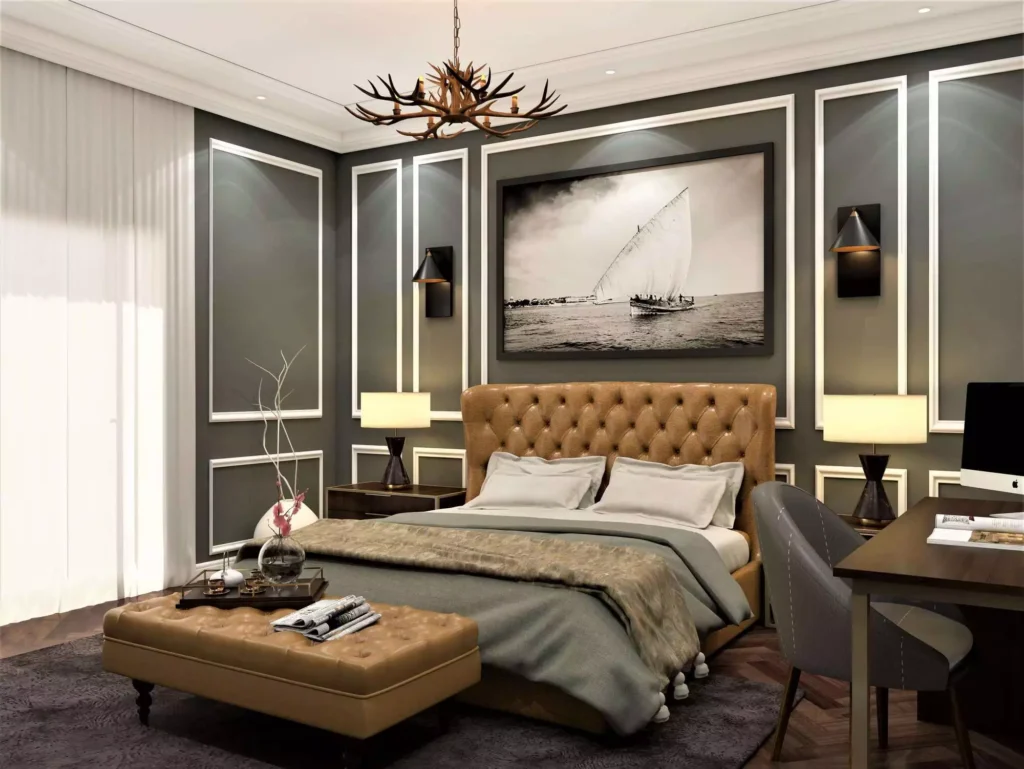
Tan leather becomes the strongest warm surface against the cool grey wall.
Paneling keeps the background structured, while the darker trim and antler-style light fixture push the bedroom in a more rustic direction. The contrast comes from material and temperature rather than a bright accent color.
Grey Walls with Dark Trim and a Round Mirror
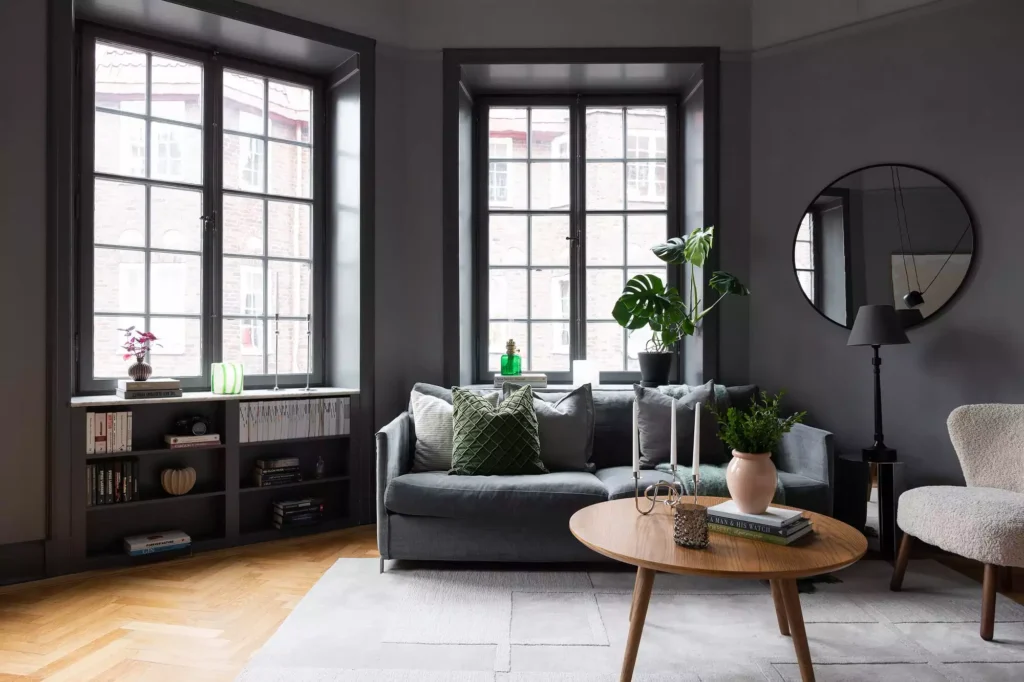
Dark window frames give the wall sharper boundaries and make the architecture part of the decor.
A round mirror repeats that darker contrast elsewhere, while the wood coffee table introduces warmth at seating level. Built-in storage under the window also uses an area that could easily have been left empty.
Decide What You Need Grey to Do
Grey does not create one specific mood on its own. A pale shade can disappear behind white furniture, charcoal can sharpen brass or dark trim, and textured grey surfaces can become decorative enough that very little artwork is needed.
Before choosing a shade or finish, decide what the wall needs to support. It may need to frame a fireplace, calm colorful furniture, connect an open-plan room, or make one warm material stand out. That decision is more useful than choosing grey simply because it feels neutral.