


A bedroom wall sits directly behind some of the room’s largest pieces—the bed, headboard, nightstands, and lighting—so even a quiet grey background can have a big effect on the finished space. Change the surface from flat paint to stone-look texture, paneling, wallpaper, or marble-look finishes, and the same color family starts to feel completely different.
These grey bedroom wall decor ideas explore that range through texture, art, mirrors, lighting, warmer materials, and stronger accent colors. Some walls stay almost empty and let the headboard lead, while others become the main feature of the bedroom.
Botanical Line Art Above a Charcoal Bed
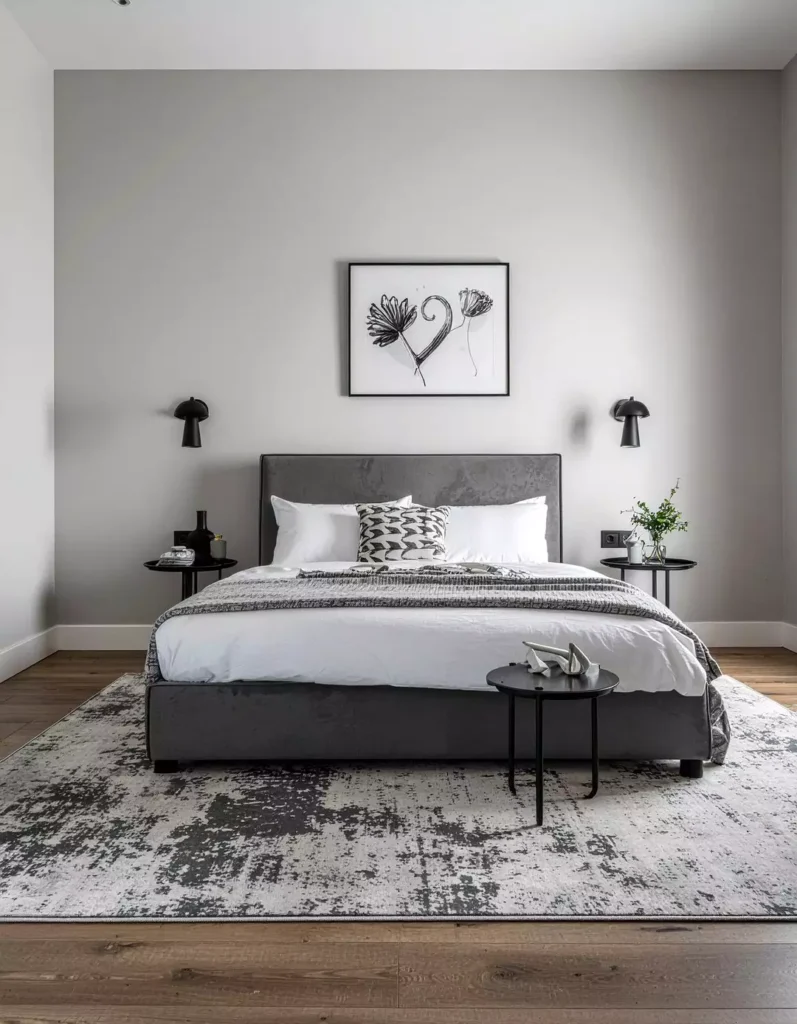
A single botanical drawing keeps the wall restrained rather than turning it into a gallery. The charcoal upholstered bed is noticeably deeper than the soft grey behind it, so the headboard still has a clear outline. Small black sconces on either side reinforce the symmetry without taking up much wall space. The limited palette suits a bedroom where the goal is calm rather than visual density.
Floor-to-Ceiling Grey Stone
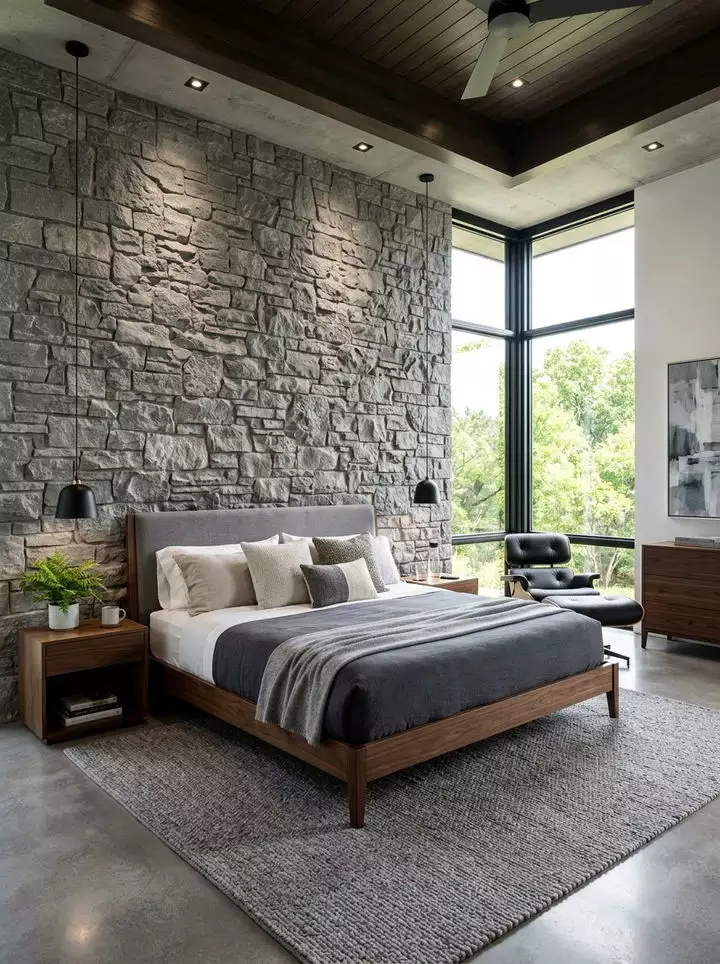
Stacked stone turns the headboard wall into a material feature before any artwork is added. Natural light from the tall windows catches the uneven surface and makes the joints and shadows more noticeable. A warm wood bed frame is especially useful here because it stops the stone, black lighting, and grey palette from becoming too cold.
This is less about decorating a painted wall and more about letting the wall material become the decoration.
Warm Grey Paneling with a Gold Mirror
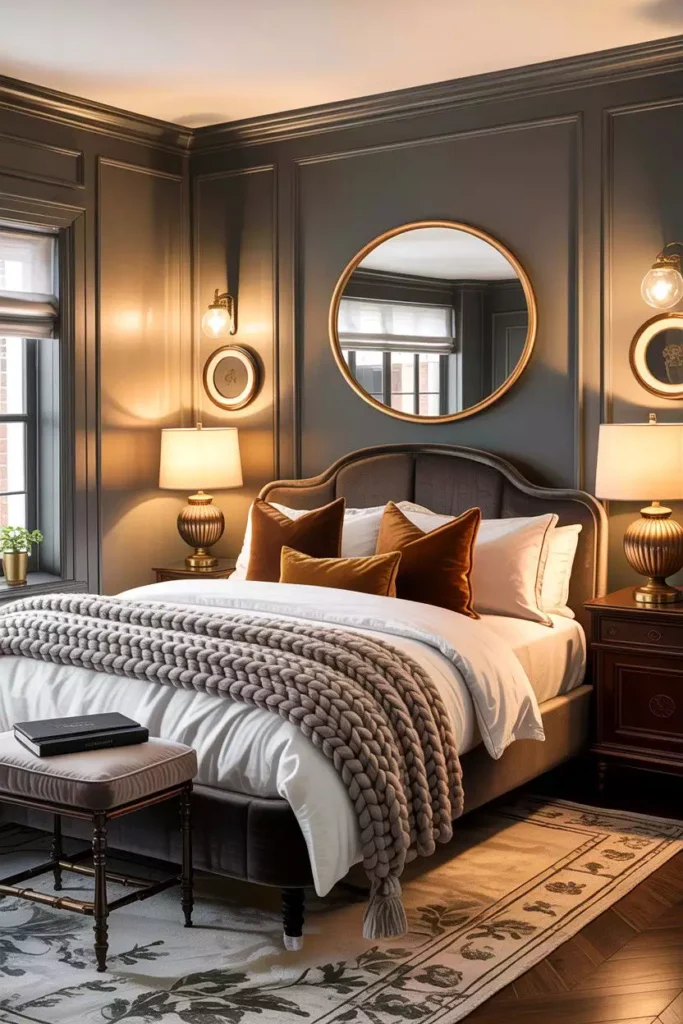
Paneling gives the wall a repeated architectural pattern, while the large round gold mirror breaks those straight lines with one strong curve.
Brass-toned lighting and rust-colored pillows introduce warmth around the deeper grey. Instead of adding several unrelated colors, the bedroom stays focused on grey, warm metal, and earthy fabric tones.
A Concrete-Look Wall with Simple Art
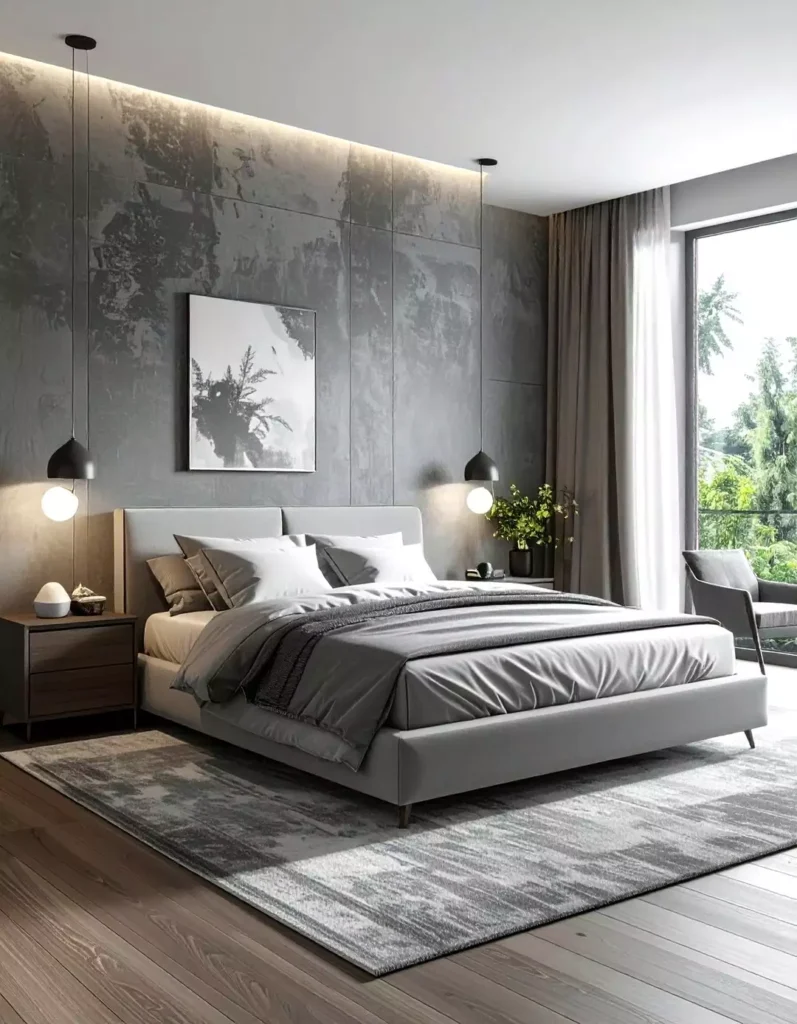
Subtle variation across the concrete-effect surface creates more movement than ordinary flat paint. One framed botanical piece sits above the bed, leaving much of the textured wall visible. Pendant lights drop beside the bed rather than filling the nightstands, which keeps the composition clean around the headboard. The wall already carries enough visual detail that it does not need a large gallery on top.
Woven Decor Against Charcoal Grey
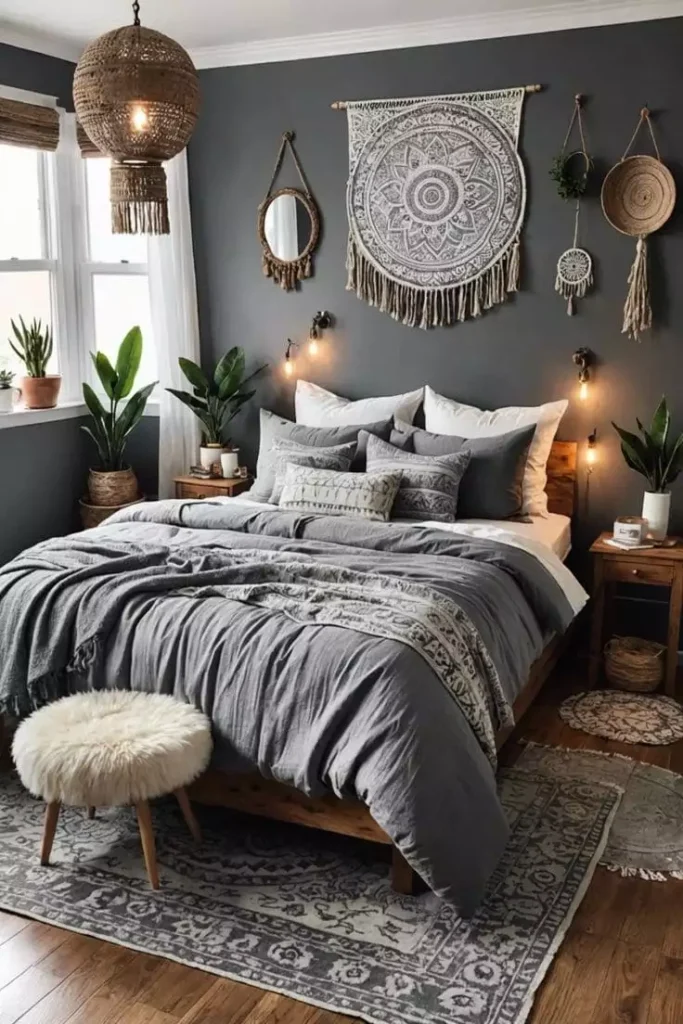
A large woven wall hanging changes the character of charcoal completely. Instead of feeling sleek or formal, the dark background becomes a strong contrast for lighter natural fibers. Smaller hanging baskets, warm lighting, rattan, plants, and layered textiles continue that tactile direction around the bed.
Among more relaxed grey bedroom ideas, this works because the warmth comes from material rather than from repainting the wall.
Light Grey Paneling with Gold and Mirrored Finishes
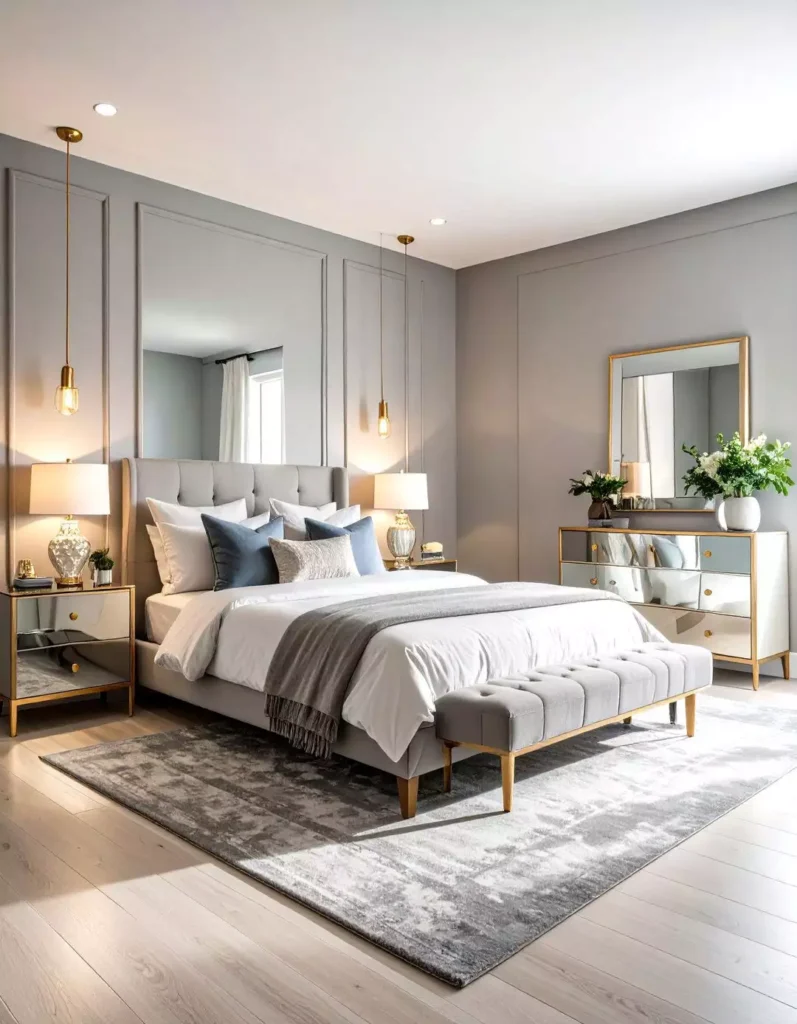
Pale paneling provides structure without making the headboard wall dark.
Mirrored furniture and gold trim introduce reflected light, while dusty blue pillows keep the palette from becoming only grey and metallic. Hanging lights also leave the bedside surfaces visually cleaner.
Here, grey works as a quiet base for reflective finishes rather than as the main statement.
Grey and Yellow Bands Across the Walls
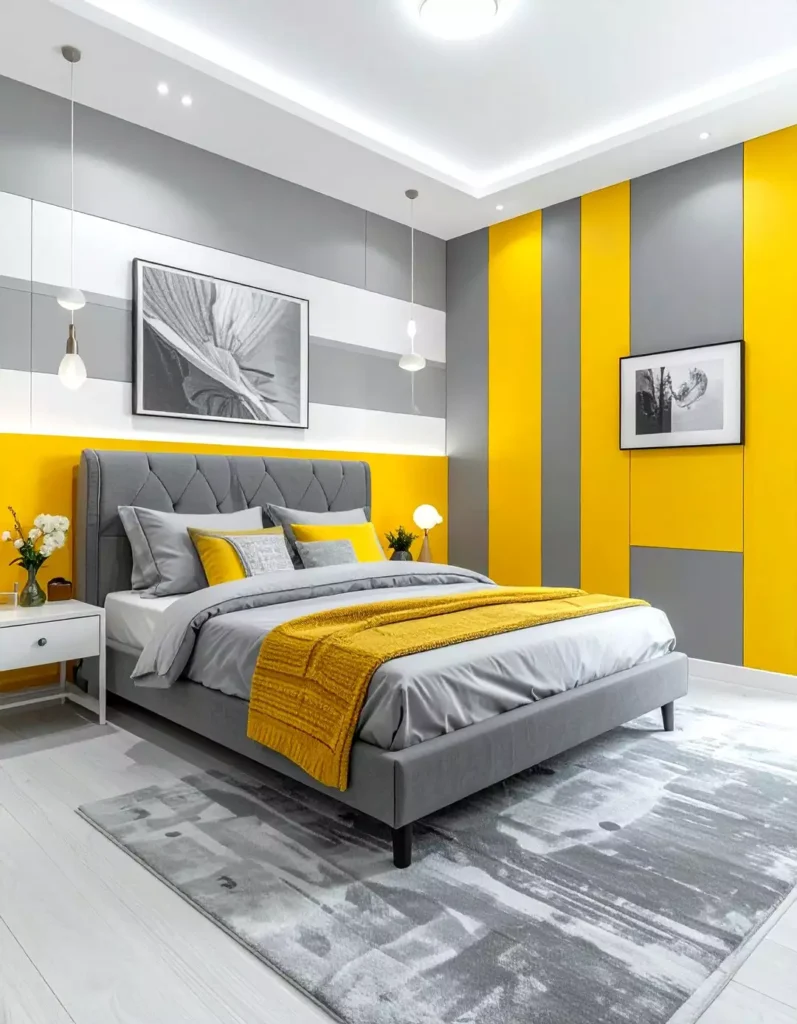
Grey, white, and yellow bands move in different directions across the walls, giving the bedroom much more graphic energy than a single striped feature wall.
The tufted grey bed anchors the lower half, while the yellow throw repeats the strongest accent color at bed level. Black-and-white artwork placed over the pattern adds detail without introducing another competing hue. Because the walls already have strong movement, the rest of the palette stays fairly controlled.
Vertical Paneling with a Round Wood Mirror
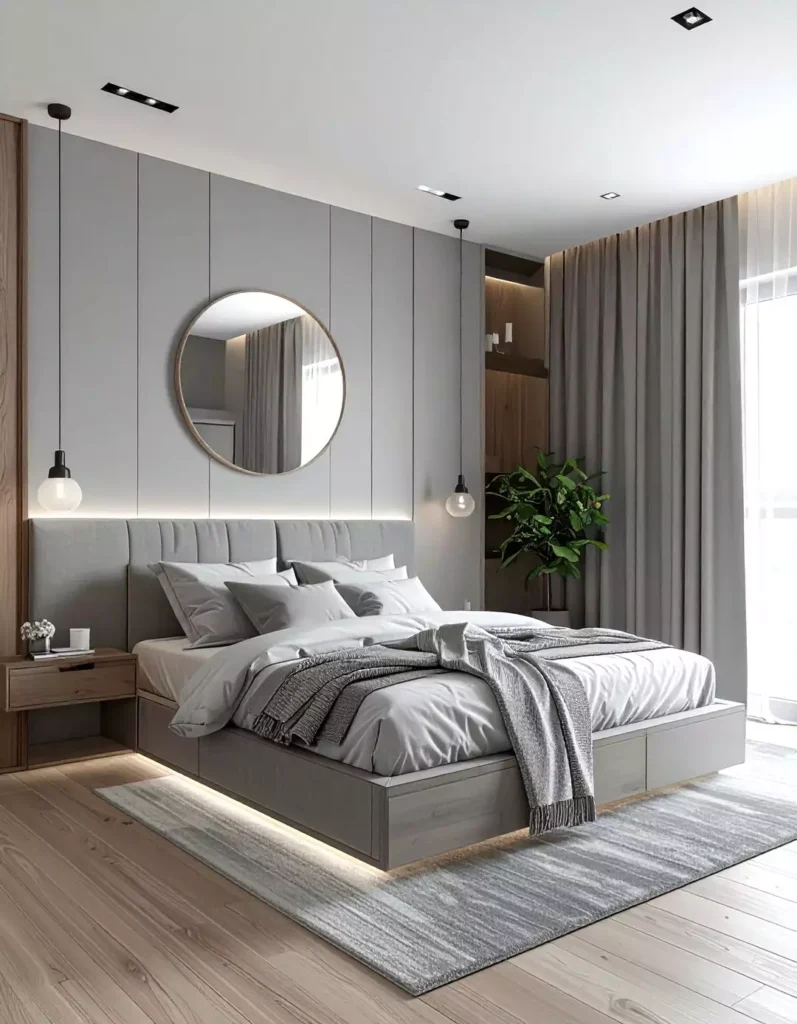
Light vertical panels pull attention upward and add shadow lines without making the bedroom feel heavy.
A round wood-framed mirror is enough to break the repetition, while pendant lighting keeps the wall area around it uncluttered.
Warm wood is particularly effective beside light grey because it introduces contrast without the sharpness of black or bright color.
Grey Beside a Red Accent Wall
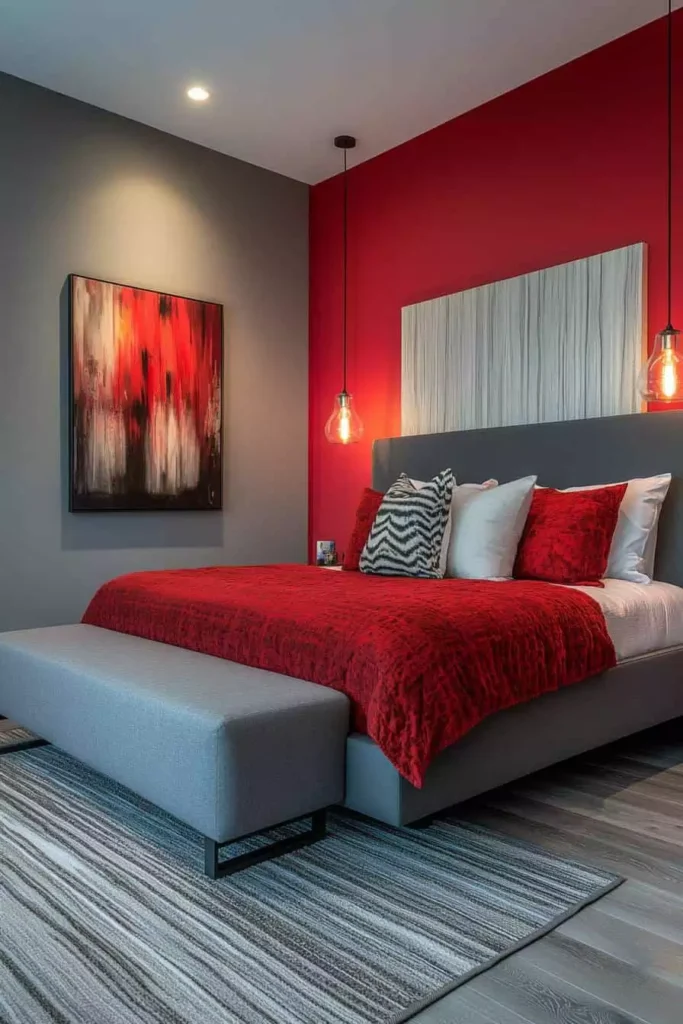
Grey and red divide the room into two very different wall treatments. Artwork on the grey side repeats some of the red, which creates a visual connection between the two surfaces. Red bedding continues that link lower in the room.
Keeping one wall neutral gives the saturated red somewhere to stop rather than allowing it to dominate every side of the bedroom.
Charcoal Stone with a Photo Grid
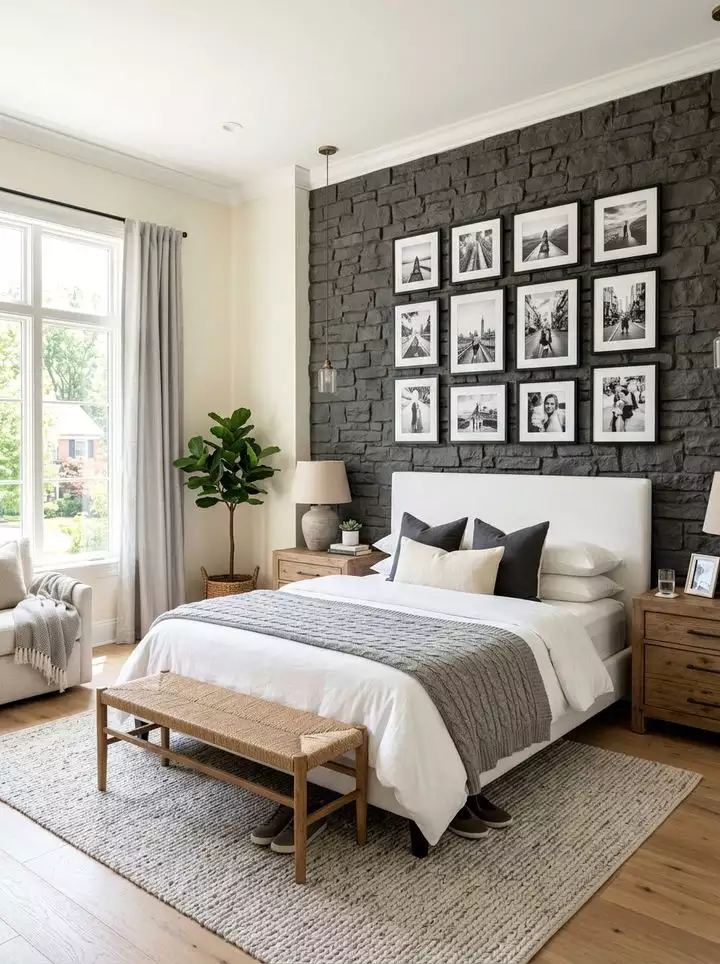
A dark stone wall provides a rough, irregular background, while the black-and-white photographs introduce a precise rectangular grid over it.
That contrast between organic stone and ordered frames is more interesting than either treatment would be alone. A pale upholstered bed and lighter natural materials below prevent the entire headboard area from becoming one dark block.
Grey Marble-Look Wall Behind a Tufted Bed
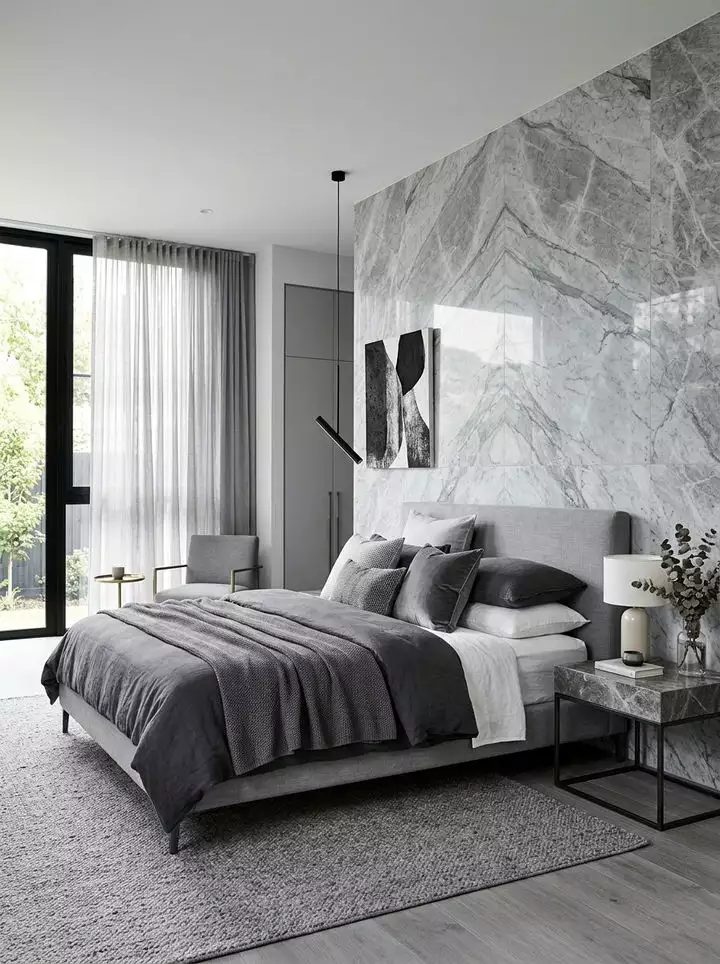
The veining in a large marble-look surface already behaves almost like abstract art. Adding only a relatively small artwork above the bed allows much of that pattern to remain visible. A dark tufted headboard creates a solid shape against the more fluid wall finish. With a surface this visually active, covering the wall with multiple frames would hide the feature that gives it character.
Light Marble-Look Wall with Brass and Warm Wood
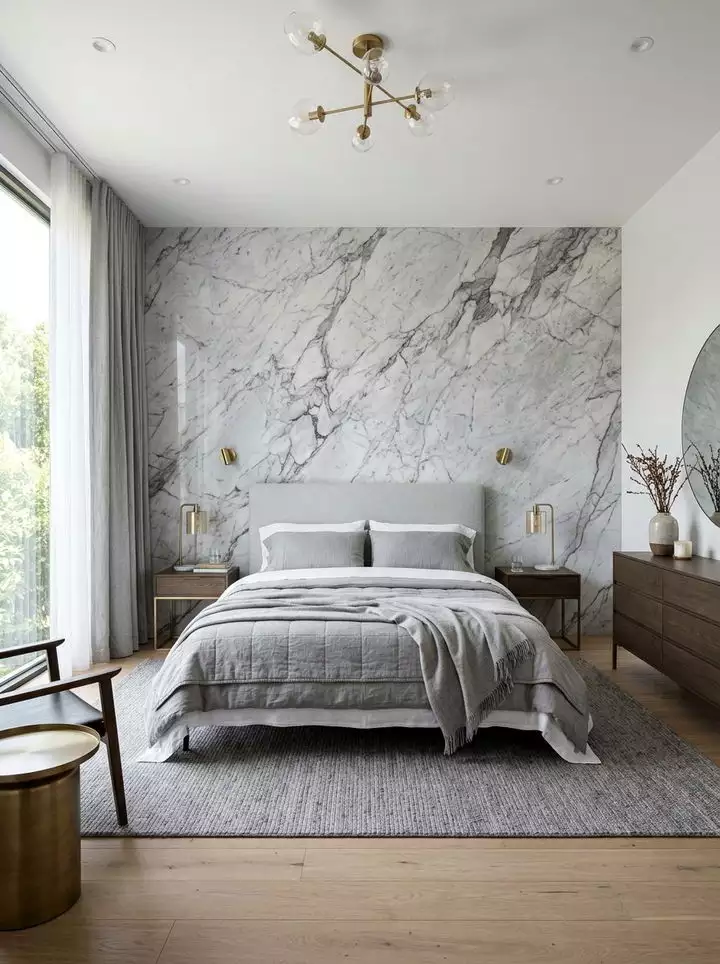
A lighter marble-look treatment creates a softer background than the deeper veined wall in the previous example. Brass sconces add warm points of light, while the wood dresser introduces another natural color beside the cool veining.
The mix is effective because the bedroom does not try to match every surface to grey; warmer materials give the wall clearer contrast.
Gold Frames on a Medium Grey Wall
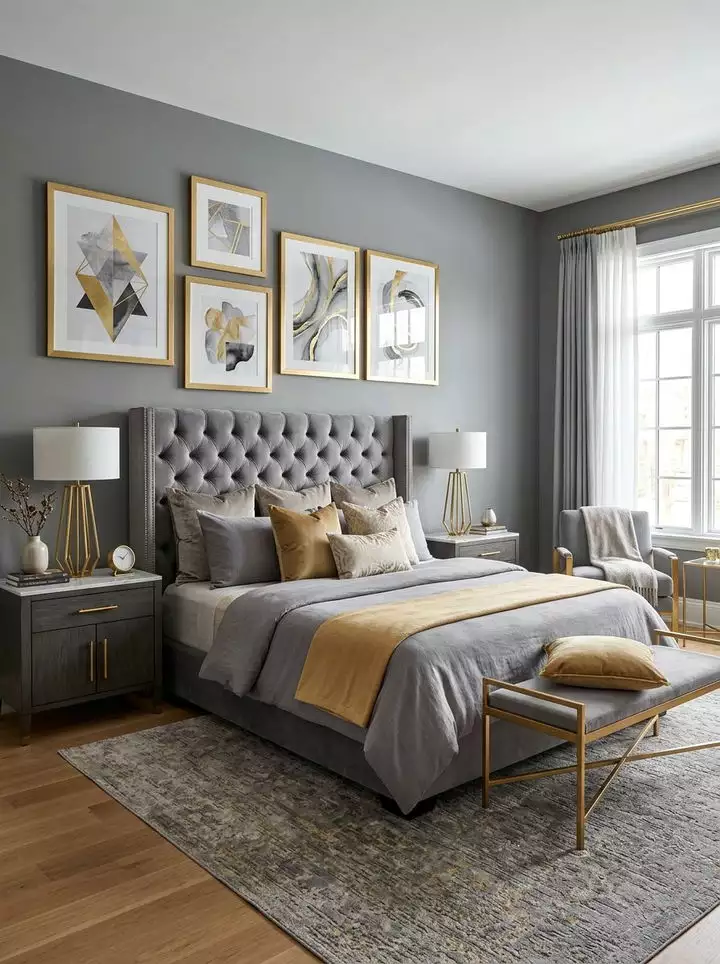
A group of gold-framed prints creates a more decorative treatment above the tufted headboard.
Matching frame finishes connect artwork with different designs, while the grey wall gives the metallic borders enough contrast to stand out.
This is one of the more traditional wall decor ideas in the set: the interest comes from the arrangement itself rather than from changing the wall material.
Grey and Silver in a Cooler Palette
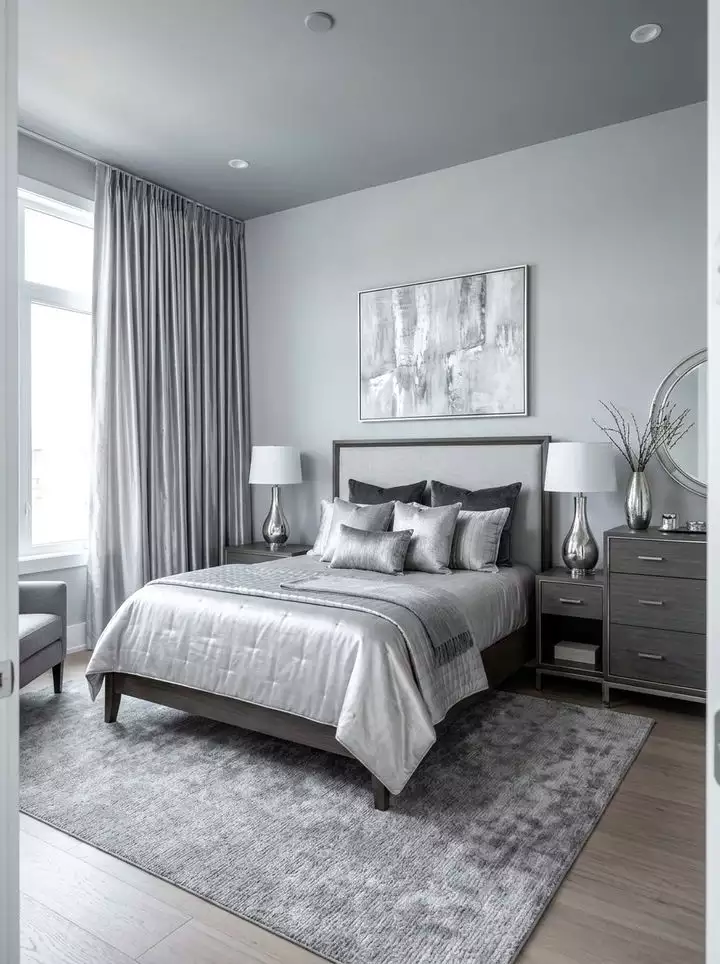
A grey-and-white abstract artwork keeps the wall within the same color family instead of becoming a high-contrast focal point.
Silver-toned details nearby reinforce the cooler direction. Because the difference between wall, art, and accessories is subtle, shape and reflection become more important than color. The result is intentionally quieter than the gold, red, or yellow examples.
Colorful Stars on a Grey Kids’ Wall
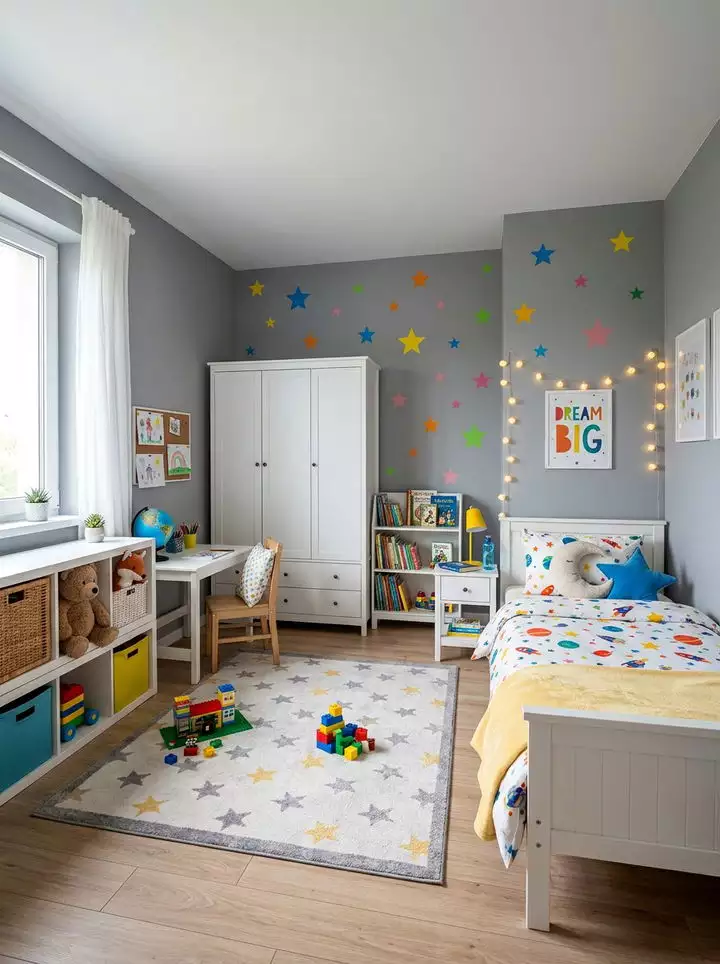
Small colorful stars spread across the grey background, allowing the wall to stay neutral while the decoration brings in blue, yellow, green, and pink.
A decorative sign and string lights add another layer without requiring a permanent multicolor paint treatment.
Using easily changed accents can make sense in a child’s bedroom, where interests may change faster than the main wall color.
Large Abstract Art on a Textured Grey Wall
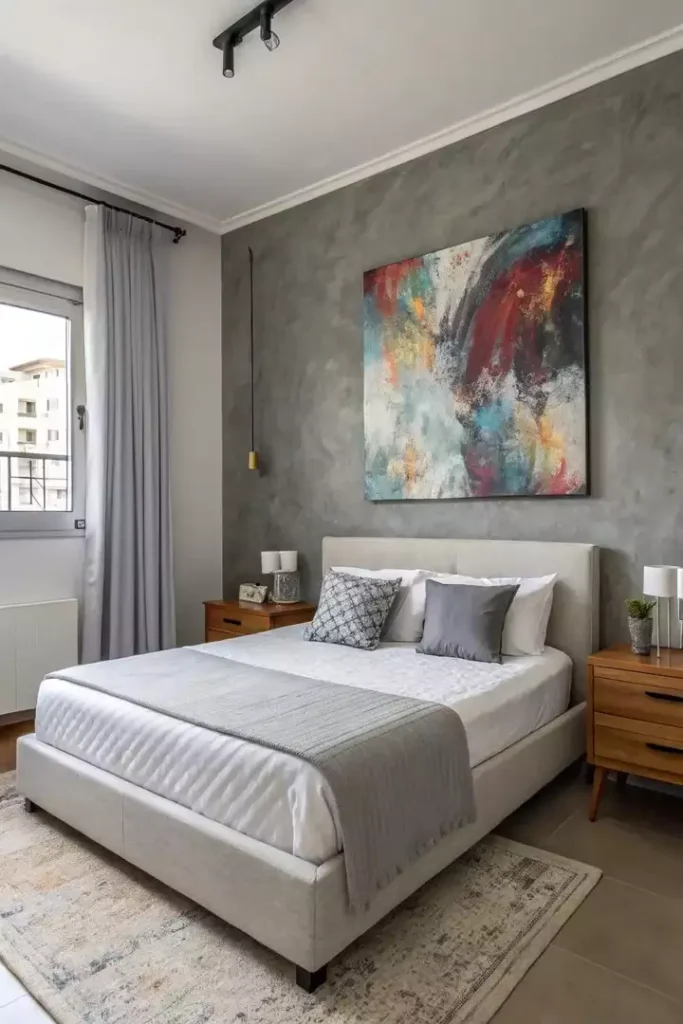
The artwork supplies the strongest color in this bedroom, with reds, blues, and warmer tones standing clearly against the muted background. A lightly textured wall gives the area depth without fighting the painting for attention. Warm wood nightstands then repeat some of that visual warmth lower down.
When one artwork is large enough to dominate the wall, surrounding it with smaller frames is unnecessary.
A Yellow Circular Accent Behind the Bed
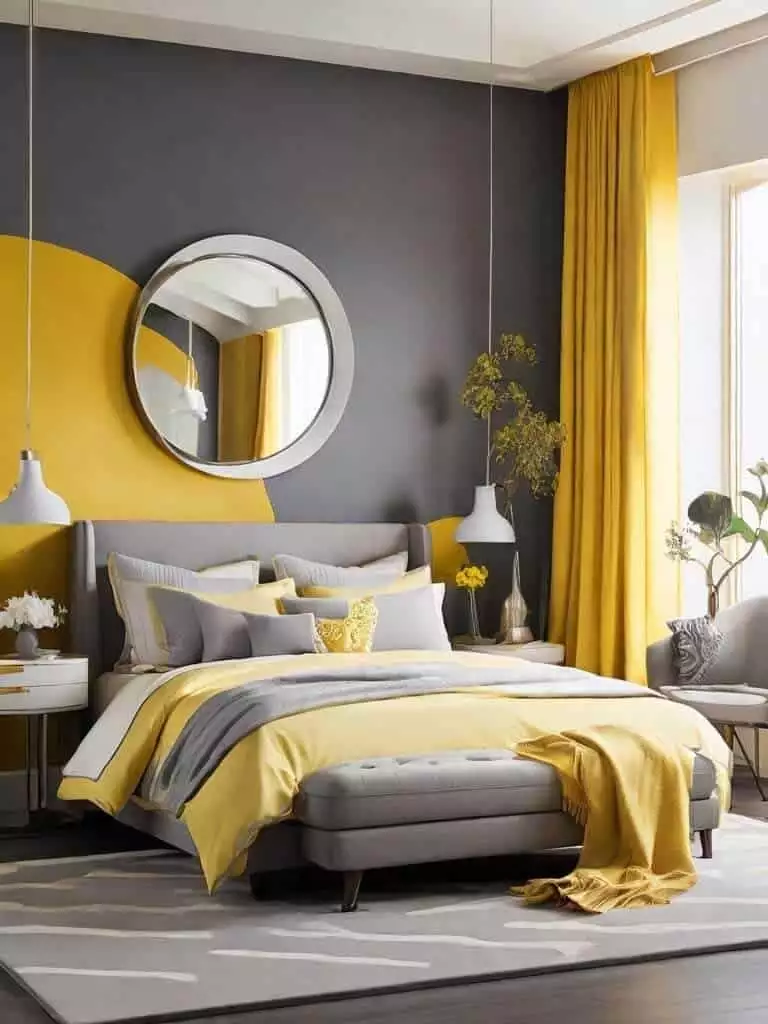
A large yellow circular shape cuts into the dark grey wall behind the bed, with the round mirror overlapping part of it.
Yellow curtains repeat the accent elsewhere in the room, while the grey tufted headboard keeps the bed tied to the darker background. The repeated yellow makes the painted shape feel intentional rather than like an isolated patch of color.
Subtle Grey Wallpaper
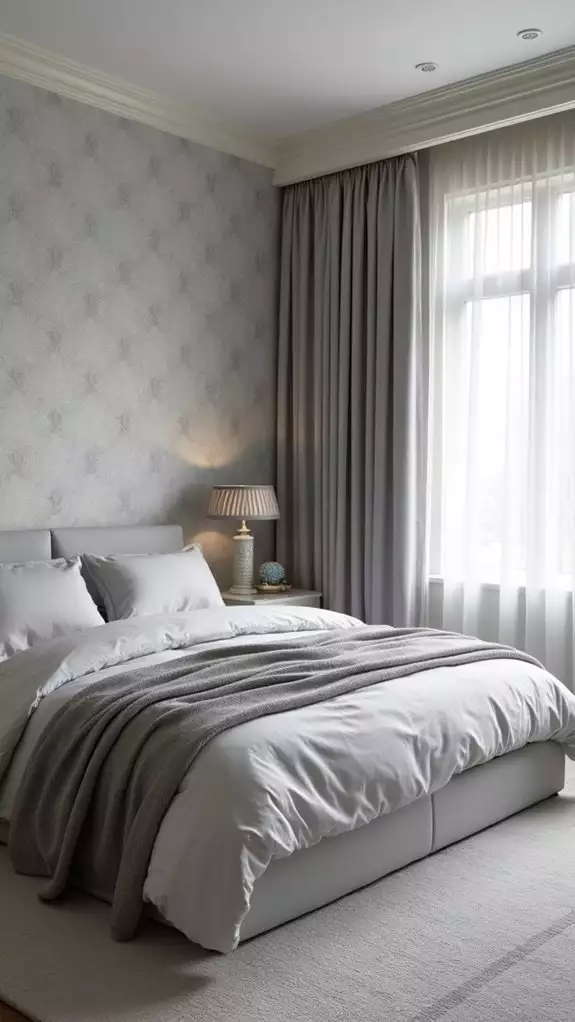
The pattern here is deliberately quiet. Instead of creating a feature wall through strong color, the wallpaper adds variation that becomes more visible as light moves across it. Simple grey and white bedding keeps the bedroom within the same restrained palette. A wall like this can carry detail without needing artwork in every open area.
Red Abstract Art Against Grey
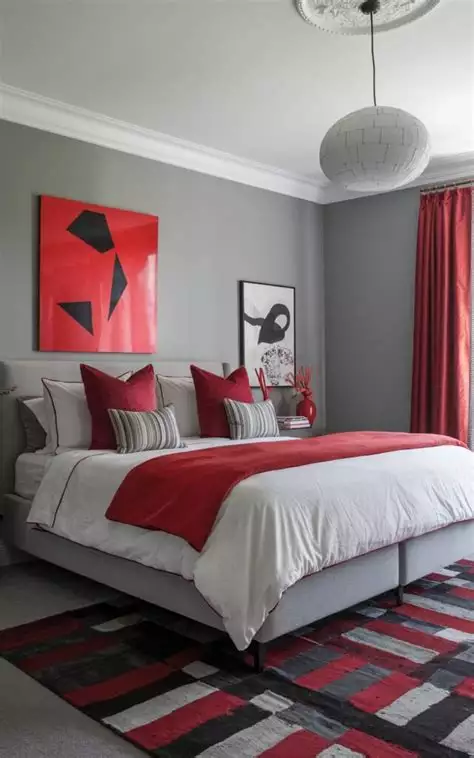
Rather than painting an entire wall red, one large artwork concentrates the color directly above the bed. Red textiles and a curtain repeat that accent elsewhere, while a smaller black-and-white print gives the main painting some asymmetrical company.
Grey gives all of those stronger red elements a neutral surface to work against.
Charcoal-Black Stone with Warm Tan Contrast
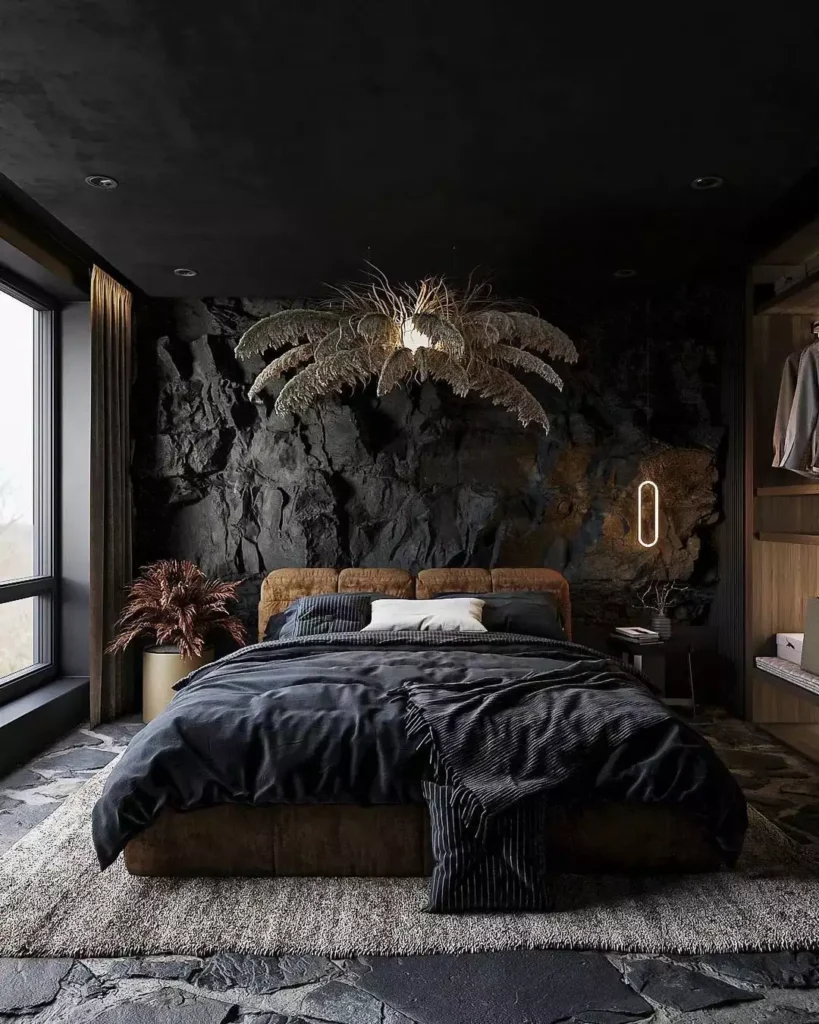
The headboard wall moves so close to black that surface texture becomes especially important.
A warm tan headboard breaks up the charcoal wall and dark bedding, while the oversized frond-like light fixture adds a lighter organic shape overhead.
The contrast is built from material and temperature as much as from light and dark.
Black Wire Pendants and Graphic Art
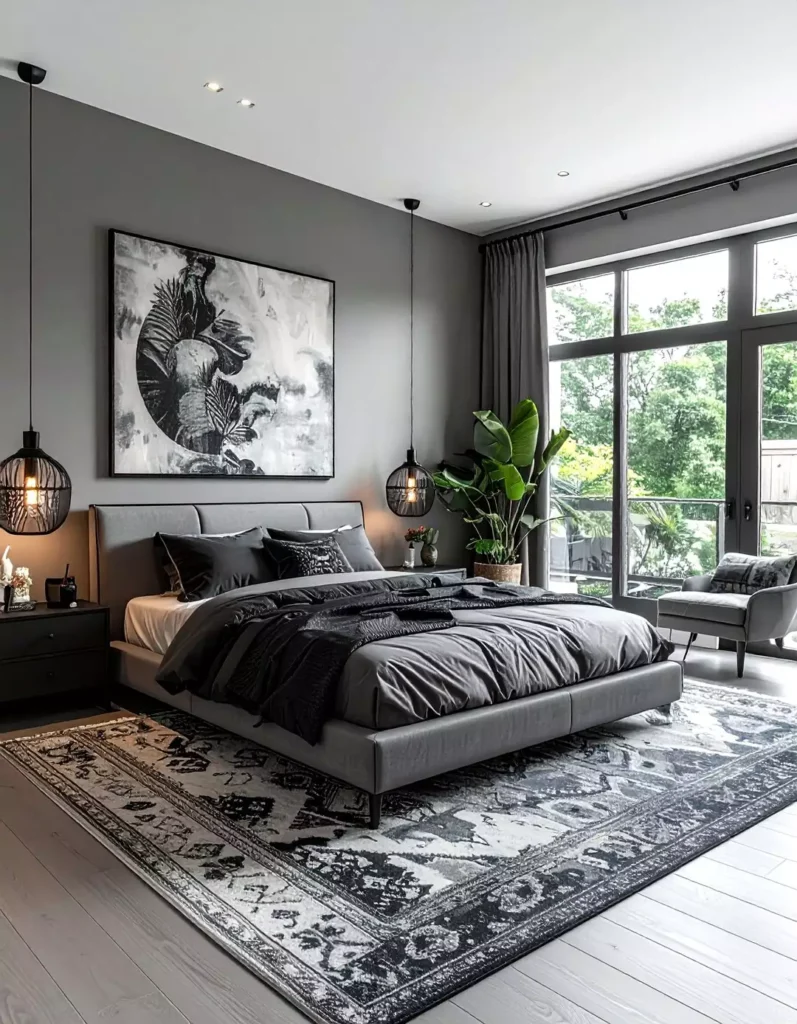
A medium grey wall becomes sharper when paired with black wire lighting and bold black-and-white artwork.
The pendants frame the bed vertically, while the artwork provides the strongest graphic element in the center. Because those details already create several dark lines, the wall itself can remain relatively plain.
A Woven Disc with Sage Green Bedding
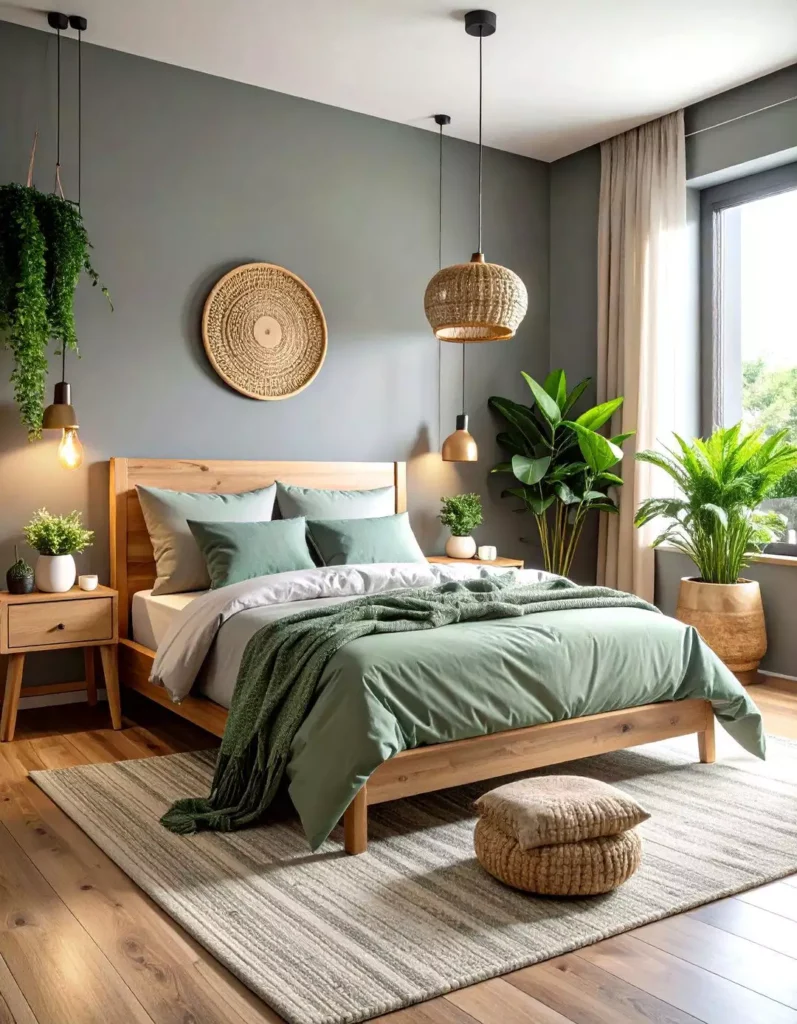
The grey-blue wall shifts toward an earthy palette once rattan, woven fiber, sage bedding, and greenery are added.
A large woven disc sits slightly off-center rather than following a perfectly symmetrical headboard arrangement. Plants introduce more irregular shapes around it.
Natural materials are doing most of the warming here, so the wall can remain cool without making the bedroom feel stark.
Three Botanical Prints Above a Black Iron Bed
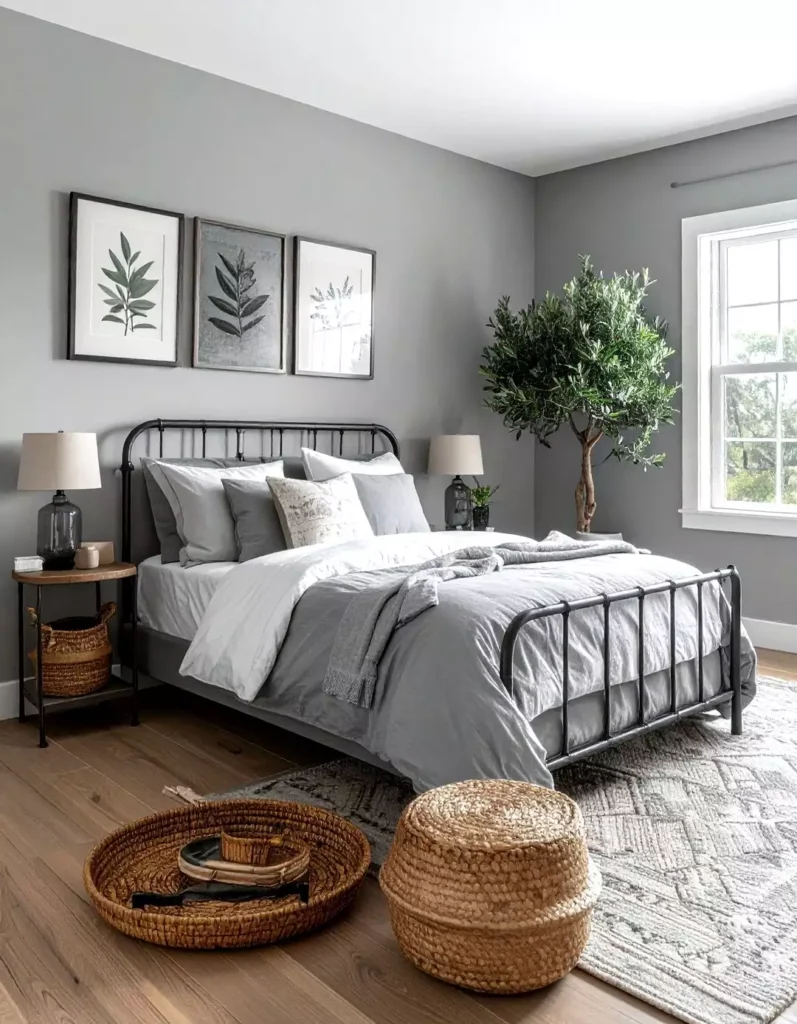
Three matching botanical prints form a straightforward row above the bed. The black iron frame gives the pale grey background a stronger outline, while woven baskets and a woven pouf soften the harder metal.
This arrangement does not need complicated layering—the repeated frames are enough to give the headboard wall structure.
Ornate Silver Scrollwork on Lavender-Grey
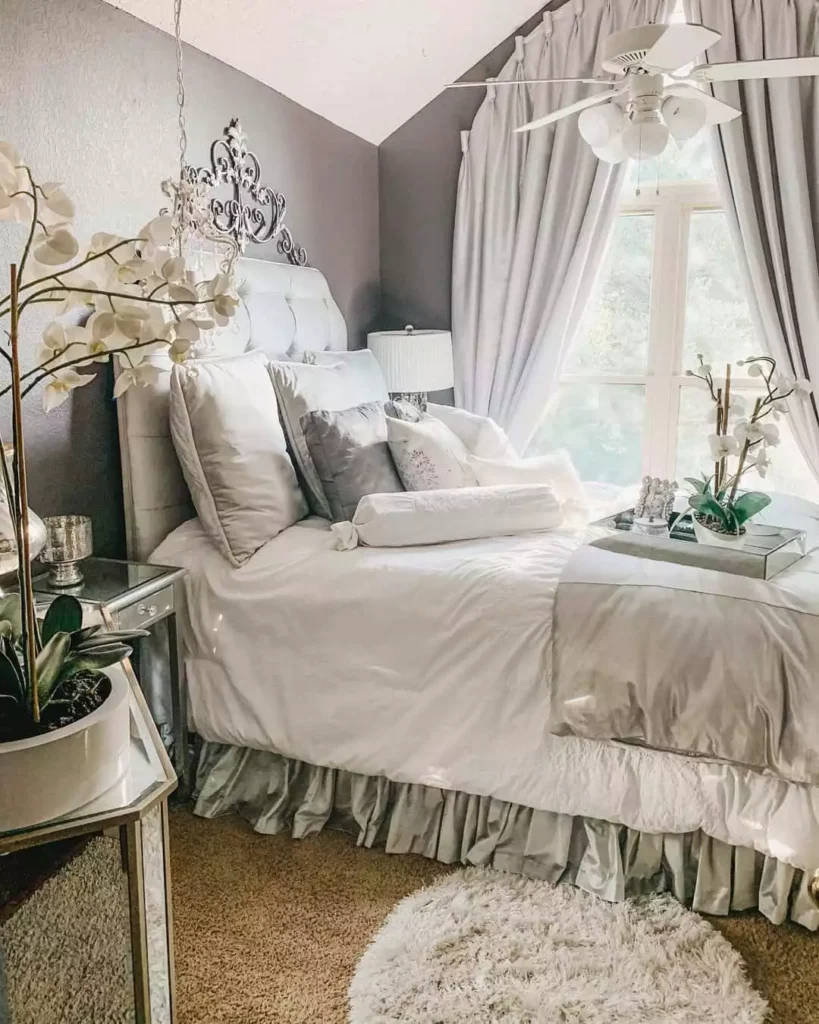
The wall carries a subtle lavender-grey tone, which changes the effect of the ornate silver scrollwork above the headboard compared with the cooler grey bedrooms elsewhere.
Ruffled bedding and reflective bedside furniture continue the softer, more embellished direction. One highly detailed decorative element can fill the role that a multi-piece gallery would normally play.
A Gold Sunburst Mirror on Medium Grey
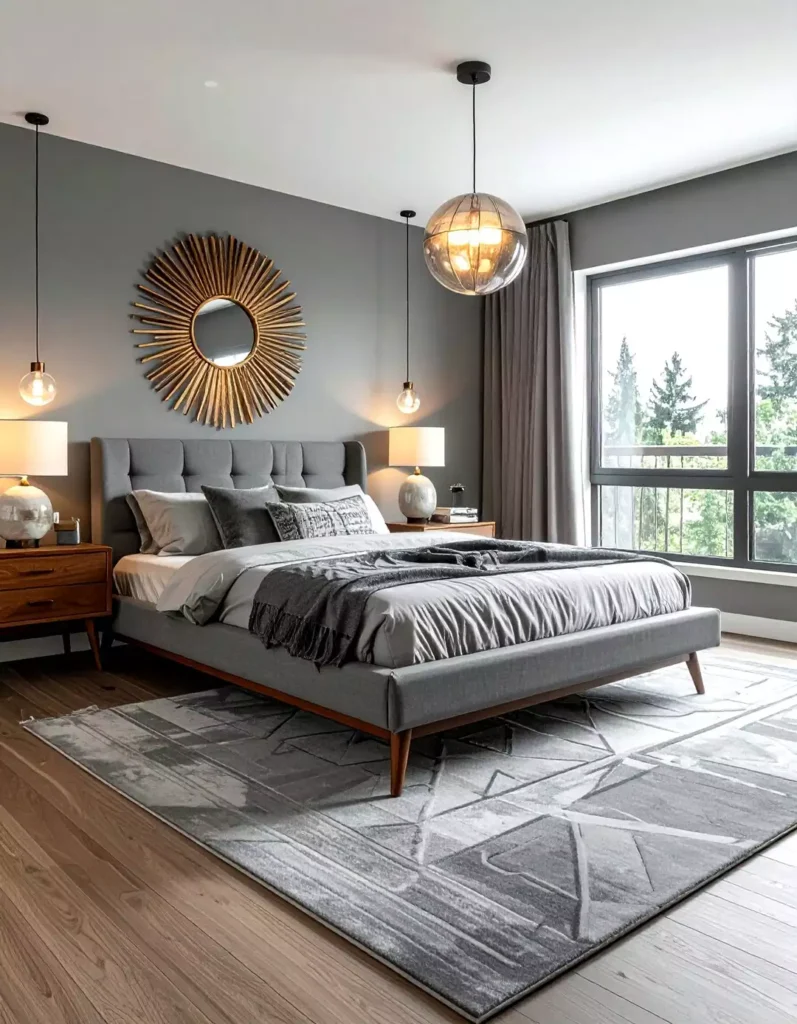
Gold stands clearly against the medium-grey background, making the sunburst mirror the first thing the eye notices above the bed. Glass globe lights add smaller circular forms on each side, and warm wood legs beneath the upholstered bed prevent the palette from becoming only grey and gold. The mirror works because its shape has enough presence to stand alone rather than needing surrounding artwork.
Silver-Framed Art with Grey Paneling
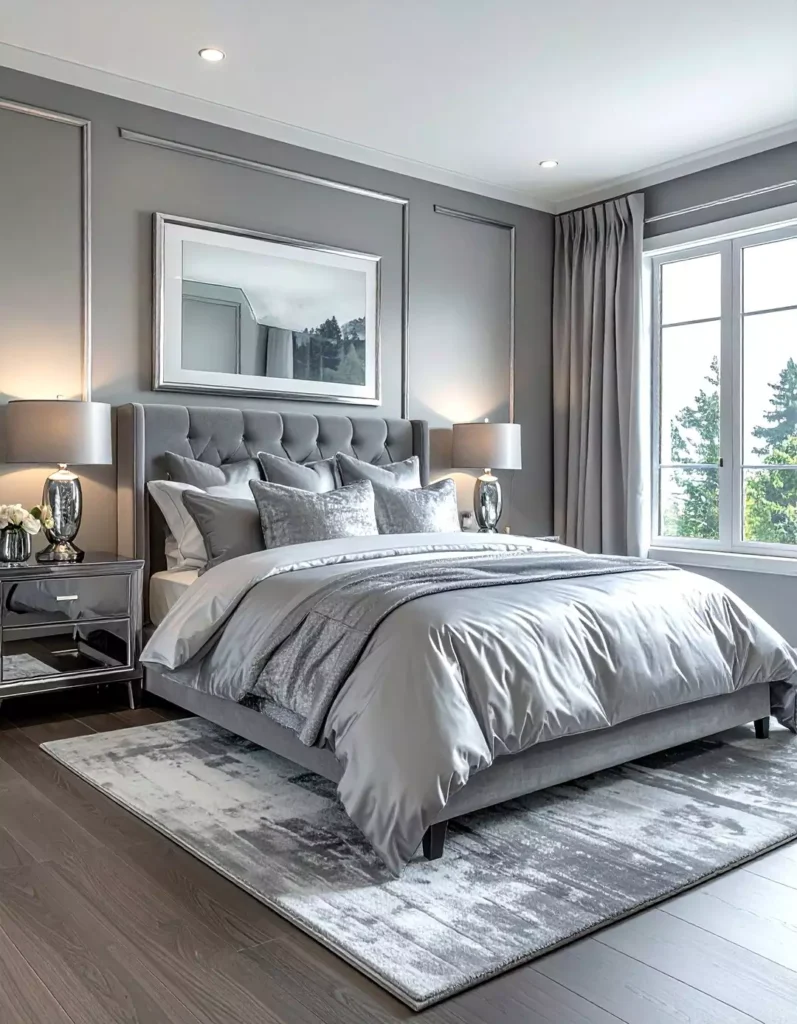
Paneling gives the background depth through shadow, while a silver-framed abstract print adds a brighter reflective edge above the bed. Satin bedding and mirrored furniture continue the reflective theme in different materials.
Keeping the colors close together lets those changes in finish—matte paint, glass, metal, and fabric—provide the variation.
Floral Pattern Beside a Wood Bed
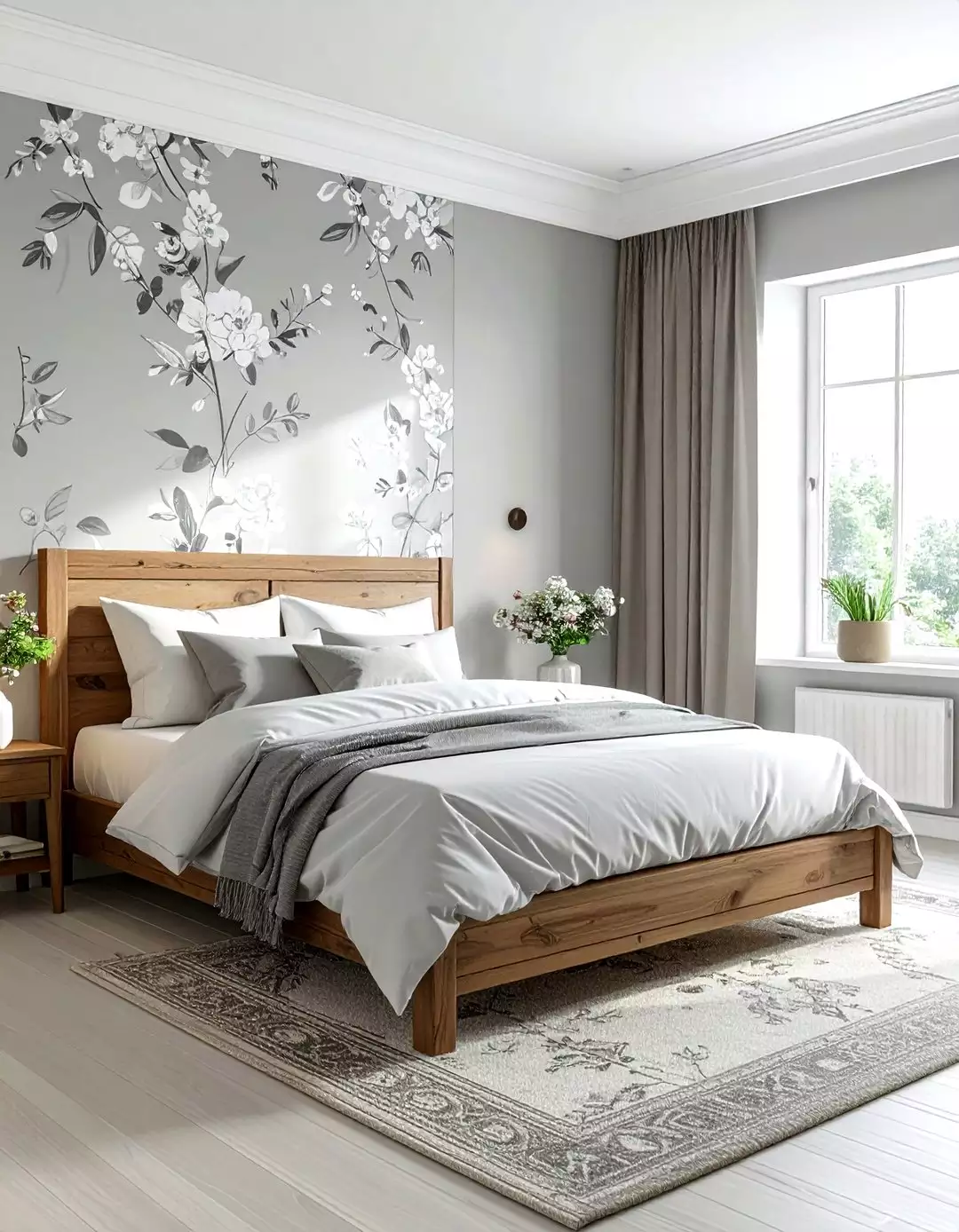
A black-and-white floral pattern spreads across one side of the grey wall behind the wood bed, leaving the remaining wall comparatively plain.
That concentration keeps the pattern from taking over the entire bedroom, while the warm wood frame softens the monochrome design.
The contrast comes from letting one area carry the detail and leaving the rest of the wall quieter.
Make Grey Work Behind the Bed
Grey changes quickly depending on what sits against it. Stone-look and marble-look surfaces make the wall more dramatic, paneling adds quiet structure, while gold, wood, red, yellow, or sage can completely shift the temperature of the same neutral background.
If the wall already has strong texture, leave more of it visible. On a smoother grey wall, one large artwork, mirror, painted shape, or compact gallery can provide enough contrast above the headboard. The goal is not to fill every open area, but to give the bed wall one clear visual direction.