
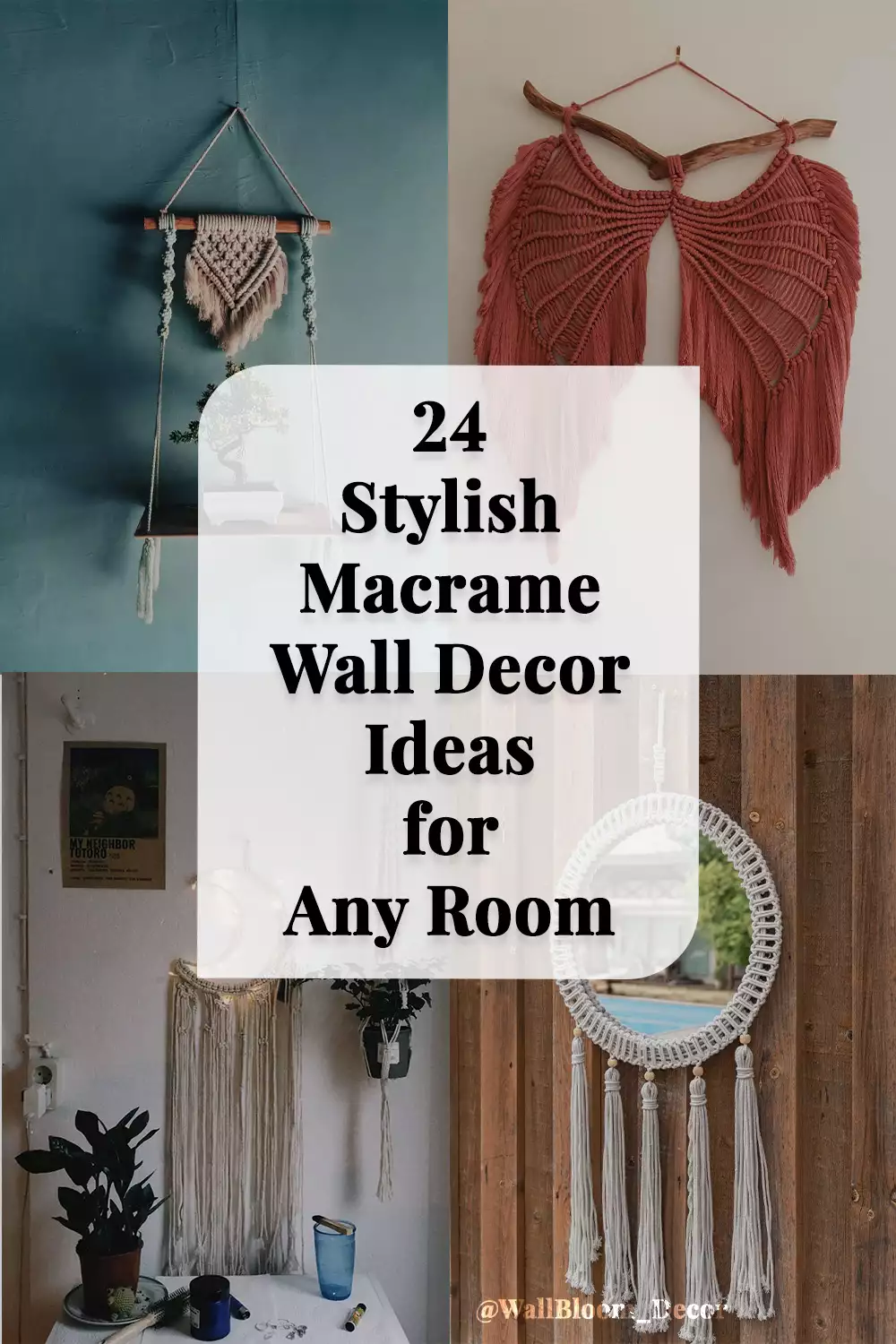
Macrame can do much more than fill an empty wall with fringe. Depending on the shape and scale, it can soften a wood-paneled surface, add texture above a bed, turn a mirror into a focal point, hold plants, or even provide a little extra storage.
These macrame wall decor ideas range from compact woven pieces to oversized hangings, mirrors, plant holders, shelves, and more colorful designs. The useful part is seeing how each piece relates to the wall around it—because size, background color, nearby furniture, and even natural light can completely change how the knots and fringe read in a room.
Colorful Woven Leaves Above a Dresser

Cream cords hang from a curved branch, ending in woven leaf shapes in teal, yellow, and warm orange.
Those stronger colors give the piece much more energy than traditional all-neutral macrame, while the pale wall keeps them from becoming overwhelming. Hanging it just above the dresser also gives that otherwise empty strip of wall a clear purpose.
A colorful piece like this works especially well when the furniture underneath is simple enough to let the textile carry the color.
A Macrame Plant Holder with a Playful Pot

This narrow hanging uses knotted cord to suspend a white pot covered in colorful dots. Because the plant and pot provide most of the visual weight, the macrame itself can stay relatively simple.
It is a useful approach when you want greenery on the wall but do not have much shelf or floor space available.
The tall, slim shape also makes it easy to fit into a narrow patch of wall that would be awkward for framed art.
A Crescent Moon with Long Flowing Fringe

A glowing crescent shape anchors this long cream hanging, with strands falling well below it toward the table. The moon gives the piece a recognizable silhouette before you even notice the knotting.
Nearby plants add more organic shapes, while the little points of warm light make the crescent feel especially atmospheric after dark.
Because the fringe is so long, it benefits from plenty of clear wall underneath rather than being squeezed above tall furniture.
A Diamond Frame Against Hot Pink

This smaller macrame piece gets a huge visual boost from the saturated pink wall behind it.
The pale cords sit inside an angular wood frame, mixing soft fringe with sharper geometry. Large green leaves entering from the corner add another strong color without competing directly with the hanging.
It is a good example of neutral macrame not needing a neutral room. A bold wall can make even a compact woven piece feel much more graphic.
A Macrame Mirror on Rustic Wood

A circular mirror is surrounded by cream knotting and finished with long tassels underneath. Against the rough wood-plank wall, the soft fibers create a clear textural contrast while still fitting the natural palette. The mirror adds function too, so this piece does more than simply occupy the wall.
The narrow vertical fringe also balances the round mirror nicely, stopping the whole design from feeling too compact.
A Feathered Dreamcatcher-Style Wall Piece

A large circular woven center is paired with dangling cords, beads, and soft feather details. There is a lot of texture here, but the pale wall lets the delicate web pattern remain easy to see.
Small touches of blue in the hanging add just enough color without changing the calm overall palette.
Because the circle already has a strong silhouette, this type of piece does not need other wall art crowded around it.
Diamond Weaves with Trailing Greenery

This hanging builds a repeating grid from small diamond-shaped woven sections rather than one solid panel. The open spaces make the piece feel lighter, and plants woven through different parts of the arrangement introduce irregular shapes against all that geometry.
That combination is what makes it interesting—the knots provide structure, while the leaves stop the wall from feeling overly symmetrical.
A Circular Woven Statement with Layered Fringe

This large round design packs much more knotting into a single piece. The detailed circular center draws the eye first, then multiple braided and tasseled strands extend downward to make the shape feel taller.
Against the plain pale wall, those overlapping layers create nearly all of the visual interest.
It is already detailed enough to work by itself, so generous open wall around it helps the pattern remain readable.
An Oversized Macrame Hanging Above the Bed

A broad cream hanging stretches across much of the space above the headboard, with curved rows of knots and fringe forming a soft half-moon shape.
Its width is what makes it work here. A much smaller piece would feel disconnected from the bed, while this one visually anchors the sleeping area without needing several separate frames.
The warm terracotta wall shape behind it also creates extra contrast, making the pale threads much easier to see.
A Hanging Shelf with Macrame Above It

Here, macrame becomes part of a suspended wood shelf rather than a separate piece of wall art.
A compact knotted section hangs above the shelf, while long cords extend down the sides and finish in tassels. The small plant placed on the shelf gives the whole structure a clear focal point.
It is a clever option for a small wall because the same hanging provides texture and usable display space.
Rust-Colored Macrame Wings

Two large woven sections spread outward from a natural branch, creating a wing-like silhouette. The dusty rust color immediately separates this piece from the cream and white designs elsewhere in the article.
Long fringe exaggerates the wing shape and gives it a lot of movement even though the wall itself is plain.
The distinctive outline is strong enough that adding other art immediately beside it would probably weaken the effect.
A Classic Rectangular Hanging Between Two Windows

This neutral macrame piece sits neatly between two windows, where its rectangular form fits the narrow vertical wall almost exactly.
Repeating rows of knots create detail in the upper section, while shorter fringe keeps the lower edge tidy.
The placement is doing a lot of work here. Instead of treating the space between the windows as leftover wall, the hanging turns it into a deliberate focal point without blocking any daylight.
A Dreamcatcher with Bright Tassel Accents

A pale circular woven center is paired with long hanging strands and small accents in yellow, blue, and dark grey.
Those bursts of color break up the cream fibers and make the piece feel much more playful.
Because the colors appear mostly toward the lower half, the circular top remains visually calm. This is an easy way to introduce color through macrame without committing to one fully saturated textile.
A Hanging Plant Above a Coffee Counter

This corner uses macrame on a much smaller scale. A knotted plant holder hangs above the counter beside framed art and other collected objects. Instead of becoming the main focal point, it softens a wall that already has plenty happening.
That makes it useful inspiration for smaller kitchens, counters, or reading corners where a large textile would take over the space.
Three Wall-Mounted Macrame Planters

Three metal wall brackets hold separate macrame plant hangers at different heights.
Using vertical spacing keeps the pots from visually piling into one spot, while the pale cords stand out clearly against the textured grey wall. Each plant gets its own little zone without requiring a shelf underneath.
For a narrow wall, staggering several small hanging plants can fill the height more naturally than one wide piece of artwork.
A Macrame Wall Shelf for Small Storage

This design combines a long woven panel with a narrow shelf running across the lower portion.
The macrame gives the wall softness, while the shelf introduces a practical surface for small items.
Because the shelf is incorporated into the hanging, it feels more decorative than attaching a conventional shelf on its own. The vertical proportions also make it useful above a desk where wall width is limited.
A Small Macrame Hanging Beneath an Eye Mirror

Macrame takes a supporting role in this corner rather than being the main attraction. A metal eye-shaped mirror sits higher on the wall, while a smaller cream hanging fills the area beneath it. The fern below adds another layer of texture and helps the different wall pieces feel connected.
Mixing one woven object with metal and greenery keeps the arrangement from turning into an all-macrame theme.
Two Contrasting Macrame Pieces on Dark Green

A dark olive-green wall creates a dramatic background for two very different woven pieces.
One is tall and narrow with a mustard center and long cream fringe, while the other uses a broader rounded shape with more mustard through the lower portion. Their related colors connect them even though the silhouettes are different. This kind of pairing works because the pieces coordinate without looking duplicated.
A Soft Macrame Frame Around a Round Mirror

Short woven fringe forms a textured halo around this simple circular mirror. Compared with the longer tasseled mirror earlier in the article, this one stays much more compact. The woven edge adds softness without dramatically increasing the mirror’s overall footprint.
That makes it especially useful for smaller wall areas where a long hanging would feel oversized.
Rust and Cream with Extra-Long Tassels

This sculptural wall piece uses a rigid curved top section with cream fringe through the center and two very long rust-colored tassels at the sides.
The asymmetry inside the upper form gives it a more artistic feel than a traditional rectangular macrame hanging.
Those exaggerated side tassels also create a strong vertical line against the otherwise empty white wall. Here, the unusual silhouette is the decoration—there is no need to surround it with more pieces.
A Simple Cream Hanging for a Quiet Corner

This small cream hanging proves macrame does not need to cover half the wall to add texture. A short wood rod supports layered knots and shaggy fringe, while nearby plants bring a little more life into the otherwise simple corner.
Its modest scale suits the narrow wall perfectly. Going much larger here could make the little passage feel crowded.
A Geometric Hanging on a Vivid Pink Wall

A triangular wood structure frames the central woven panel, while smaller strings, tassels, and feather-like details spread outward from the main section.
The intense pink wall makes every pale strand visible and turns a relatively delicate handmade piece into a strong focal point. There is plenty of negative space between the dangling elements, which keeps the design airy despite its width.
Stacked Circular Dreamcatcher Forms

Two circular woven forms are arranged vertically, with the larger one above a much smaller matching piece. That size progression gives the hanging more movement than using two equal circles. Long cords and small tassels continue downward, extending the composition toward the plant underneath.
Because everything stays within one narrow vertical line, it can decorate a tall wall without using much width.
Two Warm-Toned Woven Pieces on Wood Planks

Two matching-size wall pieces sit side by side against a warm wood-plank background.
Each combines a rounded woven upper section with long cream fringe, while orange and darker brown tones add a sunset-like band of color near the top. The wood behind them makes those warmer shades feel especially at home.
Using two pieces creates better balance across the wide wall than one small hanging would, but the gap between them keeps each design readable.
Let the Knots Do the Decorating
Macrame works best when the shape of the piece fits the wall rather than simply filling space. A broad hanging can anchor a bed, a slim plant holder can use an awkward vertical strip, and a woven mirror or shelf can give the wall a practical job at the same time.
Backgrounds matter just as much. Cream fibers can feel soft and subtle on pale walls, graphic against dark green, or surprisingly bold against hot pink. Wood walls add another layer of natural texture, while plants can make loose cords and fringe feel even more relaxed.
The strongest setups do not pile macrame everywhere. One thoughtfully sized piece—or a small group with a clear relationship—is usually enough to let all that knotting, fringe, and texture actually be seen.