


Choosing furniture and decor gets a little more interesting once the walls already have a strong color. Cream can make olive feel brighter, tan leather brings warmth to forest green, and black or blue furniture can create a sharper contrast without fighting the paint.
These room decor for green walls ideas move through bedrooms, living rooms, and dining spaces with very different personalities. You’ll see soft sage paired with natural wood, dramatic emerald with velvet and gold, darker greens with crisp white bedding, plus plenty of plants, artwork, texture, and unexpected color combinations.
Dark Green with an Emerald Sofa and Gold
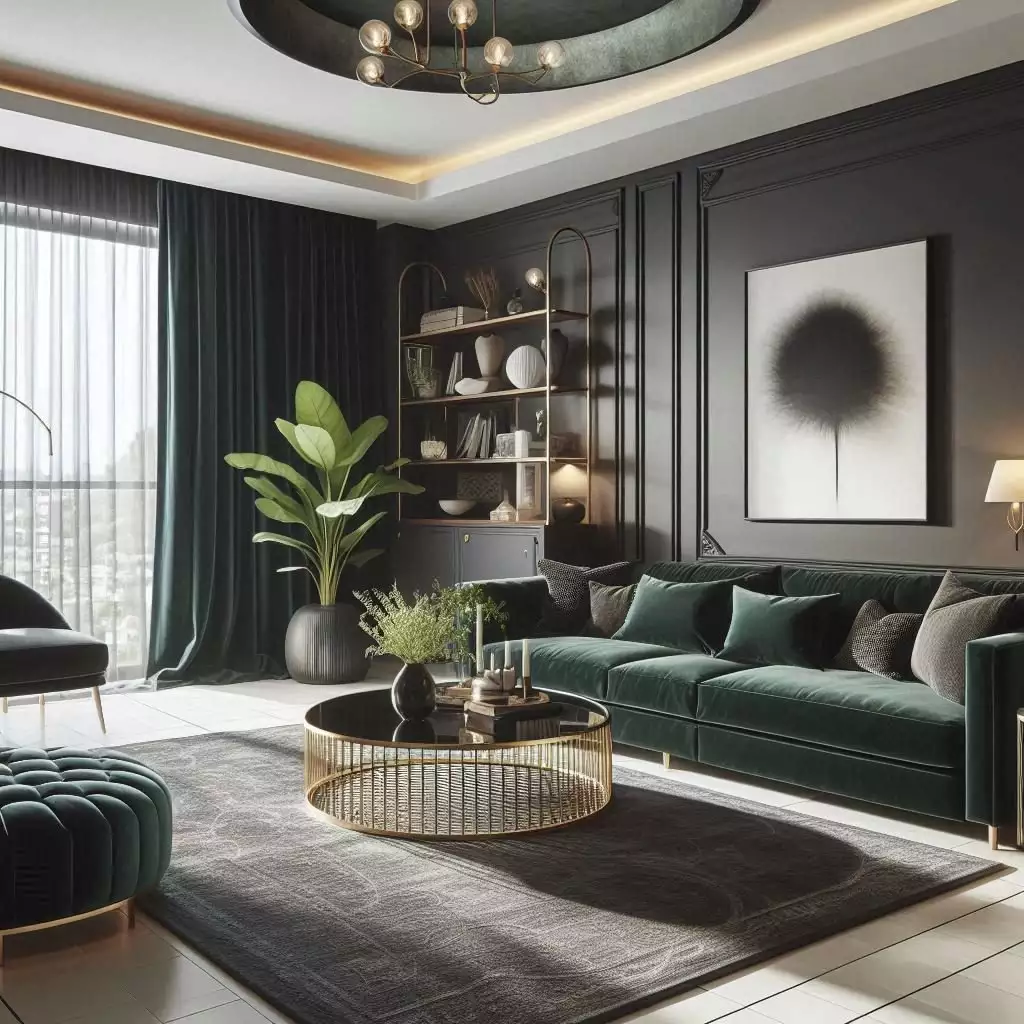
This living room layers a deep green sofa against equally dark green walls, creating a rich tone-on-tone effect rather than relying on contrast.
A gold glass coffee table and metallic lamp introduce just enough brightness to separate all that green. Cream cushions help too, giving the eye a few lighter resting points.
When both the sofa and wall are dark, reflective metal and pale textiles can stop the room from becoming visually flat.
Sage Green with Oak in the Dining Room
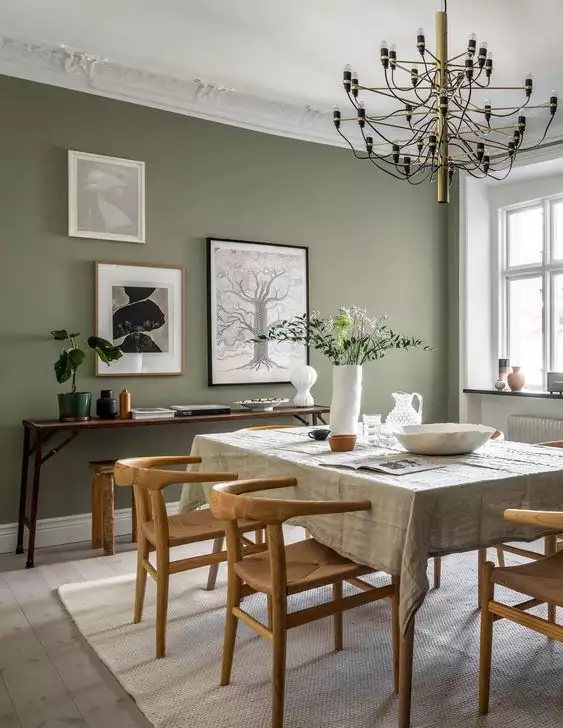
Soft sage walls give the dining area a calm backdrop, while the oak chairs and table bring in warmer natural color.
The artwork above the console is spaced loosely rather than filling every inch of the wall. That matters because the dining furniture already introduces plenty of repeated lines and shapes.
Sage and light wood are an easy pairing when you want color without making the room feel heavy.
Olive Green Surrounded by Plants
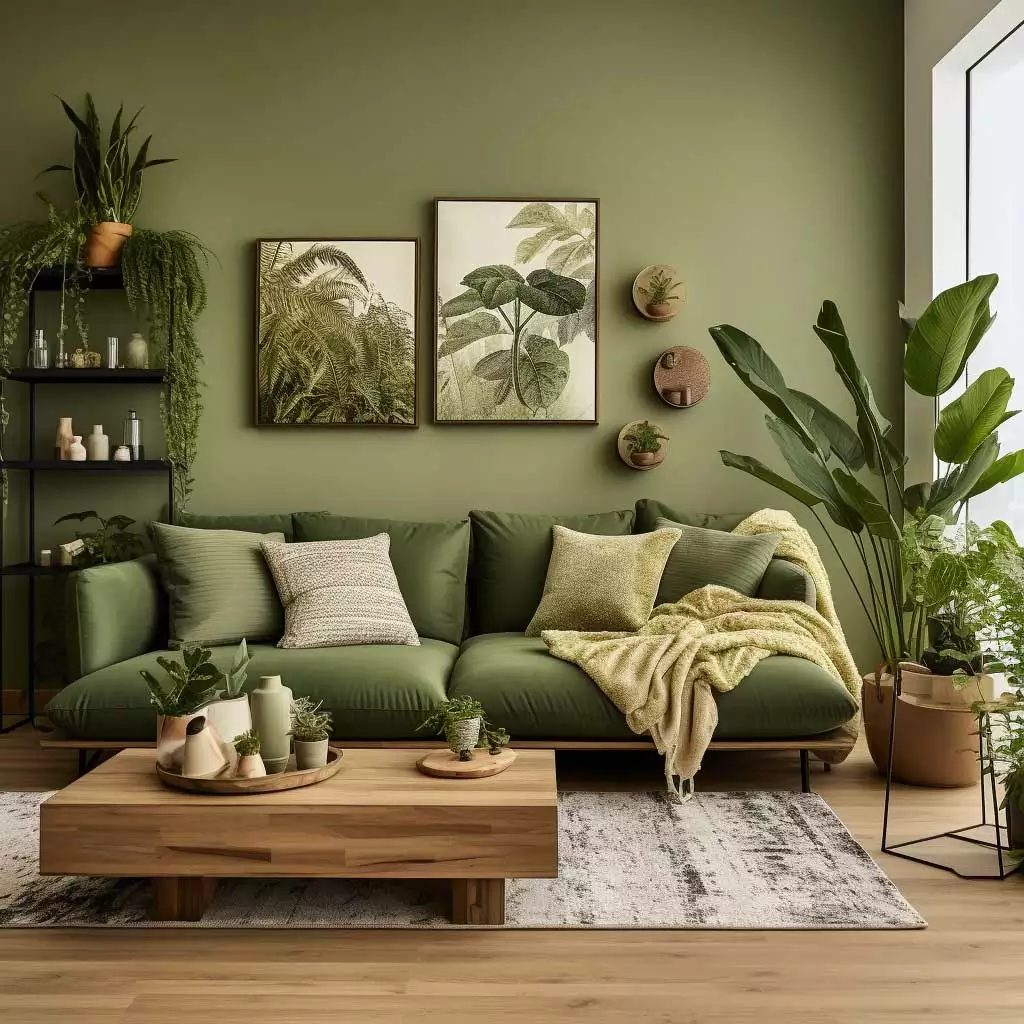
This living room almost lets the plants disappear into the olive wall.
Different leaf shapes create most of the texture, while the simple wood coffee table keeps the center of the room grounded. Botanical artwork continues the leafy theme without looking like a separate decorating idea.
The fun here is in layering greens rather than trying to match every shade exactly.
Emerald Green with Oversized Abstract Art
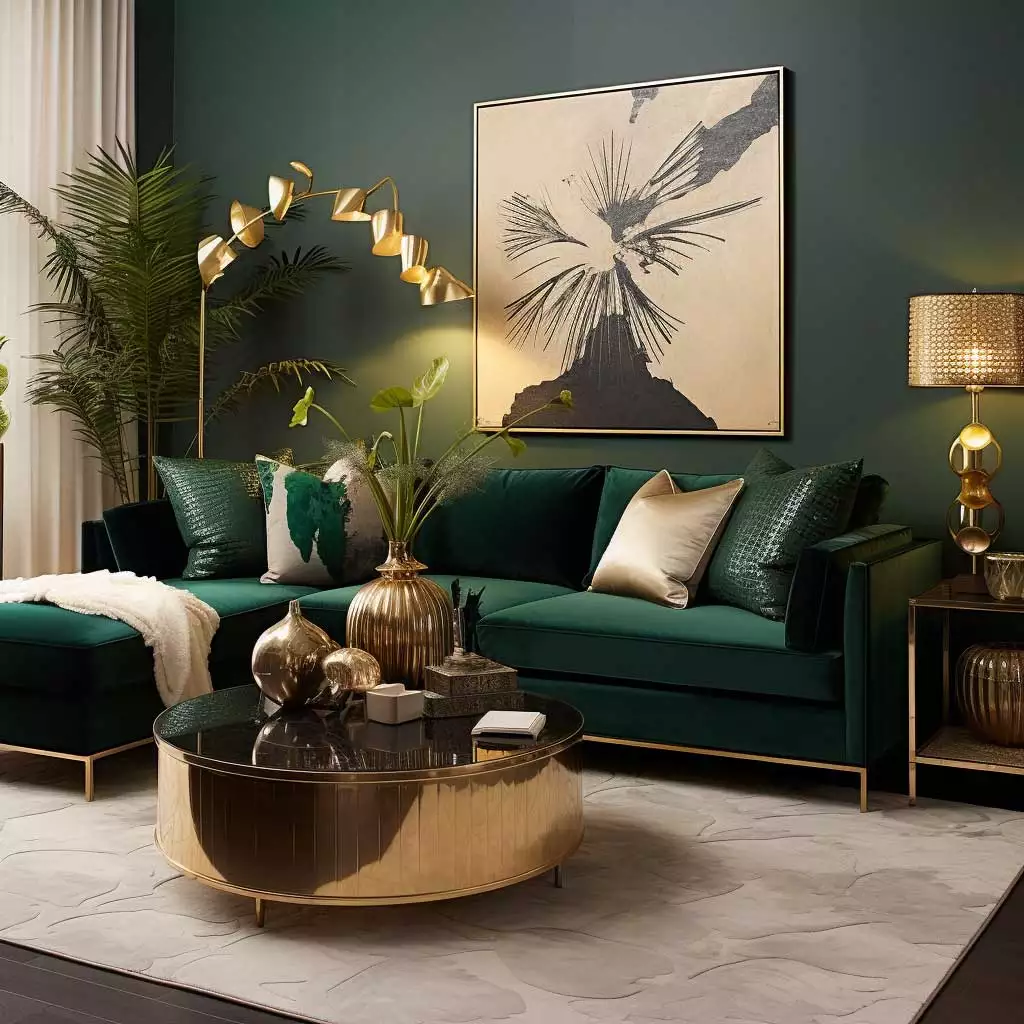
A large pale abstract artwork breaks up the saturated green wall and immediately gives the seating area a focal point.
The emerald sofa stays close to the wall color, while a gold floor lamp introduces a warmer accent. Because the artwork is oversized, the wall does not need a collection of smaller frames competing around it.
One large piece can be especially effective on a strong wall color because it creates a clean visual break.
Soft Sage Wrapped Around a Bright Living Room
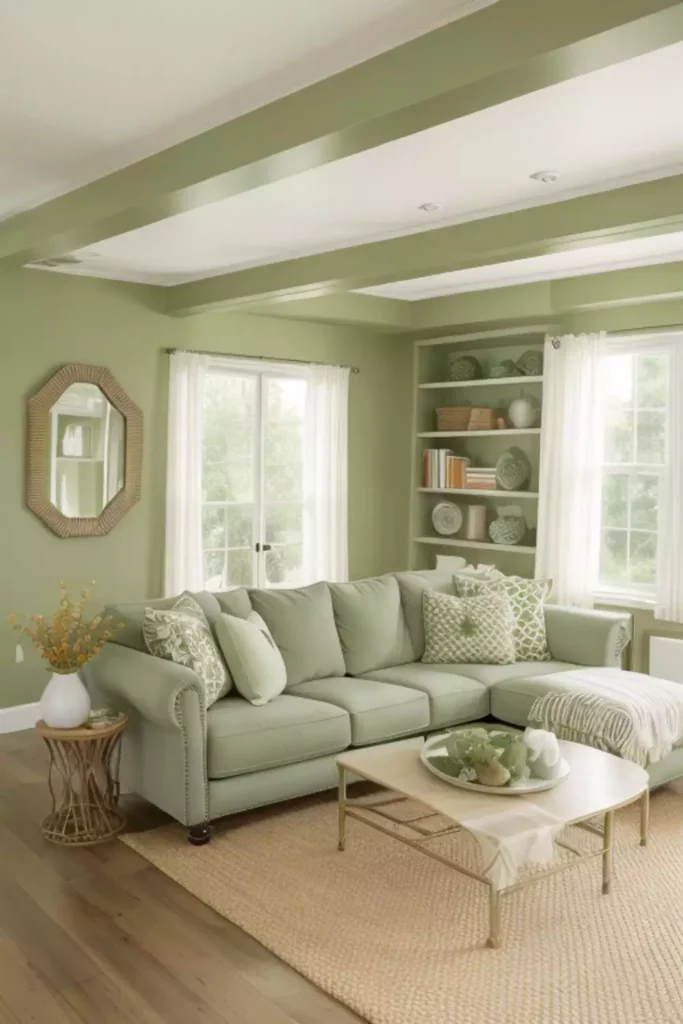
This room keeps almost everything gentle: sage walls, a pale sectional, light flooring, and plenty of daylight. Because the sofa sits close to the wall color, the room feels continuous rather than divided into strong blocks of furniture and paint.
This kind of low-contrast palette works best when texture and light do some of the decorating instead.
Sage Green with Mustard and a Gallery Wall
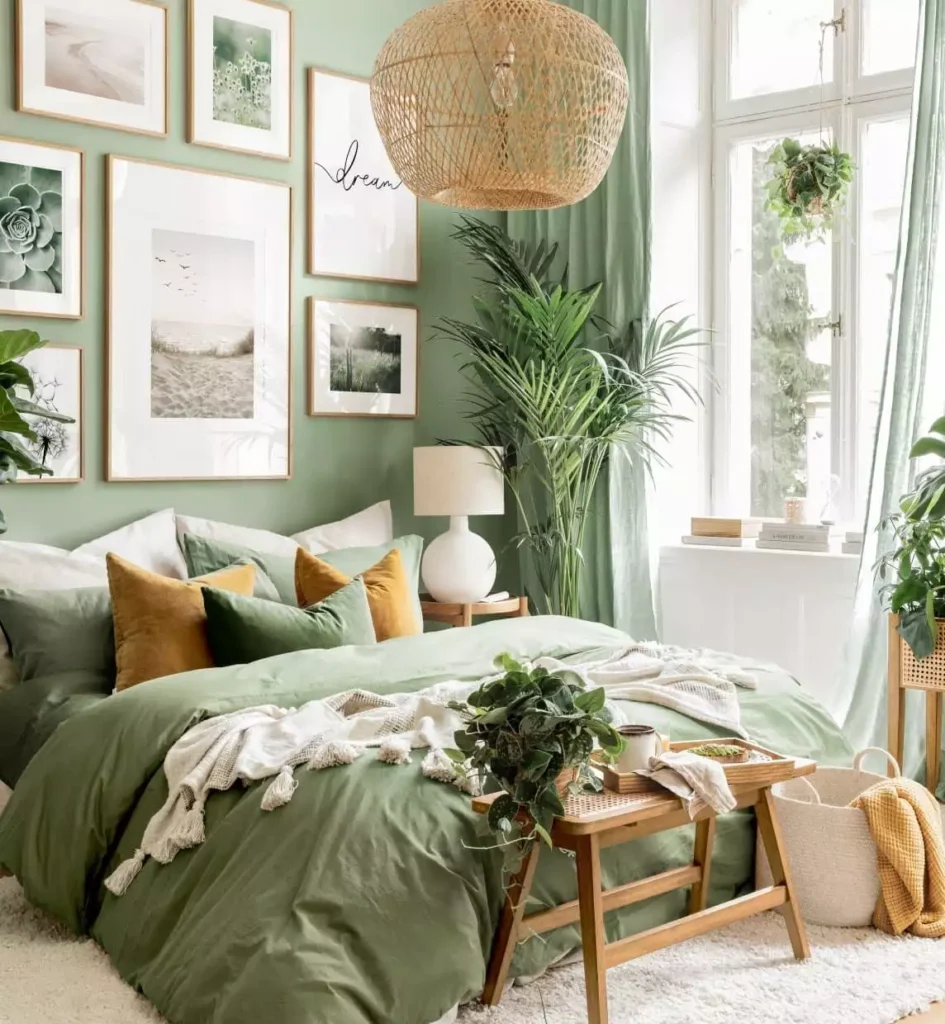
The sage walls create a quiet background for a loose gallery above the bed, while mustard pillows add warmth near the center of the room.
A woven pendant light introduces another natural tone overhead, helping the wood and warm textiles feel connected.
The artwork varies in size, but the grouping stays concentrated over the bed. That keeps it from drifting randomly across the wall.
Forest Green with Leafy Textiles and Plants
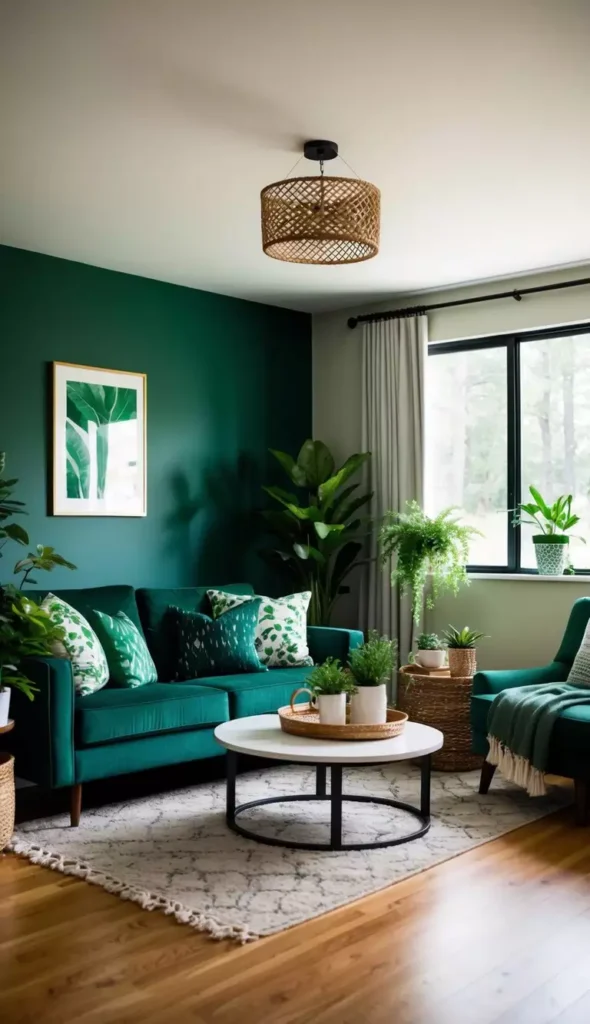
A deep green sofa nearly blends into the forest-green wall, giving the room a lush, layered look.
Botanical cushions and real plants push the theme further, while the woven pendant and lighter floor stop everything from becoming one continuous dark green mass.
When using several greens together, variation in texture can be more useful than trying to create strong color contrast.
A Dark Green Library with Mustard Seating
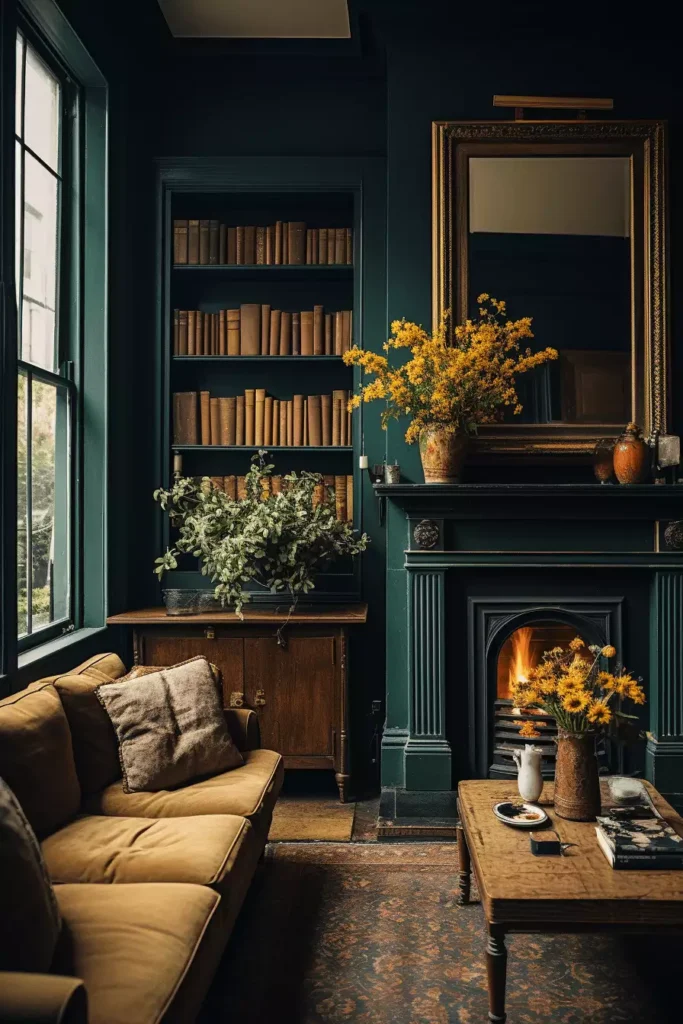
Dark green walls suit this library because the bookshelves, fireplace, and layered objects already give the room a cozy, enclosed character.
The mustard sofa adds a warm interruption to the darker palette, while the large mirror over the fireplace catches some light and keeps the back wall from feeling too dense.
This is a room where the deep wall color supports the architecture instead of acting as the only feature.
Emerald Green in a Dramatic Bedroom
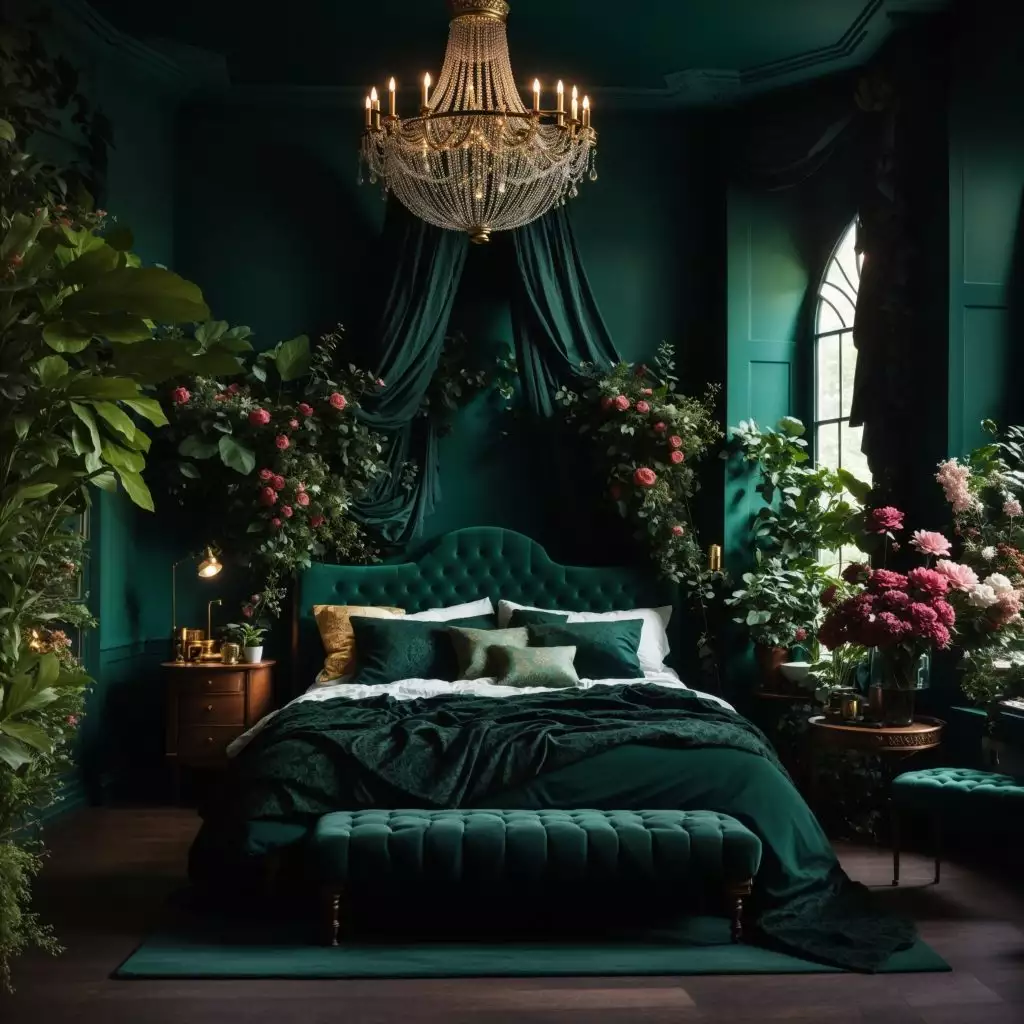
This bedroom commits fully to green with dark emerald walls, deep bedding, and heavy drapery around the bed.
Flowers, warm lamps, and the chandelier introduce softer highlights against the dark backdrop. The effect is intentionally theatrical, so the room does not need much pale furniture to calm it down.
For a maximal bedroom, repeating the wall color through textiles can make all the decorative layers feel more connected.
Lime Green with a White Sofa
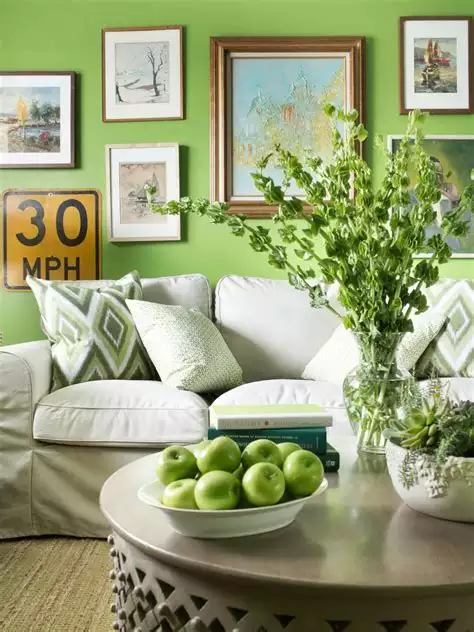
Bright lime walls bring far more energy than sage or olive, so the white sofa is doing important balancing work.
The mixed framed art adds character without introducing one oversized competing color, and small green accents around the room repeat the wall in lighter doses. With a wall this vivid, neutral furniture gives the color somewhere to breathe.
Olive Shiplap with Cream Upholstery
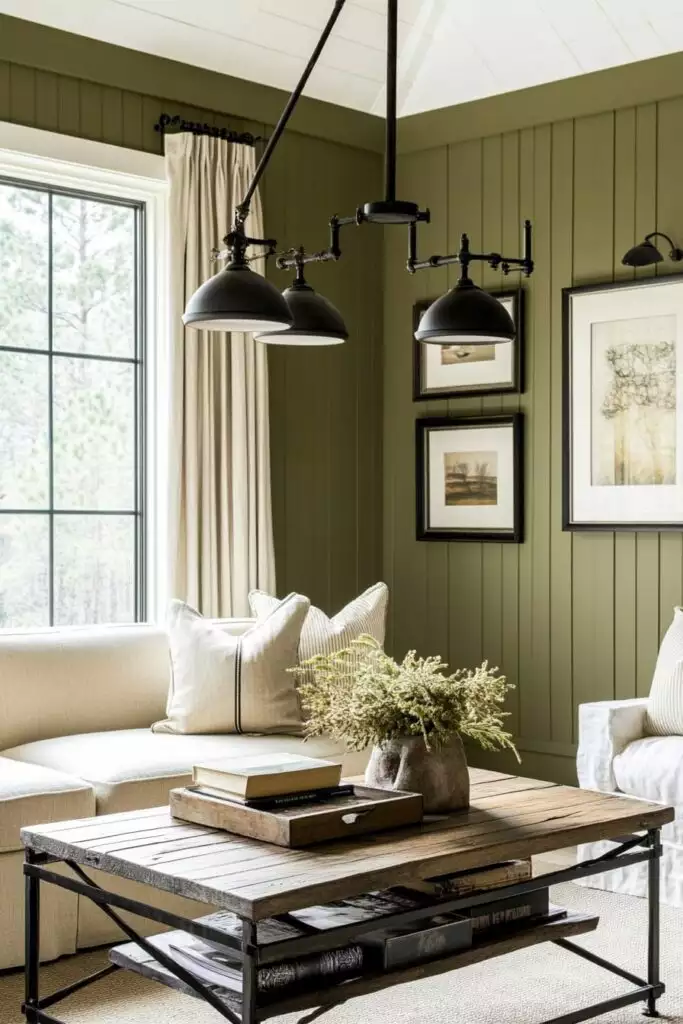
Painting the wall paneling olive makes the texture more visible than a flat painted surface would be.
A cream sofa creates strong contrast, while black hanging lights introduce crisp darker lines overhead. The rustic table sits comfortably between those extremes. The wall already has plenty of visual structure, so it does not need much extra decoration.
Olive Green with Blossom Artwork
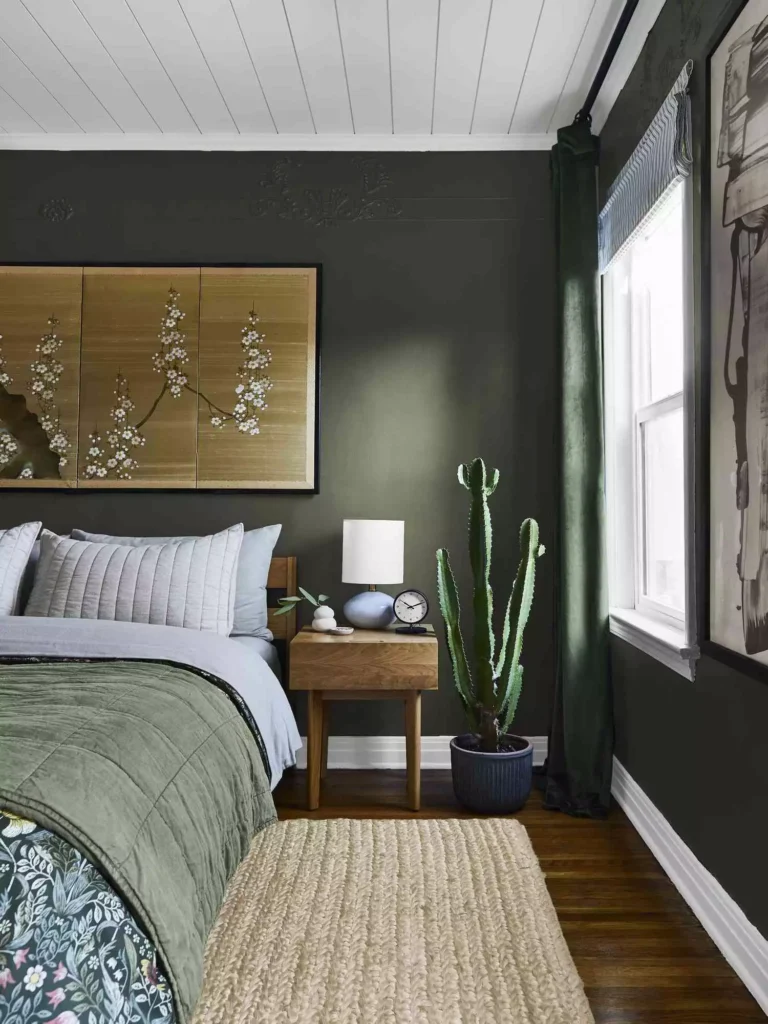
A wide blossom artwork anchors this bedroom wall above the bed and introduces warmer gold and brown tones against the olive.
The green quilt repeats the wall more softly, while the cactus adds another vertical shape near the window. The artwork works partly because its proportions relate to the bed—it feels substantial enough for that long stretch of wall.
Dark Green Across the Walls and Ceiling
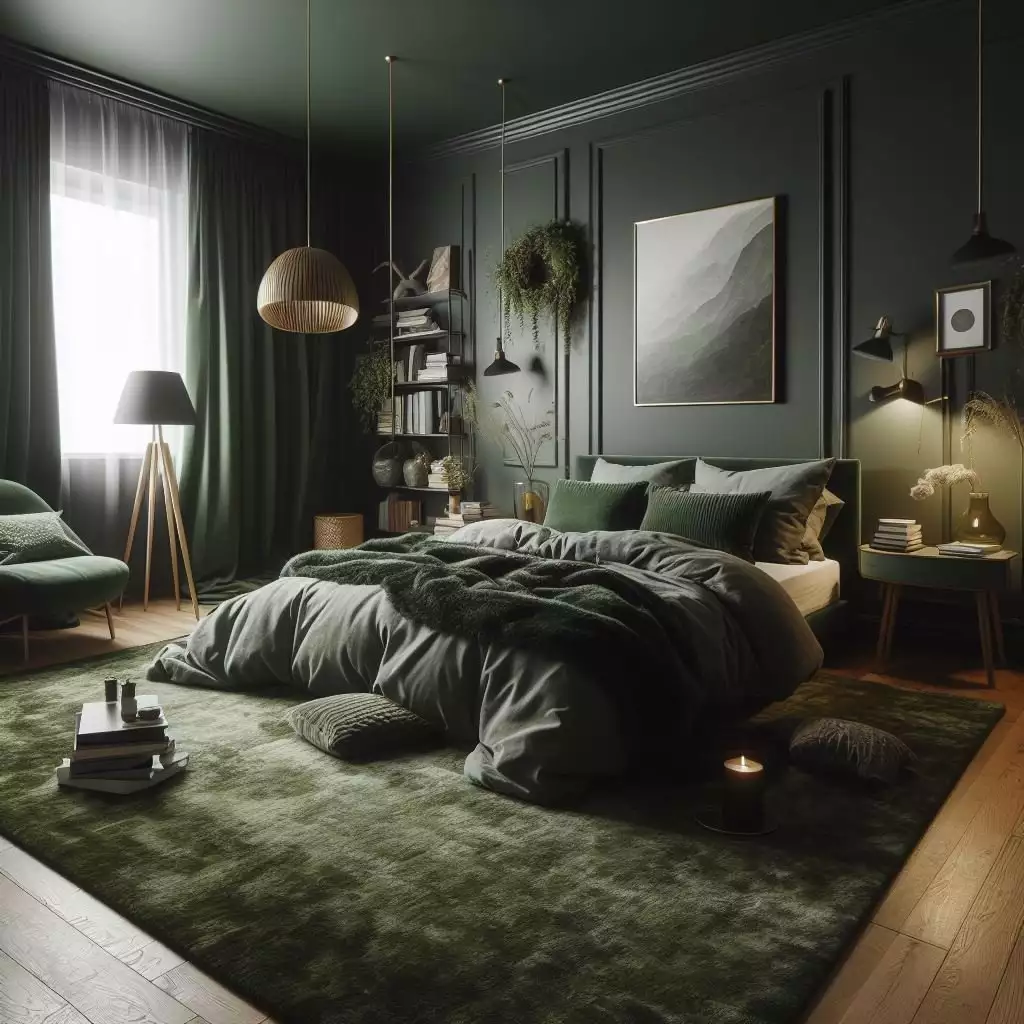
Using the same deep green on the walls and ceiling turns this bedroom into a much more enclosed, cocoon-like space.
Soft bedding, velvet cushions, and the plush rug are important here because they keep the dark surfaces from feeling severe.
Painting the ceiling too is a bold choice, but in a bedroom it can make the room feel intentionally intimate rather than simply dark.
Emerald Green with Fine Gold Details
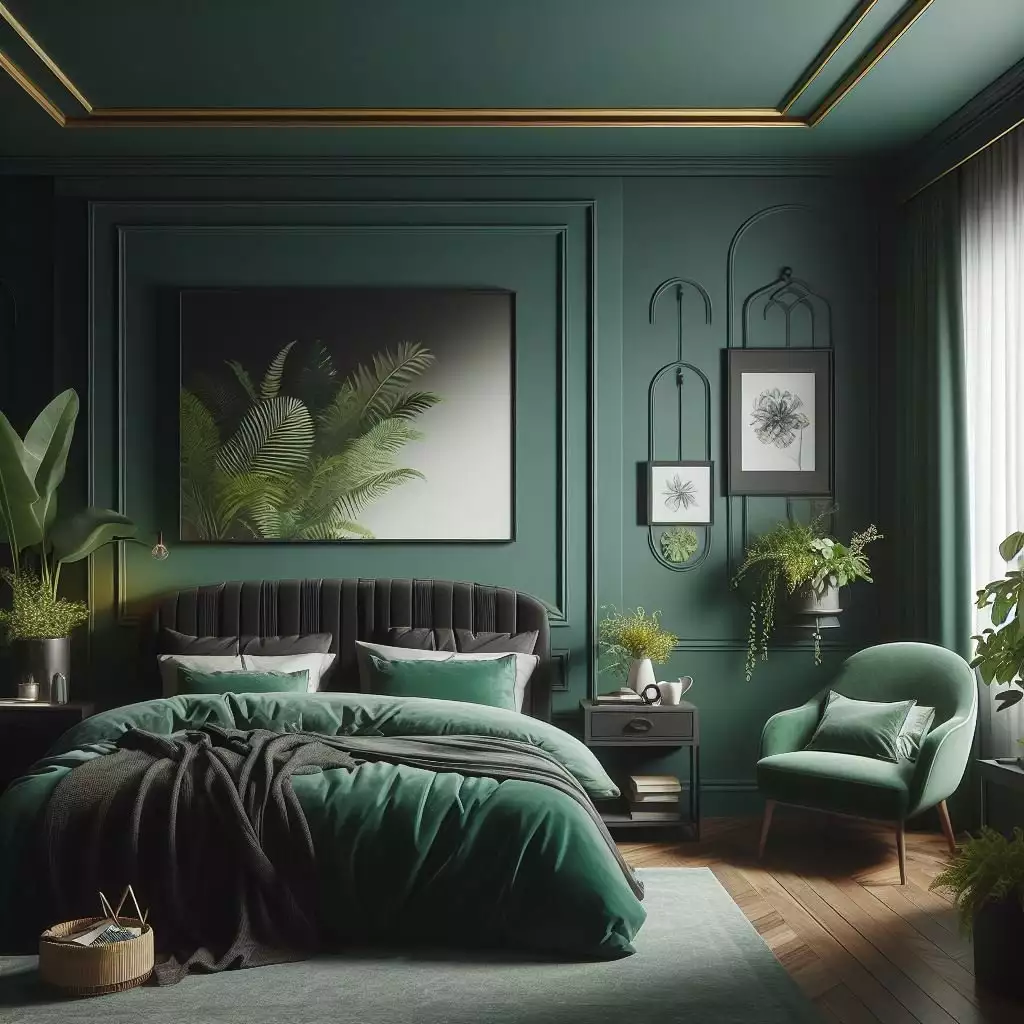
This room uses gold more delicately, with narrow trim near the ceiling instead of large metallic furniture. Palm artwork and a green chair continue the color story, but their lighter details prevent the wall from feeling uninterrupted.
Small metallic lines can be enough when the green itself is already doing most of the dramatic work.
Olive Green in a Layered Boho Living Room
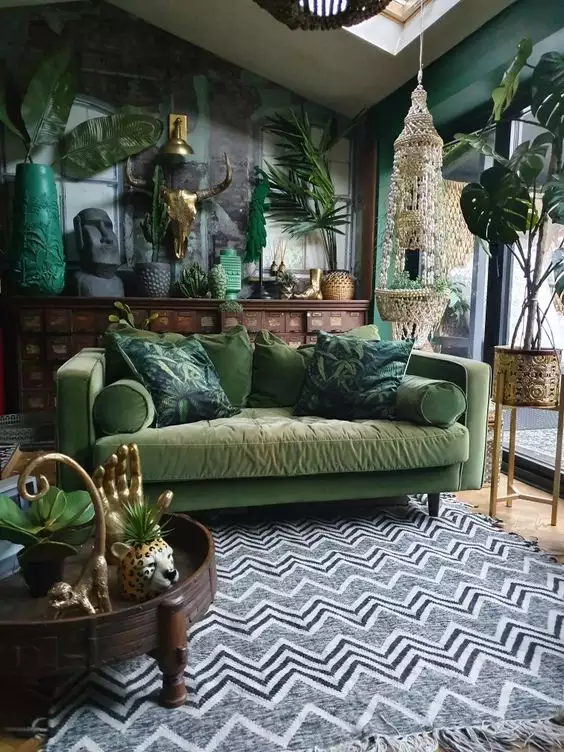
Olive walls give this plant-filled living room a warm base for patterned cushions, a velvet sofa, a woven pendant, and the graphic rug.
There is a lot happening, but most of the colors stay earthy enough to work together. The plants also help bridge the wall and furniture rather than sitting as isolated green accents.
In a layered room like this, repeating materials—woven fibers, wood, greenery—can create more unity than matching every color.
Sage Green with Fairy Lights and Soft Bedding
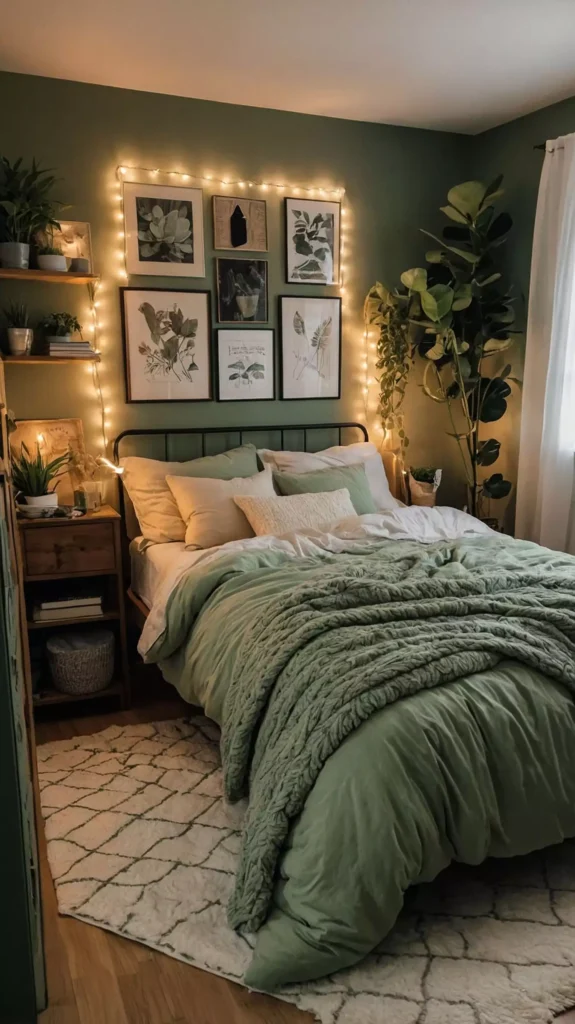
The sage wall stays calm while fairy lights, framed pieces, and plants bring more personality to the bedroom. A chunky knit blanket adds heavier texture at bed level, balancing all the smaller details on the wall above.
The lighting is decorative, but it also softens the gallery after dark, making the wall feel less formal.
Sage Green with a Black Sofa
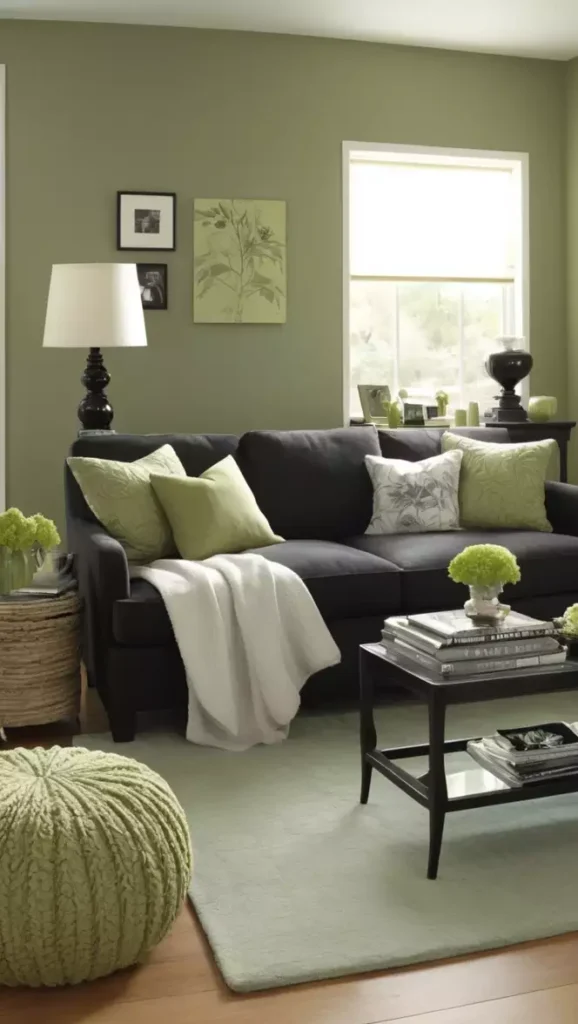
The black sofa gives this pale green wall much stronger contrast than cream or tan furniture would. Bright green cushions bridge the two colors, while the knitted pouf softens the darker seating area with a chunkier texture.
This combination works because black is concentrated in one large piece instead of being repeated heavily around the room.
Sunlit Sage with a Matching Sofa
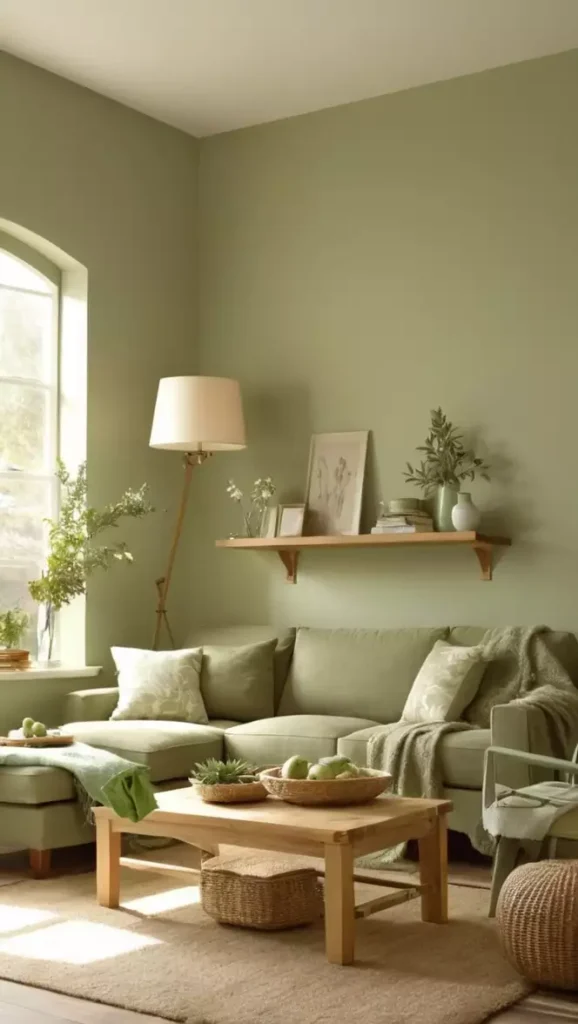
This is one of the quieter spaces in the set. The sofa stays close to the wall color, and one simple wood shelf provides just enough contrast above it. Daylight creates most of the variation across the green surfaces.
When the furniture and wall are this similar, keeping accessories sparse helps the room feel calm rather than washed together.
Paneled Green Walls with Two Matching Sofas
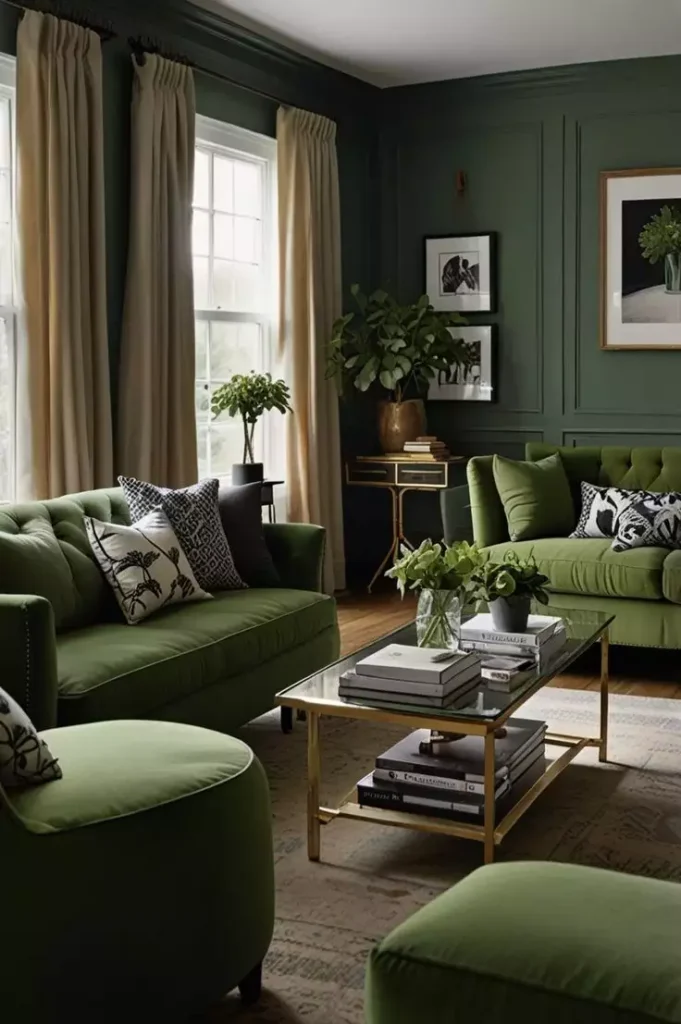
Dark paneled walls give this living room strong architectural structure before any furniture is added.
Two matching emerald sofas face one another, while cream curtains and a glass coffee table lighten the center. The symmetrical arrangement makes the room feel formal without requiring a complicated wall display. The wall molding itself is effectively part of the decor here.
Olive Green Behind Floral Bedding
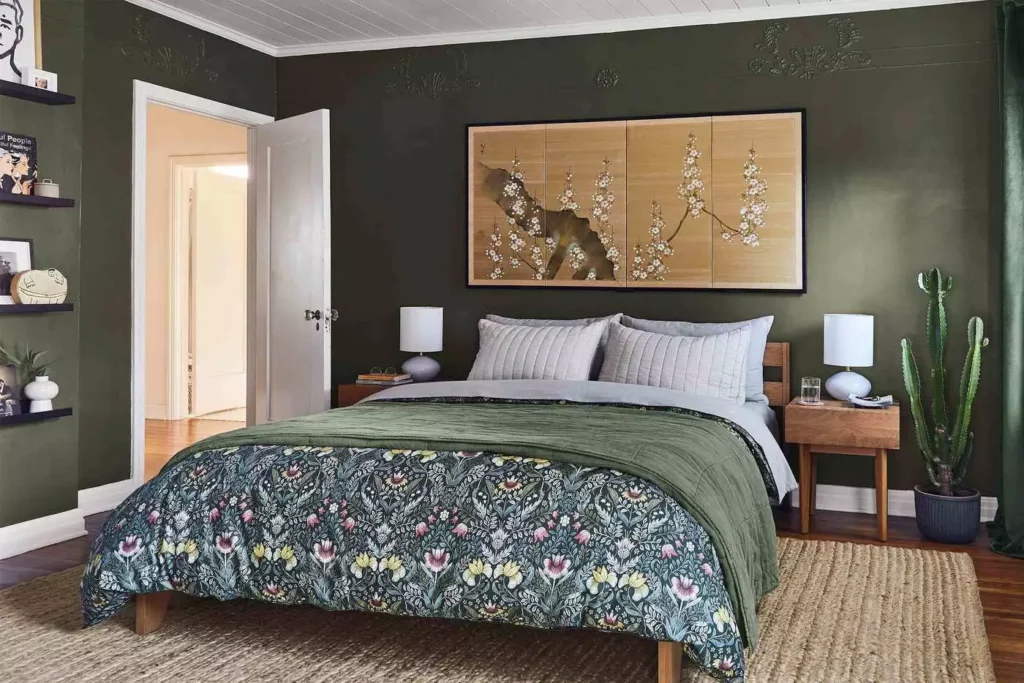
A patterned floral bedspread becomes the main feature against the solid olive walls.
Because the wall is relatively quiet, the bedding can carry more color and detail without making the room confusing. Matching lamps on both sides give the bed a clear frame.
This is a useful approach when you love patterned textiles: keep the wall color strong but uncomplicated.
Forest Green with Landscape Prints
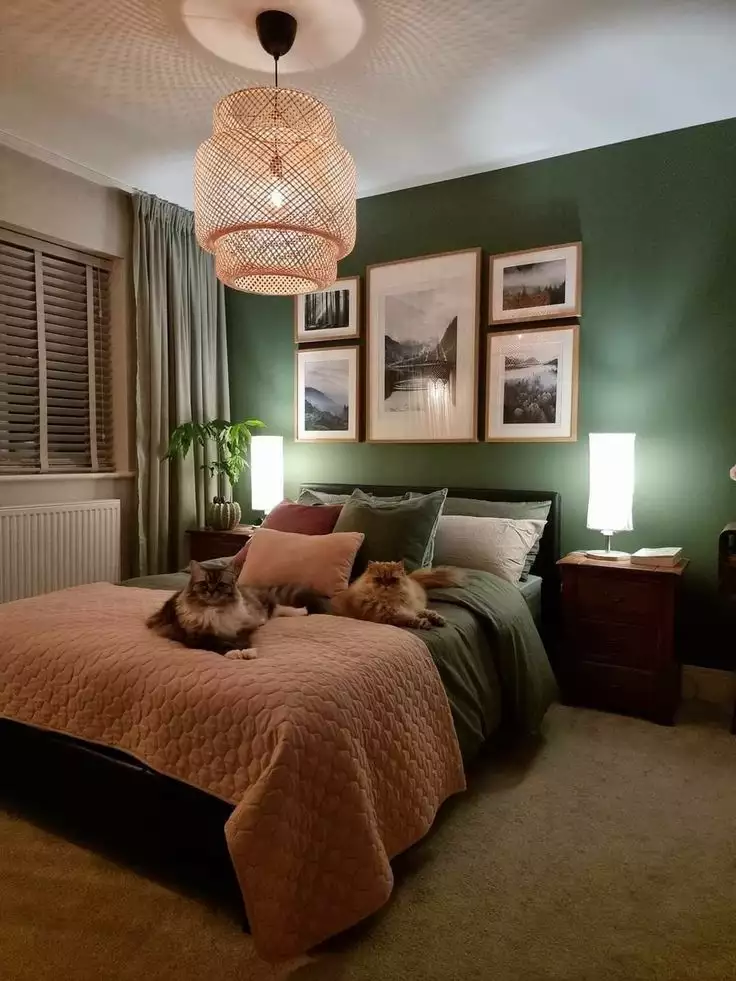
A group of landscape prints above the bed echoes the darker, natural mood of the forest-green wall.
The rattan pendant introduces warmth, while pale bedding prevents the room from becoming too visually dense. Even the cats on the bed make the space feel pleasantly lived-in rather than staged.
The artwork works because it shares the mood of the wall without disappearing into exactly the same colors.
Rich Green with Tan Leather
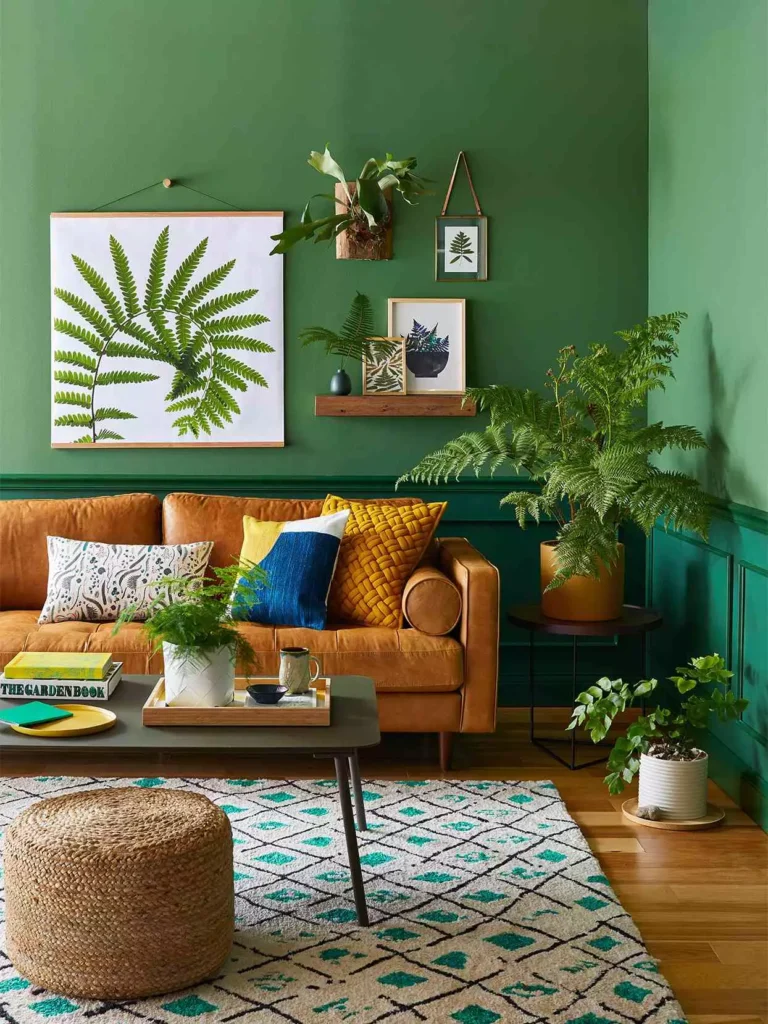
Tan leather immediately warms up the deep green wall and gives this midcentury-style living room a strong color contrast.
Fern prints continue the botanical connection, while plants and woven pieces add softer texture around the more structured sofa. Green and tan work particularly well because both can feel earthy without looking overly matched.
Olive Green Under a Sloped Ceiling
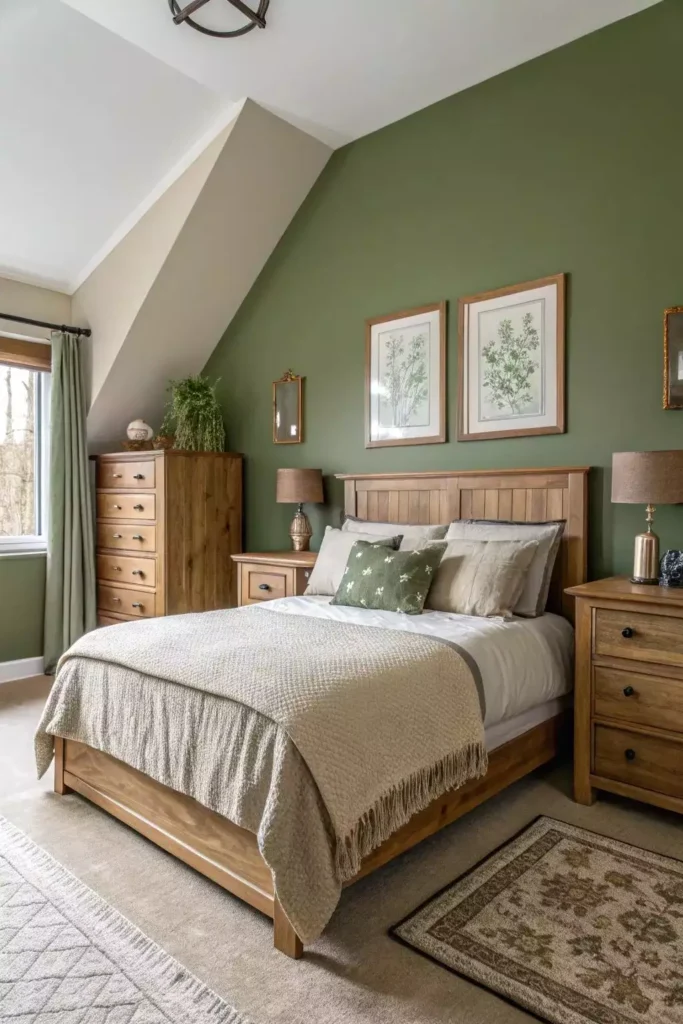
The olive paint continues into the angled section of this bedroom, making the awkward architecture feel intentional rather than something to disguise.
Oak furniture introduces warmth, while two simple botanical prints keep the wall above the bed from feeling empty. With a sloped ceiling, carrying one color across the irregular surfaces can make the room feel visually calmer.
Olive Green with a Blue Armchair
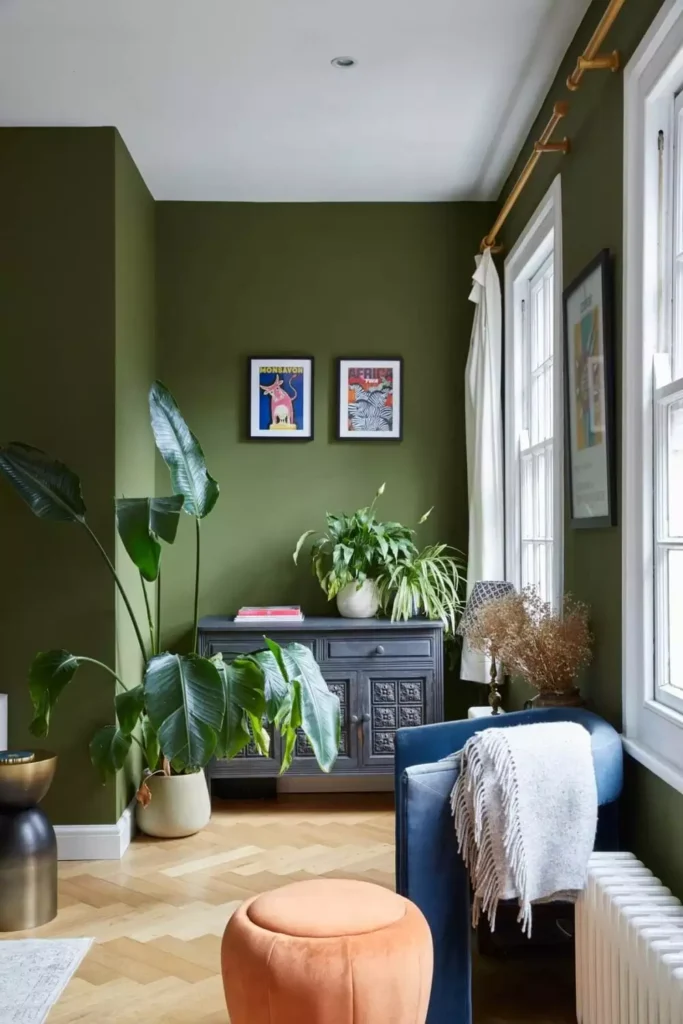
The blue chair is the surprise in this olive room, and it works because the two colors are different without fighting each other.
Large plants fill the brighter side of the room, while the dark carved cabinet adds more visual weight near the wall. Art and smaller objects make the space feel collected rather than perfectly coordinated.
An unexpected accent color can be more interesting than repeating another shade of green.
Olive Green with Oversized Minimal Art
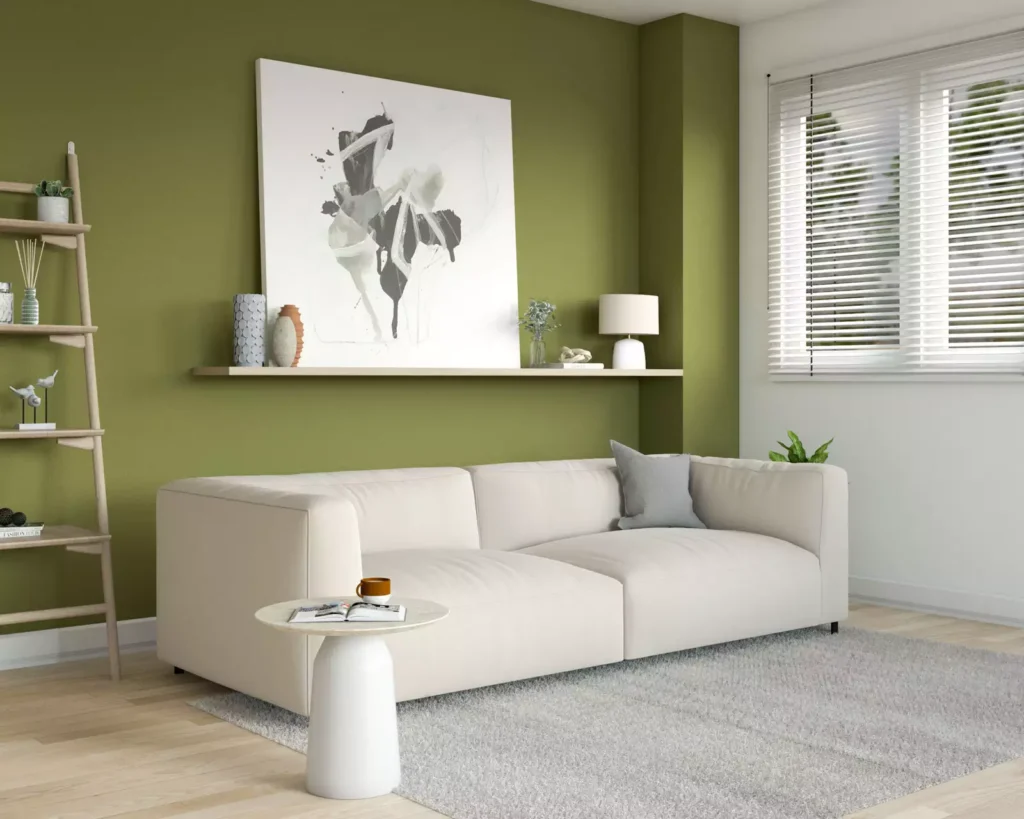
This room takes a much cleaner approach to olive walls.
A large abstract artwork gives the wall one clear focal point, while the cream sofa keeps the seating area bright. The ladder shelf carries only a handful of objects, so the room stays visually open.
When the wall color already adds personality, minimal decor can actually make it feel stronger.
Sage Green with a Cream Sectional
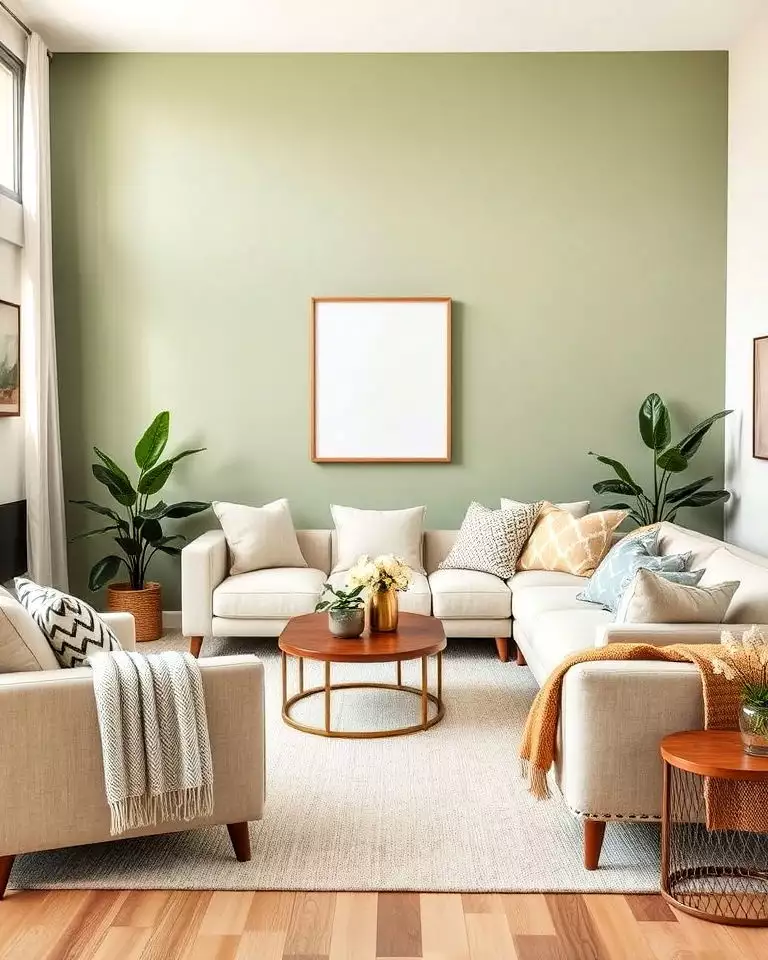
The cream sectional creates a soft contrast against the sage walls without making the room feel stark.
A round wood coffee table warms the seating area, and one large framed artwork prevents the long wall over the sofa from feeling bare.
The combination is easygoing because none of the colors are extreme—sage, cream, and mid-tone wood all sit comfortably together.
Sage Green Around a White Fireplace
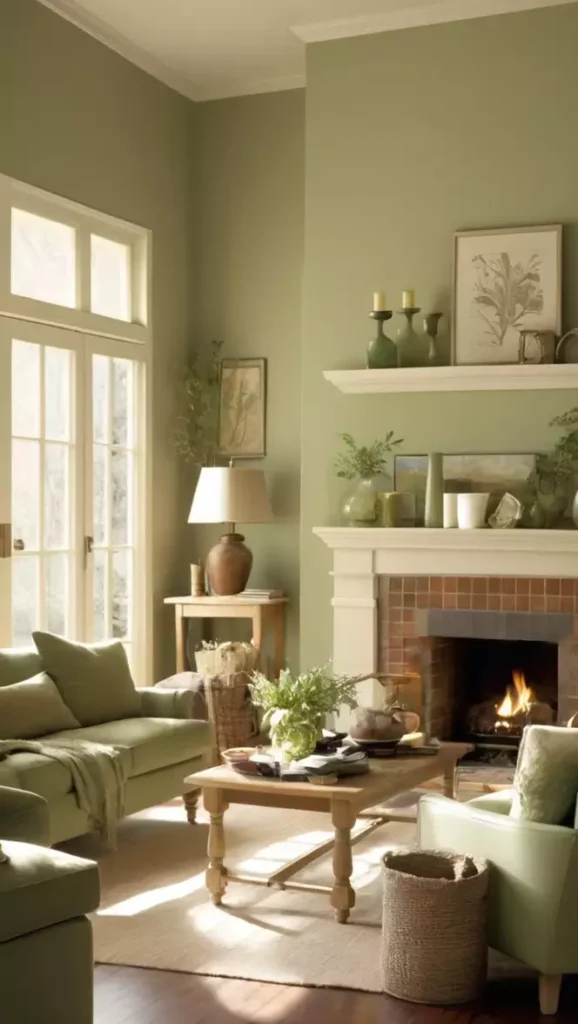
A white fireplace gives this sage-green room a bright architectural anchor.
Natural light from the French doors shifts the wall color throughout the day, while the wood coffee table and woven basket add warmer texture lower in the room.
When a room already has a fireplace, letting that feature stay visually dominant can be better than filling the surrounding green wall with extra art.
Sage Green with Tan, Cream, and Wicker
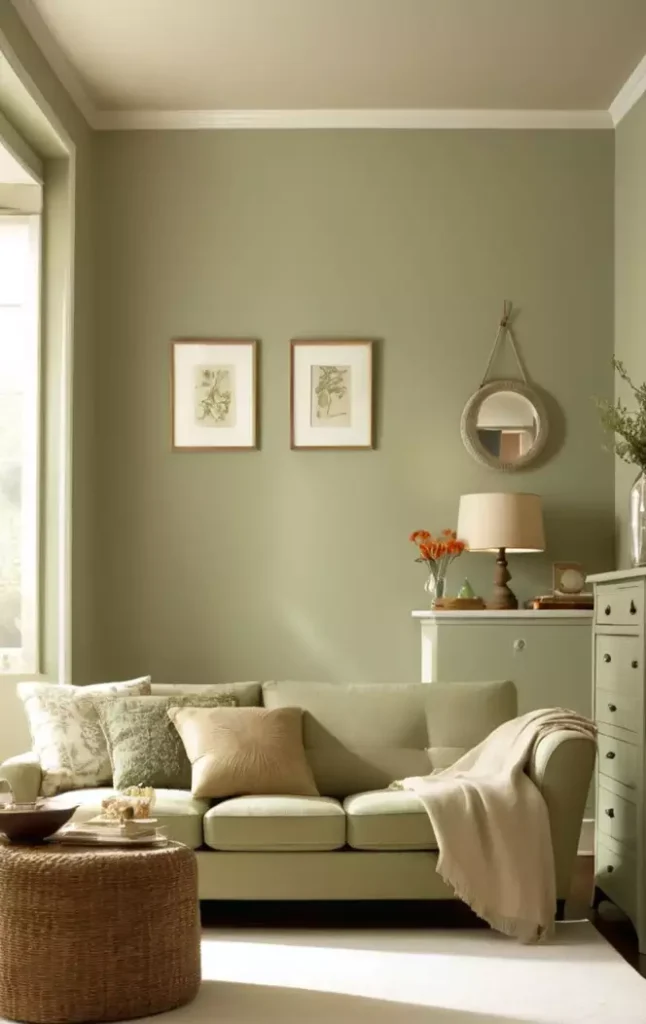
This living room builds almost everything around a soft natural palette. Tan and cream cushions sit against the sage wall, while the wicker ottoman and round woven mirror introduce texture without bringing in another strong color.
The result is warm rather than overly green because the natural materials take up so much of the visual space.
Light Sage Across an Open Living and Dining Area
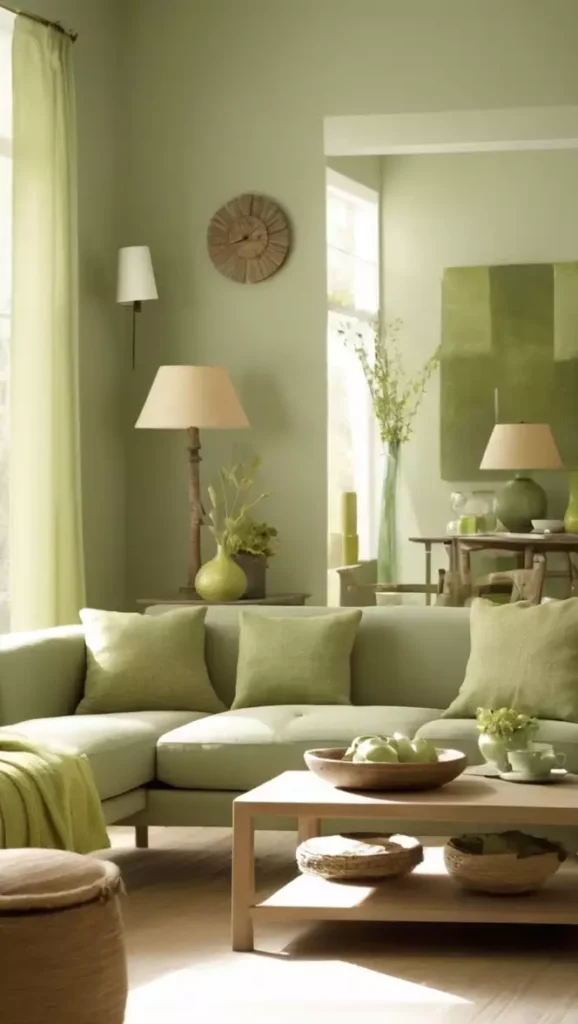
Using one pale green across both zones helps this open-plan space feel connected.
The linen sofa stays light and relaxed, while wood furniture in the dining area adds enough warmth to separate the functions without needing another wall color.
In open rooms, repeating one wall shade can make transitions feel much smoother than giving every zone its own accent wall.
Olive Green with Crisp White Bedding
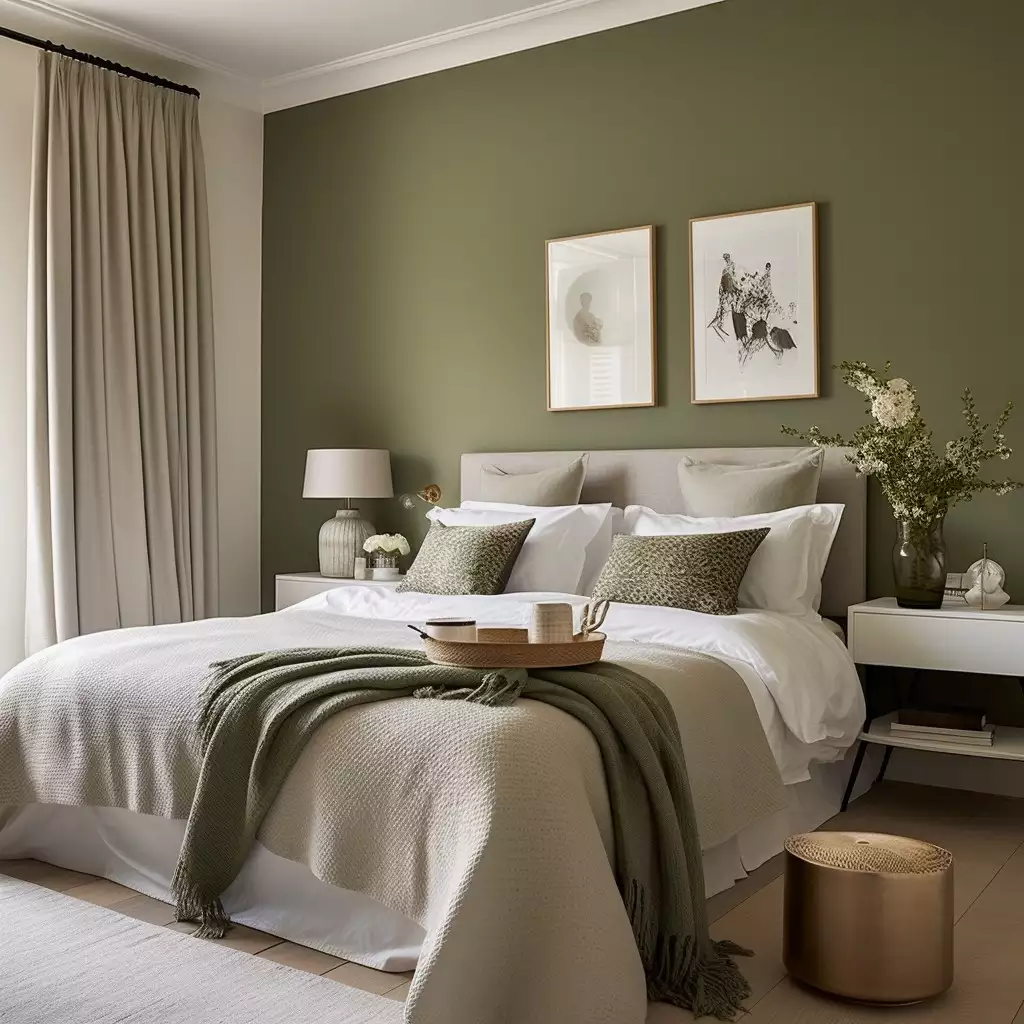
White bedding creates one of the strongest contrasts in the article against these olive walls.
Two matching framed prints keep the wall above the bed balanced, while a taupe throw adds a softer middle tone between white and green.
The simplicity is what makes this bedroom work. The wall gets to be the color statement without needing busy accessories around it.
Paneled Dark Green with Oval Mirrors
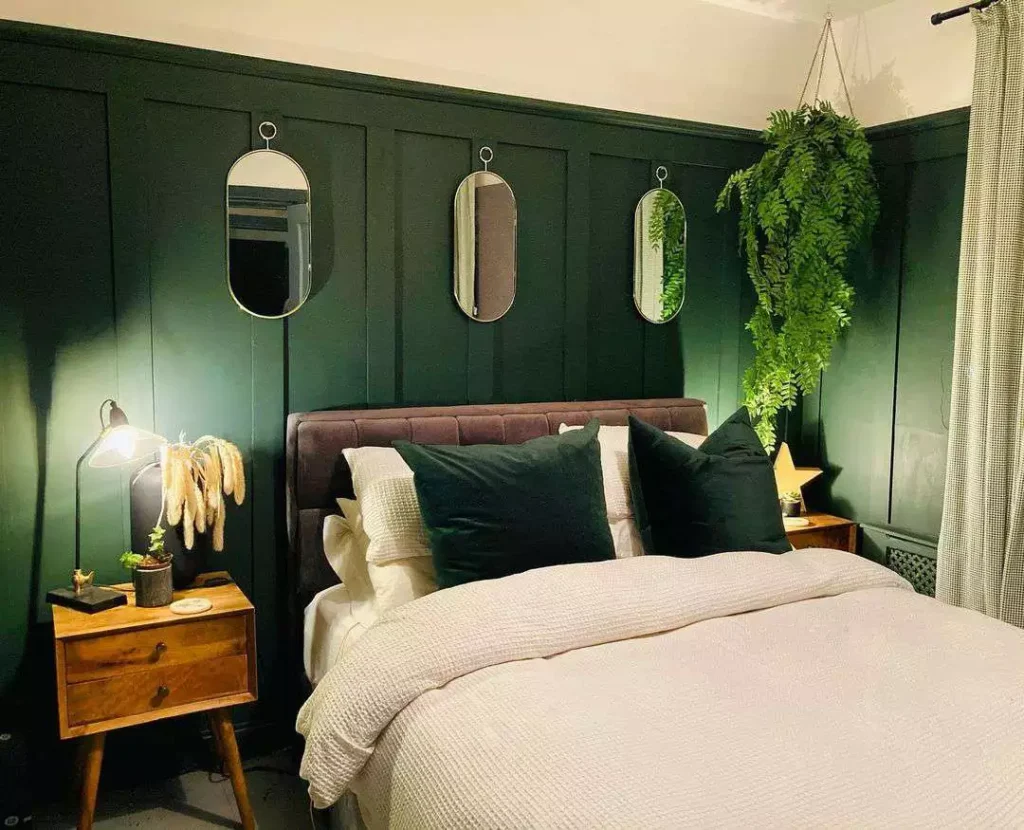
Dark green paneling creates depth behind the bed, while three oval mirrors add lighter reflective shapes across the upper wall.
Cream bedding keeps the center of the room bright, and the hanging fern softens one corner with an irregular, trailing form.
The combination works because the decor does not hide the paneling. Instead, the mirrors sit lightly over it and allow the wall texture to remain part of the design.
Green Can Carry More Than You Think
Across these rooms, green is doing a lot of different jobs. Sometimes it acts like a quiet backdrop behind cream furniture or simple artwork. In other spaces it becomes the main feature, wrapping the room in emerald, forest, or olive tones.
What makes the strongest rooms interesting is that they do not all decorate green the same way. Some bring in tan leather, some lean on white bedding, others use gold, black, blue, wood, plants, paneling, or patterned textiles. That variety is what keeps green walls from feeling like one fixed style.
Once the wall color is in place, the room can still go rustic, modern, romantic, boho, dramatic, or very simple. Green gives you the base, but the furniture and textures decide where the room goes from there.