


Textured Wall Decor Ideas often depend as much on the light across a surface as on the surface itself. Fine grooves create delicate shadows, while deep folds and raised shapes stand out from across a room. This collection brings together smaller artworks and larger decorating concepts, with details you can borrow for a reading corner, a bedroom, or an entire feature wall.
White Botanical Relief with Gold Stems

Curled petals and overlapping flowers give this pale panel its depth. Gold-colored stems spread diagonally between the blooms, with smaller buds reaching toward the edges. The slim picture light above catches the raised surfaces, making the white flowers easy to distinguish from their background.
The dark console leaves a clear gap beneath the panel. Its books, tray, and small ornaments stay low, so nothing interrupts the botanical arrangement. Taller accessories would sit better beyond the outer stems, where they could frame the display without hiding its details.
A Blue and Grey Geometric Reading Corner
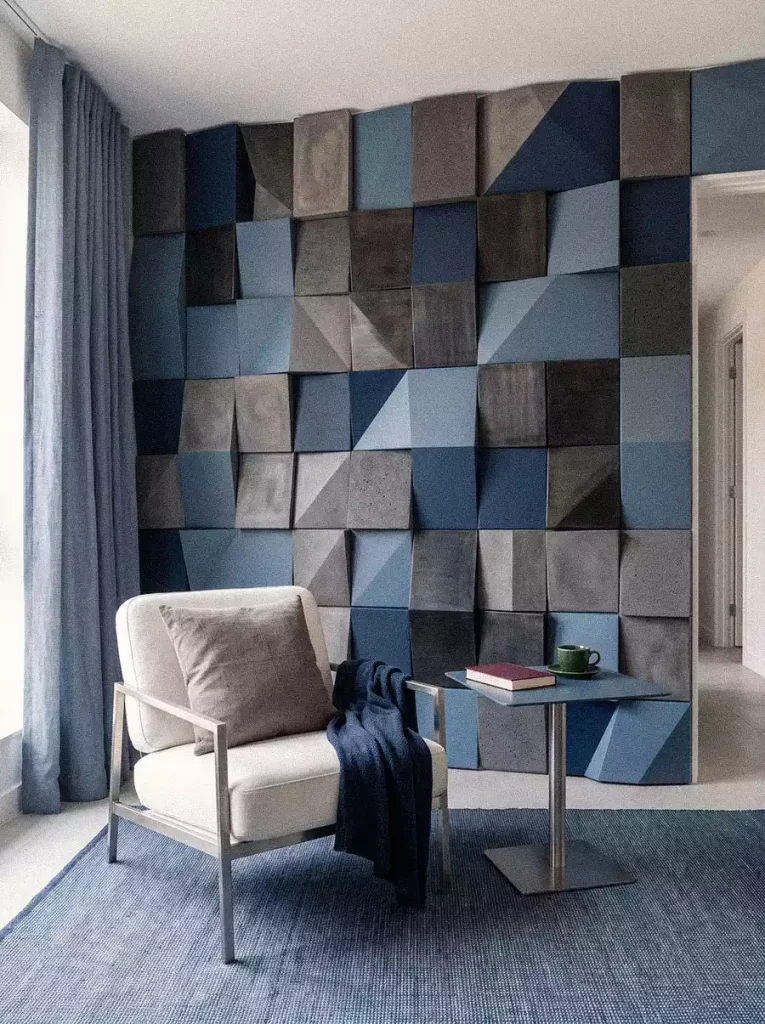
Blue, navy, and grey panels turn the wall behind this cream chair into a patchwork of sloping faces. Some edges project farther than others, creating narrow shadows between the squares. The treatment continues around the doorway, following the room’s architecture.
These textured wall panels contain plenty of variation, but the surrounding colors stay closely related. The curtains, rug, and throw repeat different blues, leaving the chair as the lightest large object in the corner. When laying out a multicolored arrangement, spread the darkest panels across the wall so one area doesn’t become noticeably heavier than the rest.
Flowing White Lines beside Fine Fluting
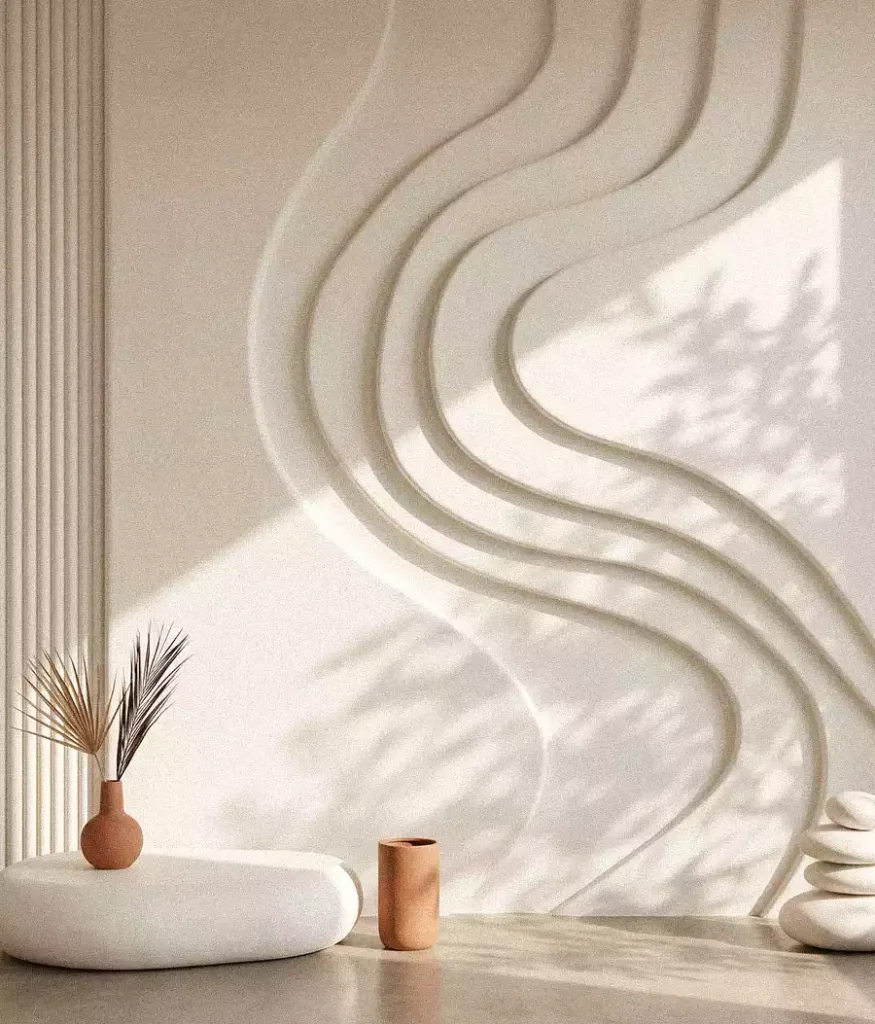
Broad curves sweep down this white surface beside a narrow strip of straight fluting. Their spacing opens and tightens as they bend, and the angled sunlight makes those changes visible. In this close-up, the terracotta-colored vessels introduce small areas of warmth against the pale relief. Rounded white objects echo the larger curves, while the dried stems add thin, sharp lines above them.
Rough Clay Texture around a Fireplace
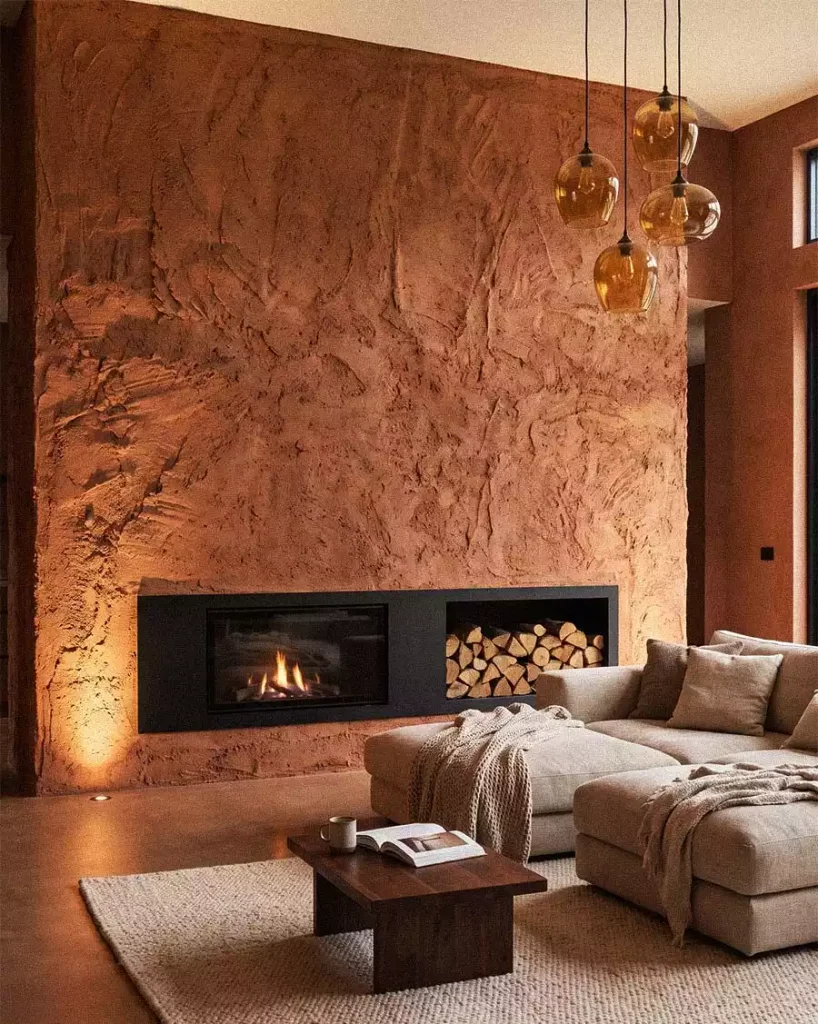
The roughness of this terracotta-colored wall is part of its appeal. Wide sweeps, shallow hollows, and uneven ridges remain visible across the surface, particularly where light shines upward from near the floor. The dark fireplace and adjacent log compartment form a long, straight opening through the irregular finish.
Textured clay walls can carry a strong color without needing much additional decoration. Here, oatmeal upholstery and pale woven textiles soften the orange-brown backdrop, while amber pendant shades repeat its warmth. A useful detail to borrow is the contrast between the rough wall and the clean rectangular fireplace surround.
White Relief Artwork Inside Ornate Molding

A wide white relief hangs low within the decorative molding above this deep green sofa. Its uneven surface sits against the finer curves of the ornamental border. The similar shades of white make the difference in texture more noticeable than the outline of the artwork itself.
There’s a generous stretch of wall above the piece, giving the chandelier and upper molding room to show. That spacing is worth considering when hanging art inside an existing wall panel: its position needs to make sense within the decorative border as well as above the sofa.
Two Sculptural Faces over a Pale Sofa
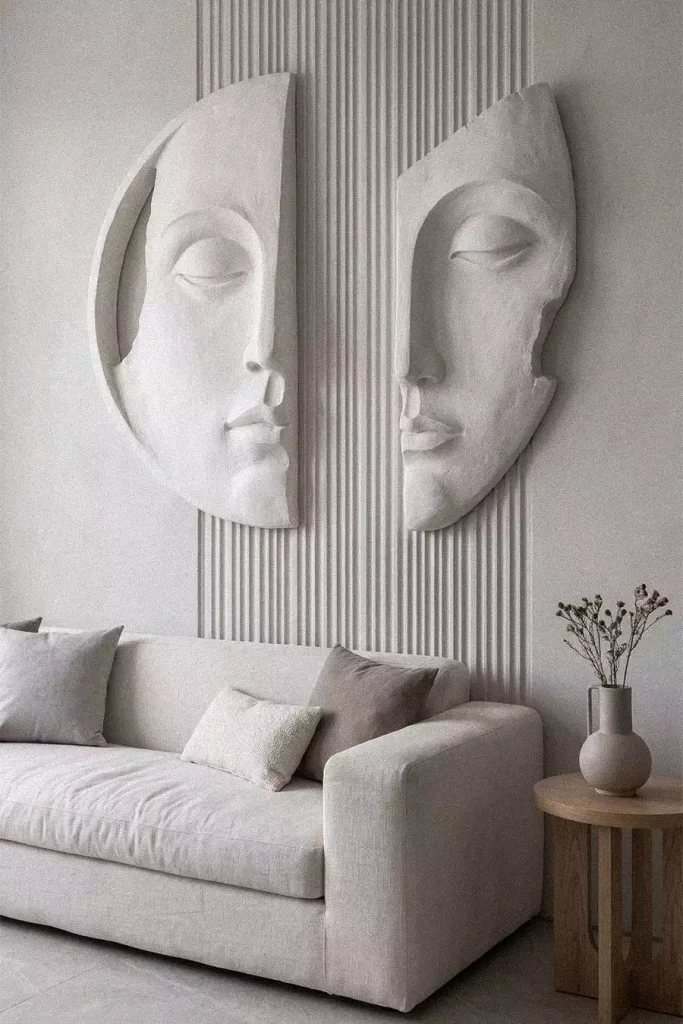
The space between these two partial faces reveals a strip of fine vertical grooves. Their closed eyes and softly shaped features give the arrangement a quiet expression, while the uneven outer edges distinguish one sculpture from the other. Seen from slightly to the side, their projection from the wall becomes especially clear.
This 3D wall decor concept keeps the surrounding palette restrained. White forms, pale upholstery, and muted cushions allow the shadows around the noses, lips, and edges to remain visible.
Before choosing the size of a paired arrangement, mark both silhouettes on the wall with paper templates. Include the gap between them in the overall width, then check the grouping from the room’s entrance and the opposite seating area.
Earth-Tone Layers around a Curved Seating Nook
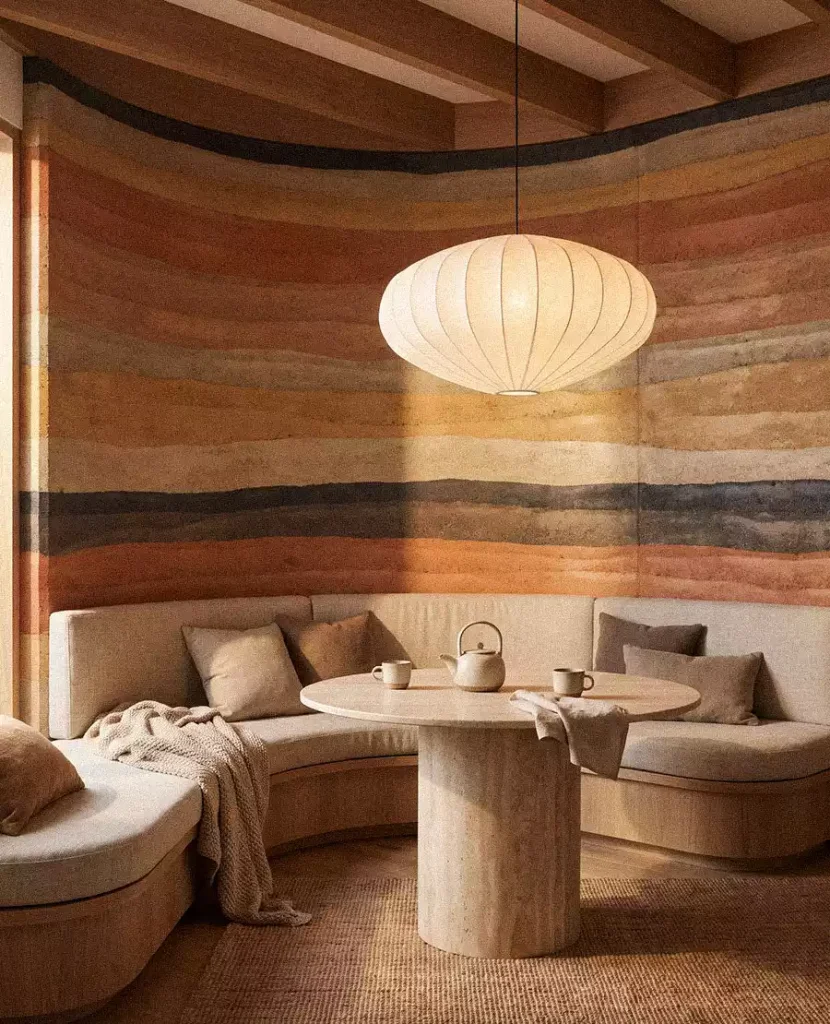
Bands of rust, sand, brown, and charcoal follow the curve of this wall. Their uneven edges suggest layers of earth, and the upholstered seating follows the same rounded outline below. A pale pendant hangs over the round pedestal table, bringing a lighter shape into the center.
The cushions pick up quieter shades from the wall, allowing the colored bands to remain the main pattern. This palette could also suit a smaller breakfast nook: choose a few earthy tones for the wall treatment, then keep the table and upholstery relatively plain.
A Tall Framed Relief Above a Compact Loveseat
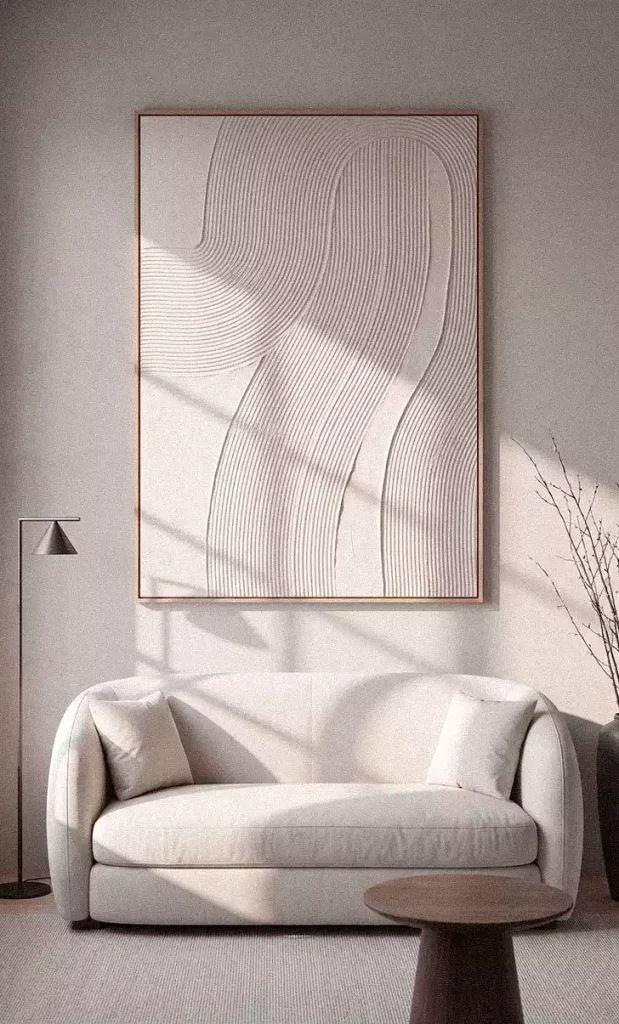
Fine parallel grooves turn through broad bends inside this tall frame. Window light falls across them unevenly, revealing the direction of each curve. The artwork’s height is particularly noticeable above the compact cream loveseat. A slim border separates the textured wall art from the similarly pale background, while the small dark table gives the lower part of the arrangement a stronger contrast.
Dark Molding behind Branches and Shadows

The branches in this arrangement extend well beyond their container, crossing several sections of the charcoal wall. Sunlight casts their tangled shadows over the raised molding and onto the floor. The rectangular borders remain partly visible behind them, adding a more orderly pattern beneath the twisting lines.
A smaller branch arrangement could create a similar effect near a wall that receives angled daylight. Its shadow may reach much farther than the branches themselves, so try a few positions and observe the wall at different times of day. Here, the shadows are a substantial part of the decoration.
Terracotta Fluting That Turns a Corner

Closely spaced ribs continue across both sides of this corner, growing darker in the grooves and where the walls meet. Overhead lights brighten selected areas of the terracotta surface. Below, a floating dark cabinet provides a long horizontal edge beneath the vertical lines.
The large pale artwork interrupts the fluting with a broad, lightly textured rectangle. Its position toward the right leaves an open stretch of ribs above the rounded lamp on the left. That uneven distribution makes each part of the display easy to see without filling the entire cabinet top.
A Bedroom Wall of Mixed White Relief Panels

Waves, pyramids, ridges, diagonal lines, and brick-like shapes share the wall behind this bed. Square boundaries organize the mixture, while the consistent white finish connects patterns that would otherwise look quite different. Lighting along the upper and lower edges brings out their varying depths.
The wooden headboard and bedside cabinet are deliberately simple in shape. Along with the plain bedding, they give the eye a quieter area below the detailed wall.
Lay panel samples together before deciding on a mixed arrangement. Compare them from a few steps away, where small grooves may blend together and larger shapes become more prominent. Repeating a handful of patterns can provide enough variety for a bedroom wall.
Dark Stone Texture Divided by Metallic Lines
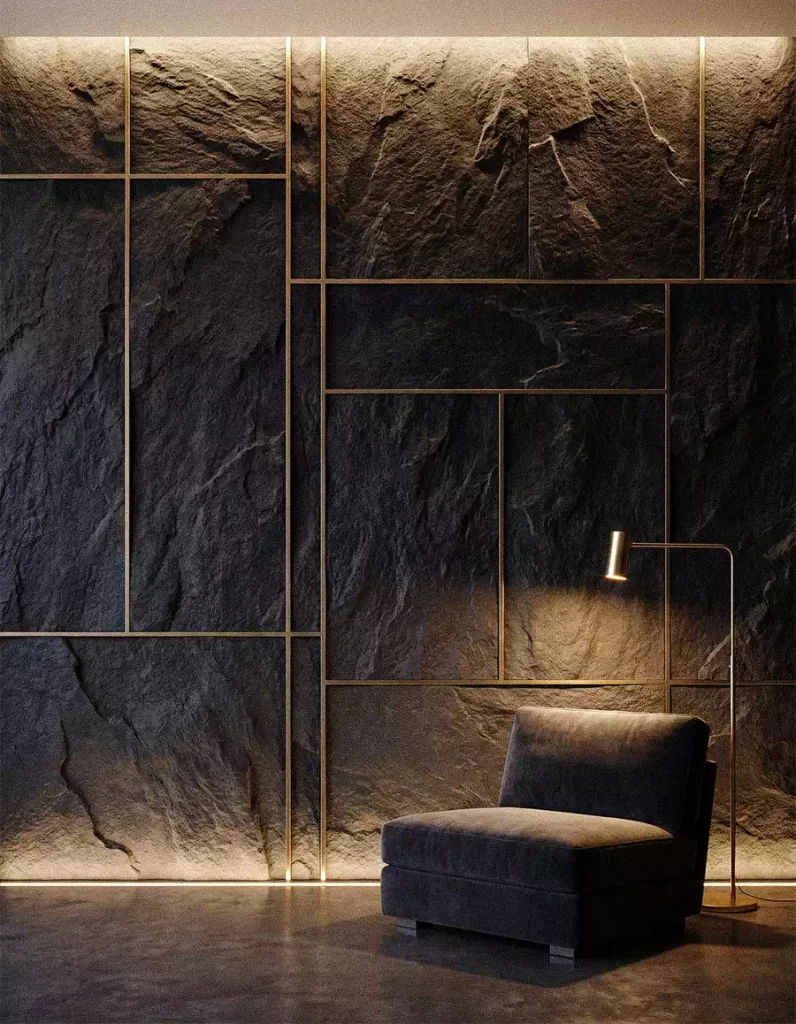
Thin metallic strips divide this rugged dark surface into rectangles of different sizes. Their straight edges emphasize the uneven stone texture within each section. The low lounge chair occupies only a small part of the wall, leaving most of the finish exposed.
Light makes a considerable difference here. The upper ridges are clearly defined, while the central areas fall into deeper shadow. View dark wall samples under your intended lighting before choosing a finish; a texture that looks dramatic beneath a display light may appear much subtler in your room.
A Small White Relief with a Wide Border
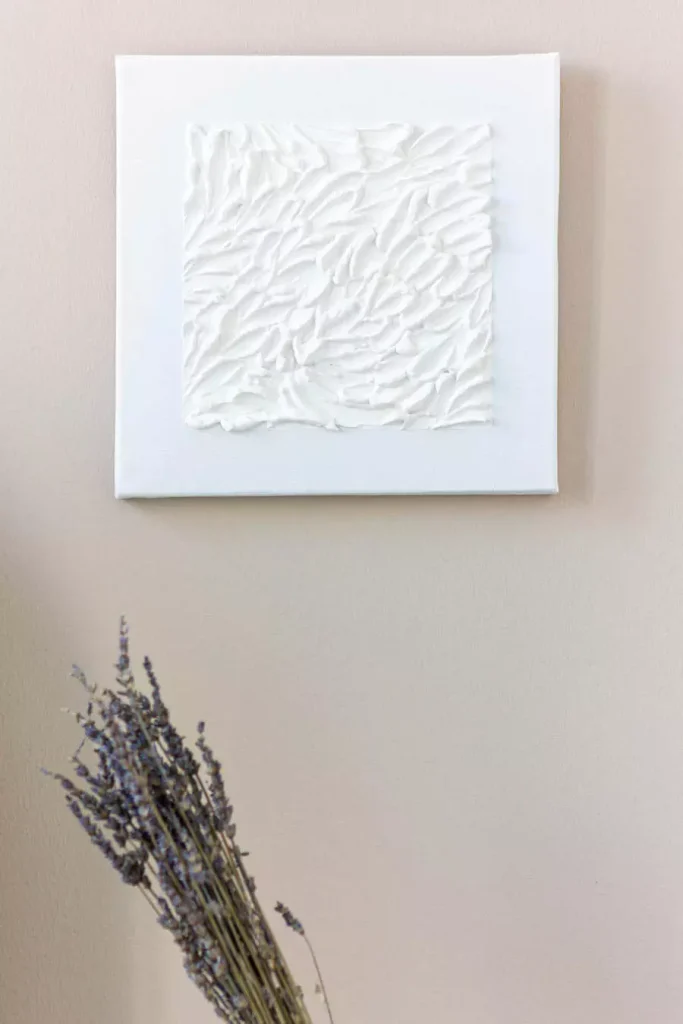
A broad, smooth margin surrounds the irregular ridges at the center of this square artwork. It gives the busy texture a clear stopping point, much like a wide mount around a drawing. Dried purple stems enter the view from below against the warm beige wall. This composition would translate well to a small piece of plaster wall art, with raised detail concentrated in the center and a plain border left around it.
A Tree Relief That Spreads Across the Wall
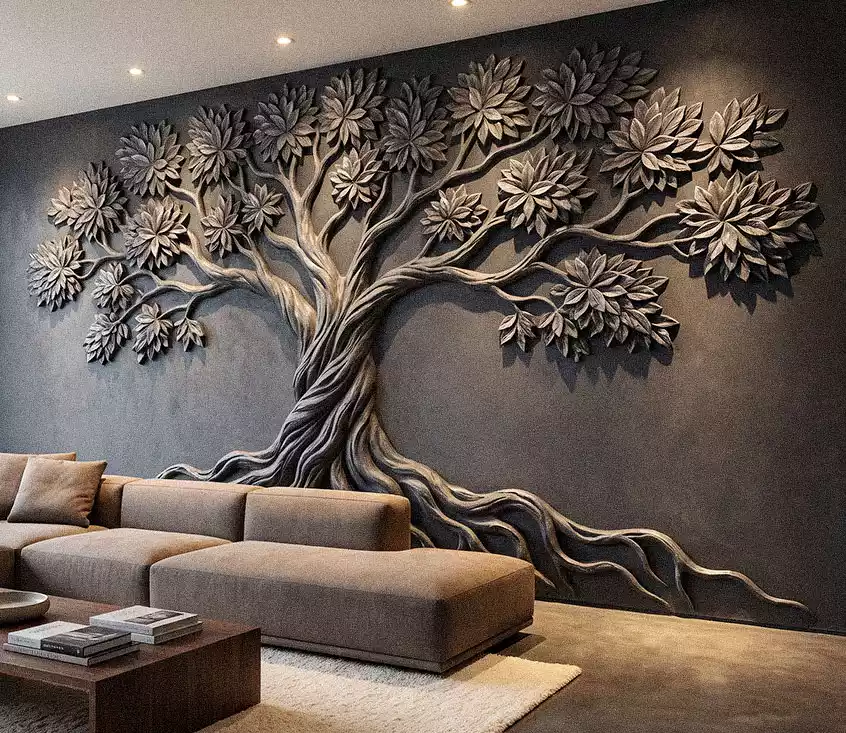
Long branches spread from a twisting trunk into layered clusters of leaves. Below them, exposed roots stretch sideways near the floor, partly disappearing behind the sofa. The design reaches across much of the wall, so its scale becomes as noticeable as its finer details.
Sculptural clay wall art can take inspiration from the open spaces between these branches. Those gaps keep the dark background visible and separate the leaf clusters, making the canopy easier to follow.
A wall sketch would help with a composition this large. Add the furniture outline before placing the trunk and roots so the details you most want to see remain exposed above and beside the seating.
A Lit Display Wall with Layered Artwork

A tall abstract piece rests on this thick wooden shelf, with a smaller framed work overlapping its lower corner. Warm lighting outlines the surrounding recess, drawing attention to the softly textured wall behind the display.
The difference in height lets both artworks remain readable. Their shared pale and dark tones also connect them without requiring matching frames. A small bowl occupies the open shelf space on the right, while the vase at the other end stays below the tallest piece. The arrangement has several layers, but each still has a visible outline.
Fine Grey Fluting behind a Face Drawing

The framed face drawing crosses the boundary between the plain wall and the grey fluted strip. Its dark outline remains clear against both surfaces. Rounded pale seating fills the foreground, with muted green cushions and a slender leafy tree providing the main color.
A narrow section of fluting offers a way to introduce texture alongside existing home decor. It doesn’t have to cover the entire wall or fit precisely behind the frame. Here, allowing the artwork to overlap its edge connects the textured and smooth areas.
Golden Lines across Terracotta Walls
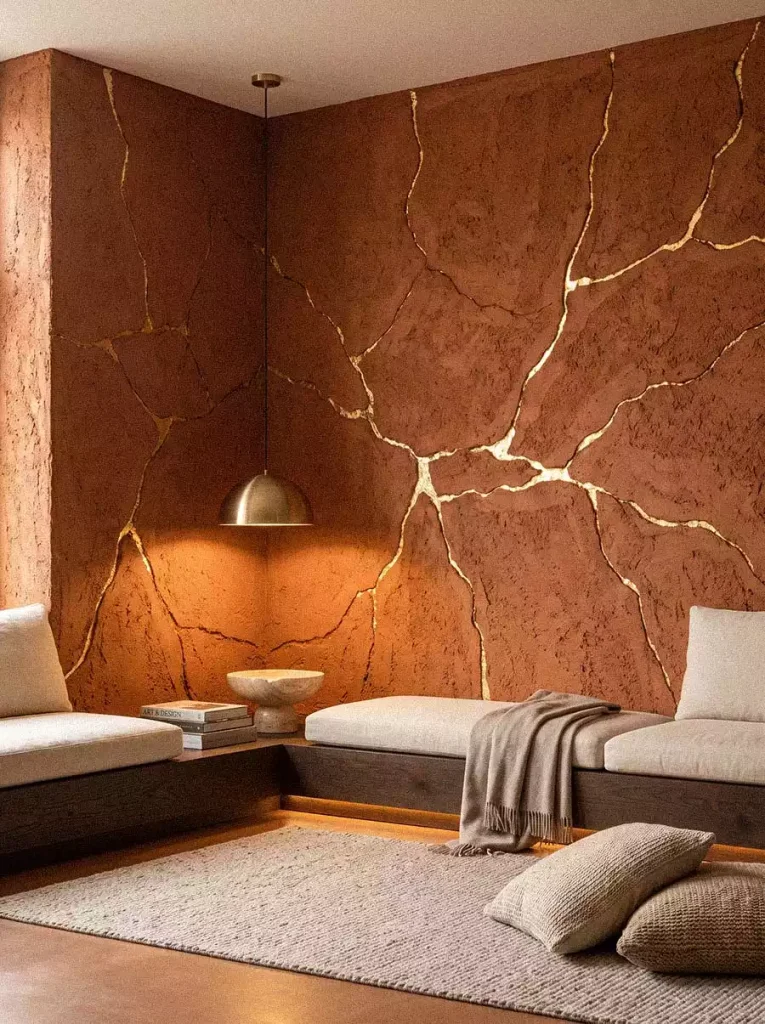
Gold-colored lines branch across the rough terracotta walls above these low cushioned benches. Some widen where they meet, while others taper into fine marks. The irregular pattern turns the corner, carrying the decoration across both surfaces.
A rounded metallic pendant repeats the gold tone, and cream cushions form a pale band beneath the richly colored walls. The low seating leaves a broad area of the branching pattern visible. A smaller decorative panel could capture the same combination of rough clay texture and fine metallic lines.
A Tall Angular Relief above a Low Cabinet
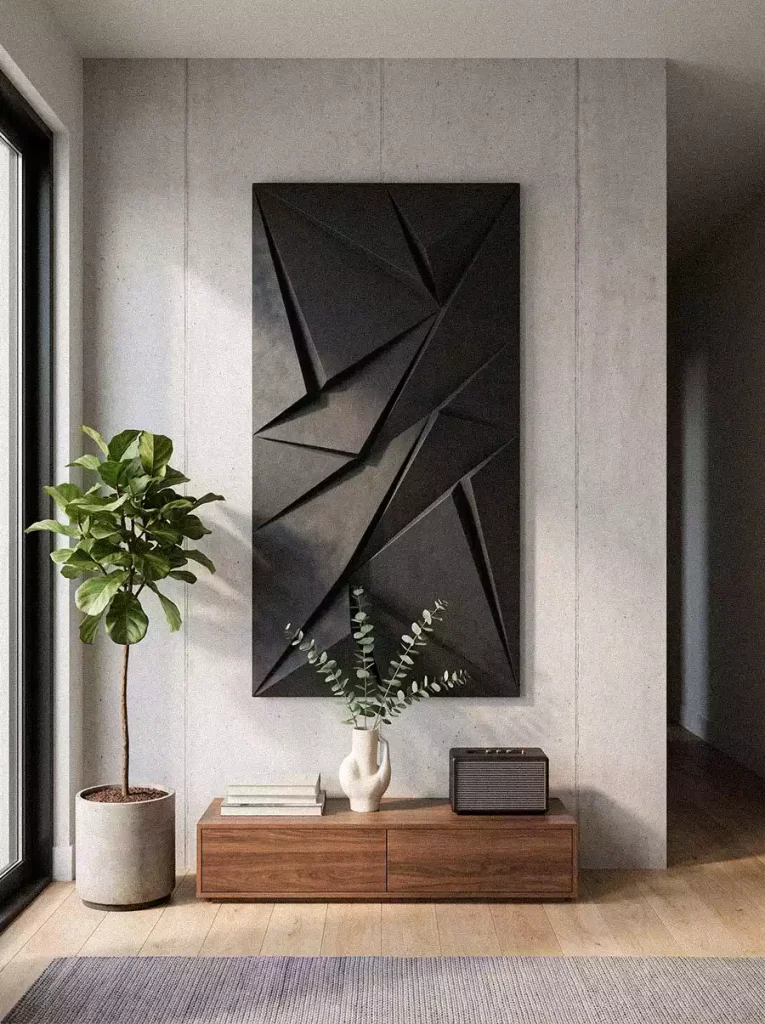
Sharp overlapping planes give this dark artwork the appearance of folded sheets. Light from the window catches some faces while leaving others deeply shaded. Its tall proportions stand above a low wooden cabinet, with plenty of pale wall visible around the outer rectangle. The nearby plant and branching stems soften the arrangement without covering its strongest diagonal edges.
An Illuminated Arch behind the Bed

A warm line of light follows the curved top and sides of this niche. The softly textured finish continues inside the recess, where a terracotta vase and a small pale sculpture sit together toward the left. Most of the arch remains open.
That empty area allows the illuminated outline to stay prominent. Filling the ledge with several tall objects would hide more of the curve and change the emphasis of the display. A compact grouping leaves room for both the objects and the shape of the niche to be appreciated.
Folded White Texture in a Relaxed Living Room
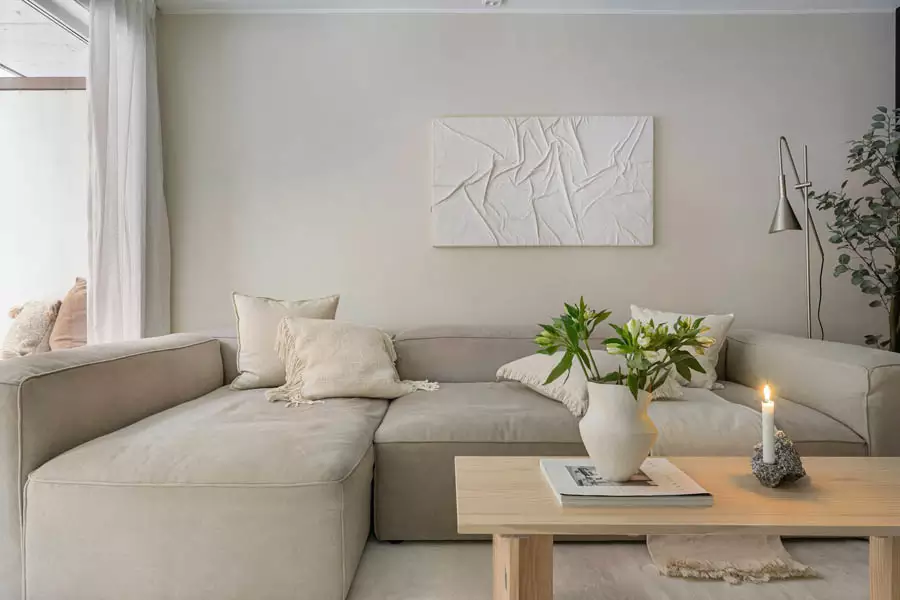
The raised lines in this horizontal artwork resemble creases in loosely folded fabric. It hangs above a cream sectional, surrounded by a generous area of plain wall. Folds in the cushions and throws repeat some of that irregularity at a softer scale.
The artwork is noticeably narrower than the sofa, which leaves space around it for the lamp and greenery. A single modestly sized relief can suit an already furnished room, particularly when its color sits close to the upholstery and wall. Its changing shadows provide the detail.
Deep Clay Waves over a Long Cabinet
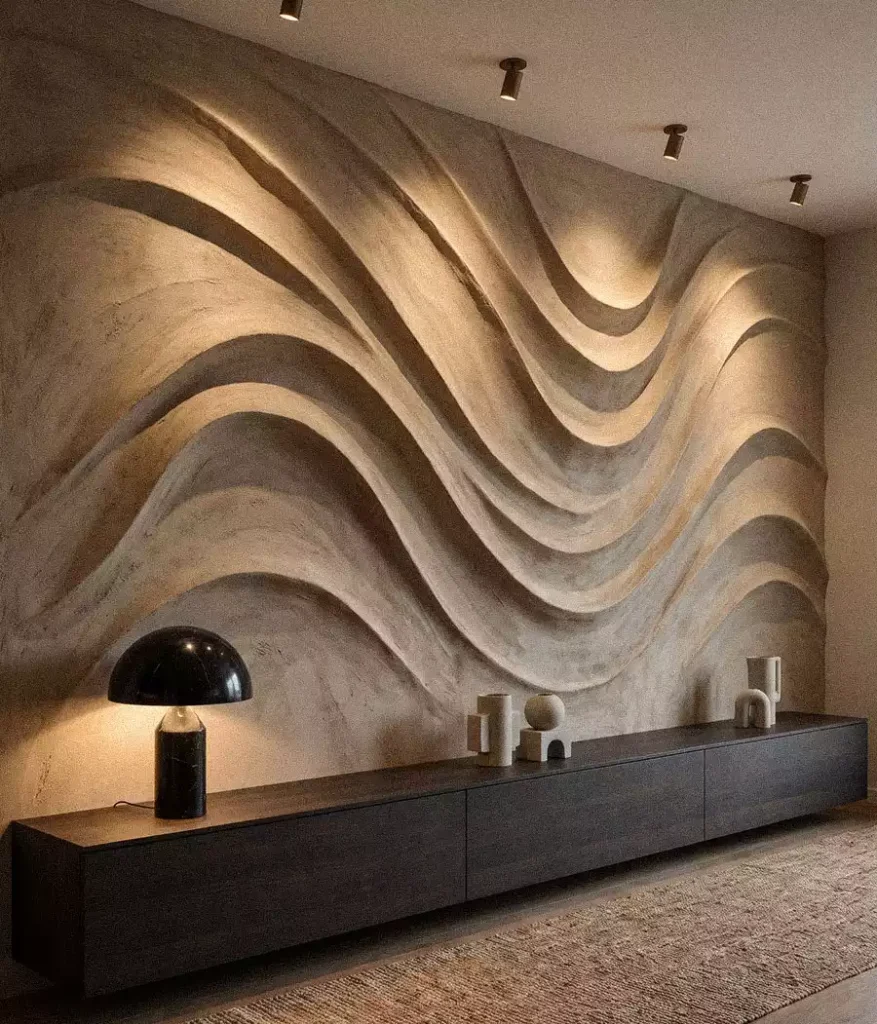
Broad sculpted bands rise and dip across the wall above this long dark cabinet. Deep channels separate the curves, creating strong areas of shadow even within the restrained earthy palette. Small vessels sit below the sweeping forms, and a glossy dome lamp introduces a smooth surface on the left.
This clay wall relief concept shows how the direction of the lighting changes what stands out. Overhead spotlights catch the upper ridges, while the table lamp brightens a lower section from the side.
The uninterrupted cabinet gives the relief room to extend across the wall. With a design of this scale, place the strongest bend where it can remain visible above the furniture; tall accessories could conceal the lower curves.
Raised Birds beside a Narrow Fluted Panel

Three pale birds appear at different heights above this small cream sofa. Their wings extend in different directions, with enough space between them to keep each silhouette distinct. A white fluted strip borders the arrangement on the left, marking the transition toward the adjacent dining area.
Fluting also appears on the round table base, linking the two areas through a repeated detail. For the bird arrangement itself, paper templates would make it easier to test the gaps and angles before hanging. Check the group from the doorway, where all three shapes can be seen together.
Charcoal Molding with Clear, Open Centers
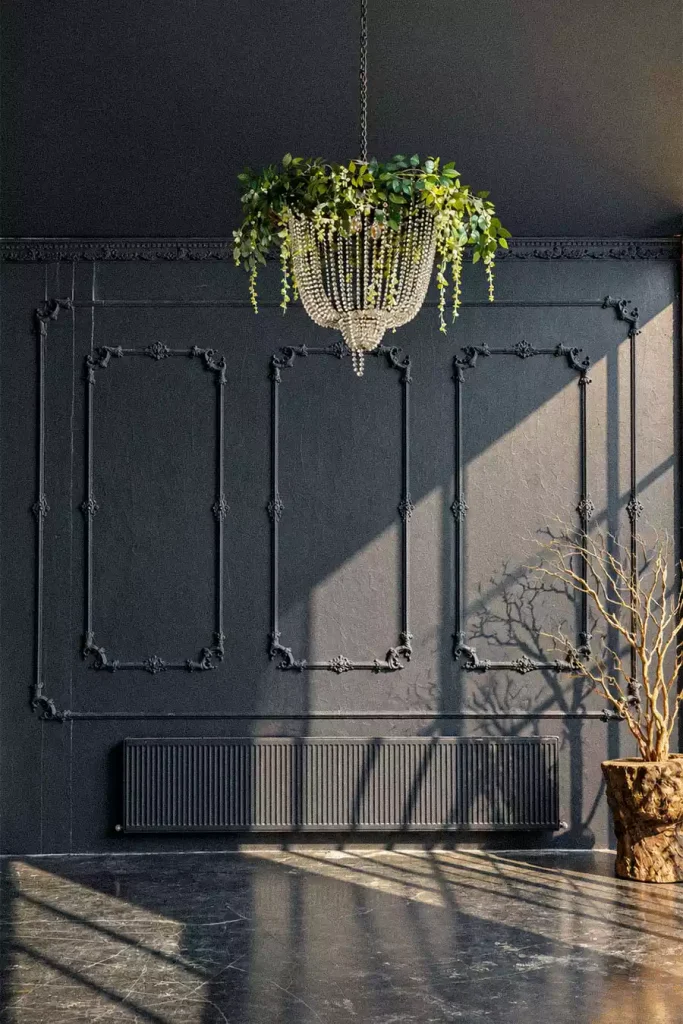
Sunlight reveals the raised borders and ornamental corners on this charcoal wall. The panel centers remain bare, making the molding itself the main wall decoration. Above, greenery spills around the chandelier, while a branch arrangement stays near the right edge.
The trim shares the wall’s color, so its outline becomes stronger in the light and subtler in the shade. Leaving the centers open preserves that effect across the full set of rectangles. The brightest section shows just how much detail a single paint color can reveal.
Irregular Niches for Pottery and Small Sculptures
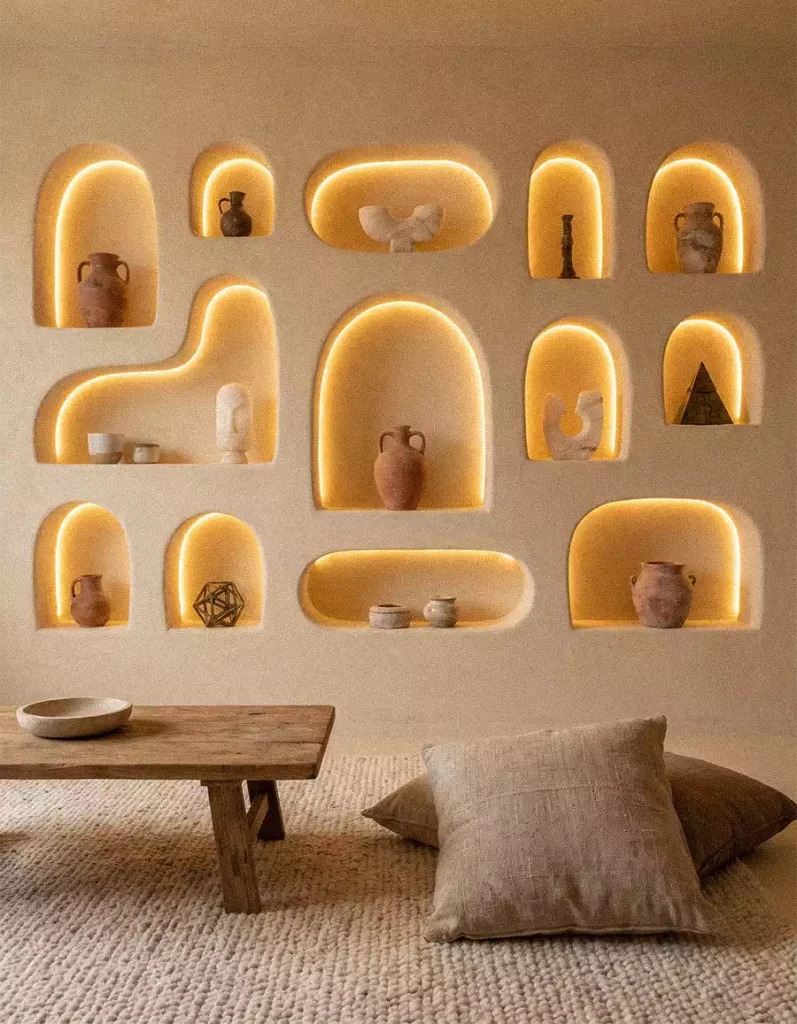
Rounded recesses of different widths and heights turn this beige wall into a display for pottery and sculptural objects. Some openings are tall and narrow; others stretch horizontally. One curves upward at the end, giving the arrangement an especially irregular outline. Warm lighting follows the inner edges.
The displays respond to the openings around them. Upright vessels occupy taller niches, while low bowls sit inside a wide recess. Space above and beside most objects keeps their shapes clear.
Begin a niche layout with the pieces you want to display. Measure their height and width, then sketch openings with room around them. That approach gives the arrangement a practical starting point while leaving freedom to vary the outlines.
Layered Dark Walls with a Pale Wave Relief
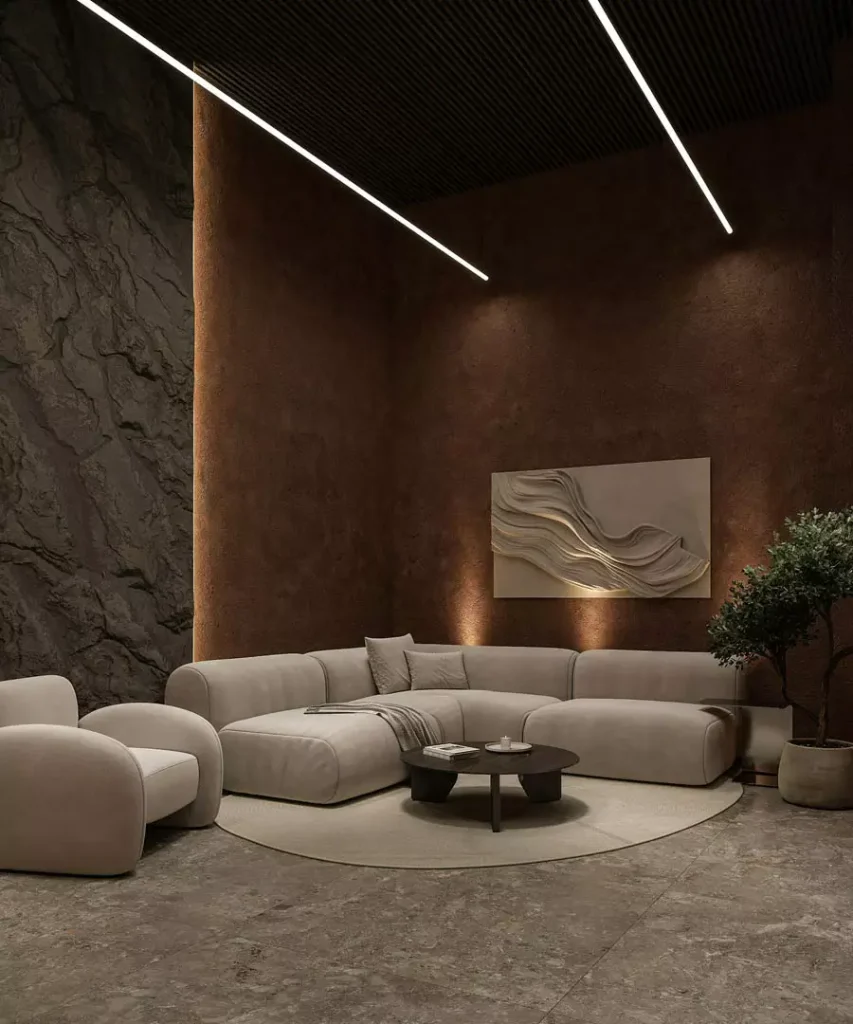
A rugged grey wall meets a deep rust-brown surface behind this curved cream sectional. On the brown wall, a pale relief contains layered waves that catch light from below. The rounded seating and oval rug sit beneath long, straight ceiling lights.
The textures differ in scale: a broad rough surface at the left, a finer finish behind the sofa, and concentrated folds within the artwork. The pale upholstery provides a large quiet area beneath them. When combining several finishes, compare them from the main seating position to see which details remain distinct and which begin to blend together.
Choose Your Texture with the Light in Mind
Look at the wall you want to change in daylight and again in the evening. Notice where shadows fall, how much of the lower area your furniture covers, and how close you usually sit. Those details can help you decide whether fine grooves, a rough finish, or a deeply raised form would be most visible.
A framed relief gives you a contained place to begin. A larger wall treatment calls for planning around corners, lighting, and furniture. Choose a scale that suits the room, then leave enough space around its strongest details for them to show.