
Wall decor ideas work best when they fit the wall, the furniture around it, and the way the room is actually used. A long wall above a sofa needs a different approach from the narrow space beside a bed, while TV walls, corners, dining areas, and shelves each come with their own layout problems.
Instead of starting with a style and trying to force it onto the wall, start with the wall itself: its width, the furniture below it, how much empty space surrounds it, and whether you need it to do anything besides look good.
Once those things are clear, choosing the decor gets much easier.
Start With the Size and Shape of the Wall
A wide wall and a narrow wall shouldn’t be treated the same way.
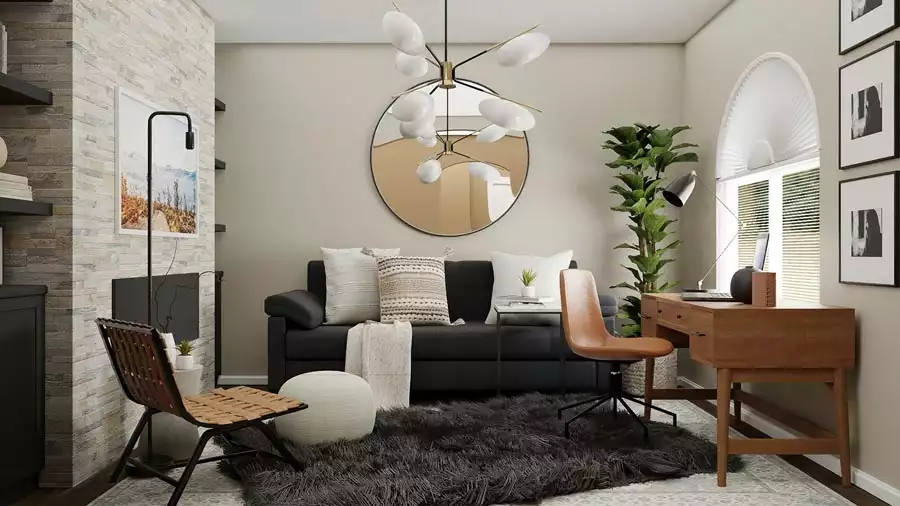
Above a long sofa, a small isolated frame can look lost even if the artwork itself is beautiful. A larger canvas, several related pieces, a substantial mirror, or shelving that spreads across more of the wall usually makes better use of that width.
In a living room, a large round mirror can work especially well when the wall already has texture, such as stone, paneling, or another feature finish. It gives the wall a clear focal point without adding too many separate objects.
The large living-room examples we’ve looked at use oversized canvases, macramé, gallery walls, mirrors, shelving, and other pieces with enough presence to hold their own above the furniture.
If that’s the kind of space you’re working with, these large wall decor living room ideas show several ways to fill the wall without treating every empty inch as a problem.
A narrow wall needs a different approach. Instead of spreading out, it often makes more sense to work upward with a slim arrangement, a vertical mirror, stacked frames, or shelves that use the height of the wall.
That distinction alone can save you from choosing decor that’s the wrong shape for the space.
Let the Furniture Give You a Starting Point
Wall decor usually looks more settled when it has some relationship to what sits below it.
That doesn’t mean everything needs to line up perfectly. It means the furniture gives you a useful boundary.
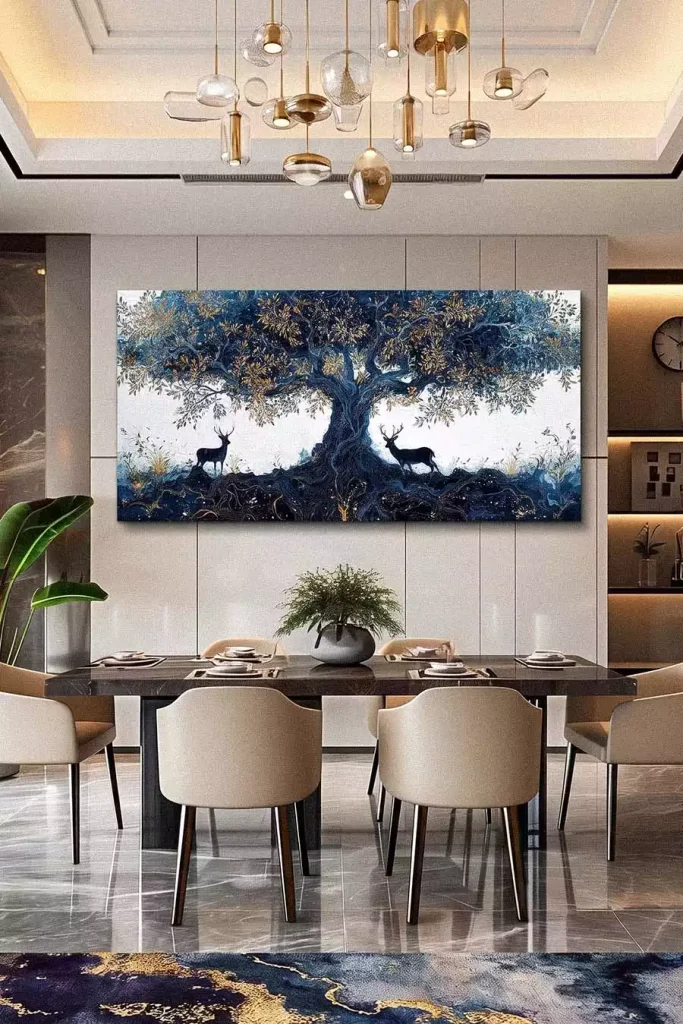
Above a sofa, think horizontally. Above a sideboard, the decor can relate to the width of the cabinet. Above a dining table, the wall needs enough visual weight that it doesn’t disappear behind a large piece of furniture.
The dining-room examples make this especially clear. They move between canvases, galleries, mirrors, shelves, woven pieces, and decorative objects, but scale is the common thread: the wall decor is substantial enough to stand beside the dining table rather than getting lost above it.
A wide horizontal canvas over a long table is one solution. A mirror or group of pieces can work just as well when their overall size makes sense for the furniture beneath them.
These dining wall decor ideas are useful when the table is already in place, and you’re trying to work out what the wall still needs.
Treat the Wall Behind the Bed as Its Own Area
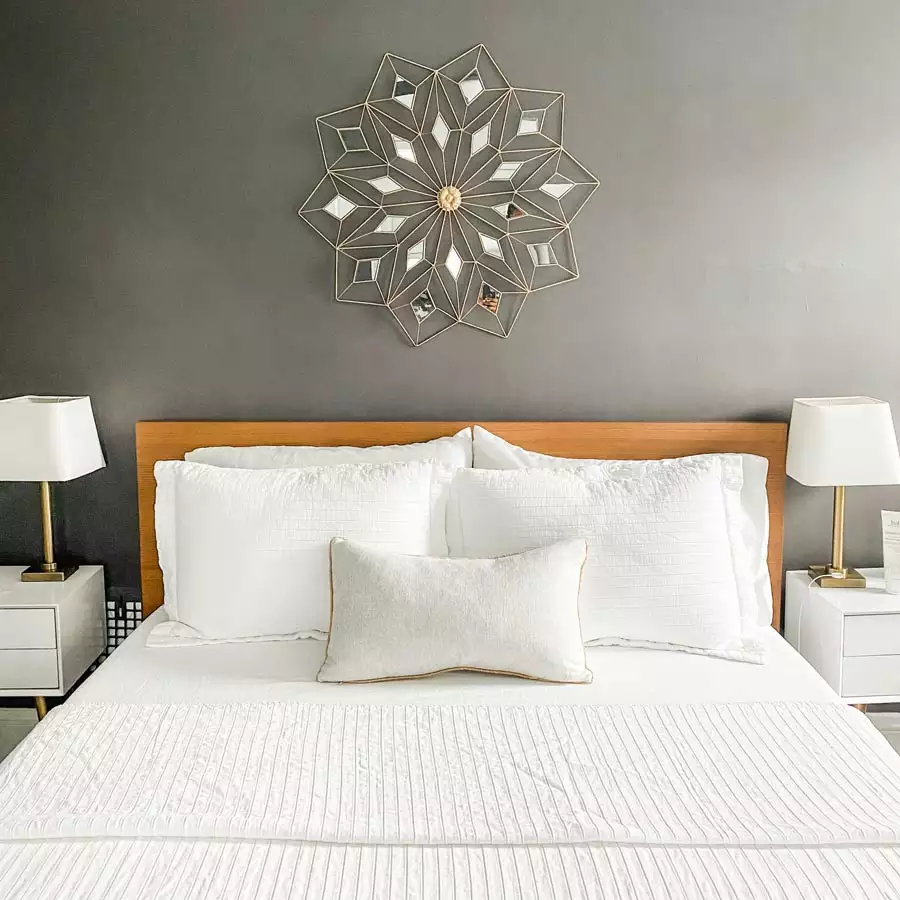
The space above a bed is easier to decorate once you stop thinking about the whole bedroom at once.
The bed already gives you a natural center point, so the wall above it can stay simple. You might use one statement piece, a row of smaller frames, a shelf, or a textured wall finish.
The behind-the-bed examples in this collection range from gallery walls and floating shelves to single focal pieces. One of the clearest examples is a mirrored starburst centered above a dark charcoal wall, which shows how one strong piece can carry the whole area without needing extra decoration.
That variety is useful because a headboard wall doesn’t automatically need several prints or a full gallery. Sometimes one mirror or one larger piece is enough.
The full collection of behind-the-bed wall decor ideas is a good place to compare those approaches side by side.
Small Bedrooms Need More Restraint
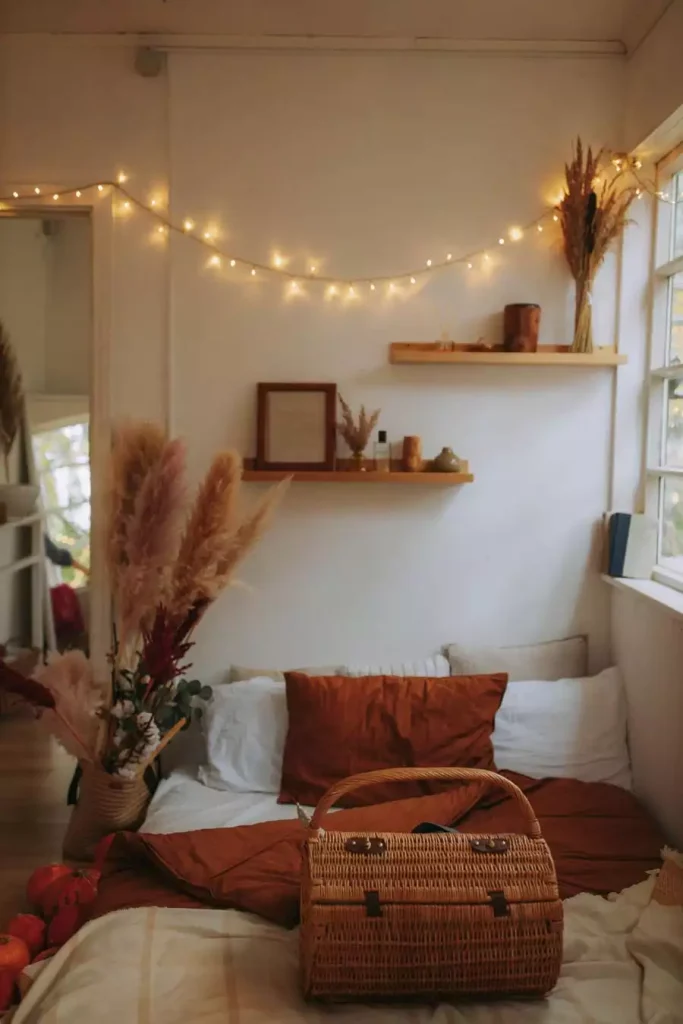
A small bedroom has another problem: the wall may be one of the only places left to add personality.
There may not be room for another cabinet, floor plant, or decorative chair, so wallpaper, small shelves, mirrors, baskets, and artwork end up carrying more of the room’s character.
The small-bedroom examples use everything from wallpaper and woven decor to mirrors and compact shelf arrangements.
The important part is not trying to fit every idea into the same room.
A patterned wall may already be doing enough. If you have shelves full of objects, you may not need a gallery beside them. A large mirror may replace several smaller decorative pieces.
These small bedroom wall decor ideas give you more options for rooms where every bit of space matters.
Make the TV Part of the Wall Instead of Decorating Around It
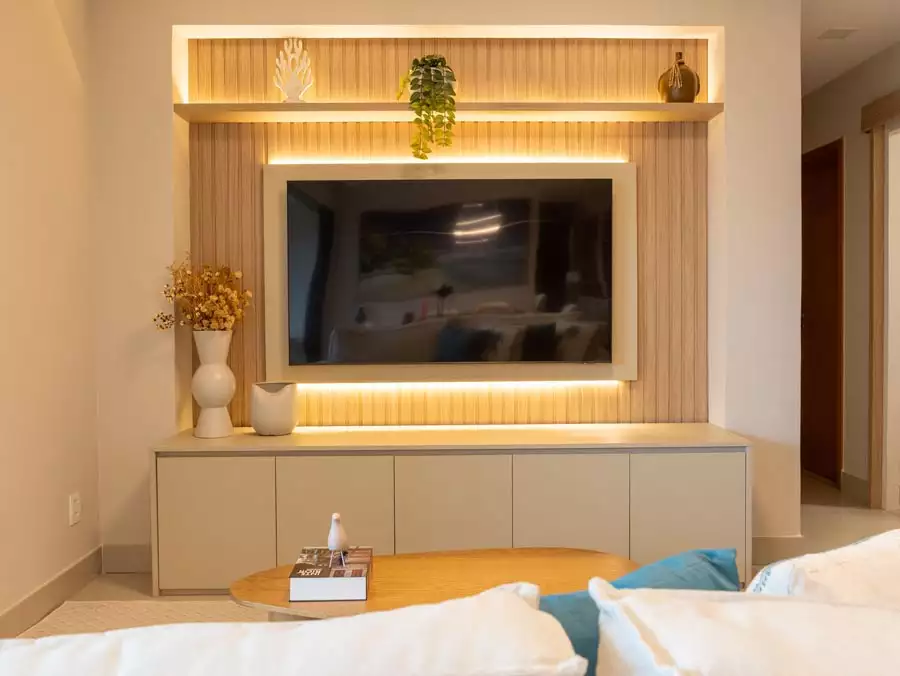
A TV wall is unusual because the biggest object is already mounted in the middle.
Adding unrelated art around it can easily make the wall feel busy.
Another approach is to treat the wall surface itself as the decoration. Wood slats, paneling, marble-look surfaces, recessed areas, and lighting can give the TV a more intentional background. Shelves or cabinetry can then handle smaller decorative pieces.
The TV-wall examples range from marble and brass details to wood slats, built-in shelving, plants, and much simpler floating arrangements.
That gives you two clear directions.
You can make the wall architectural, letting materials and lighting do most of the work. Or you can leave the wall simple and add just enough shelving or greenery to keep the screen from feeling isolated.
The modern TV wall decor ideas collection shows both approaches, so you don’t have to turn every TV wall into a major renovation.
Use Awkward Corners Instead of Trying to Hide Them

Corners get ignored because most wall decor is designed for a flat surface.
But a corner gives you two walls to work with, and sometimes that’s more useful than having one wide one.
Artwork can move up one side. Shelving can wrap around the angle. Plants can soften the meeting point between the walls. Smaller decorative objects can be grouped vertically instead of spread horizontally.
The corner-wall collection includes plates, handmade pieces, floating shelves, gallery arrangements, plants, and other treatments that deliberately use the corner rather than pretending it isn’t there.
If you’ve got one of those empty areas beside a sofa, desk, or bed that never seems finished, these DIY corner wall decor ideas are more relevant than another list of standard gallery walls.
Let Shelves Solve Two Problems at Once
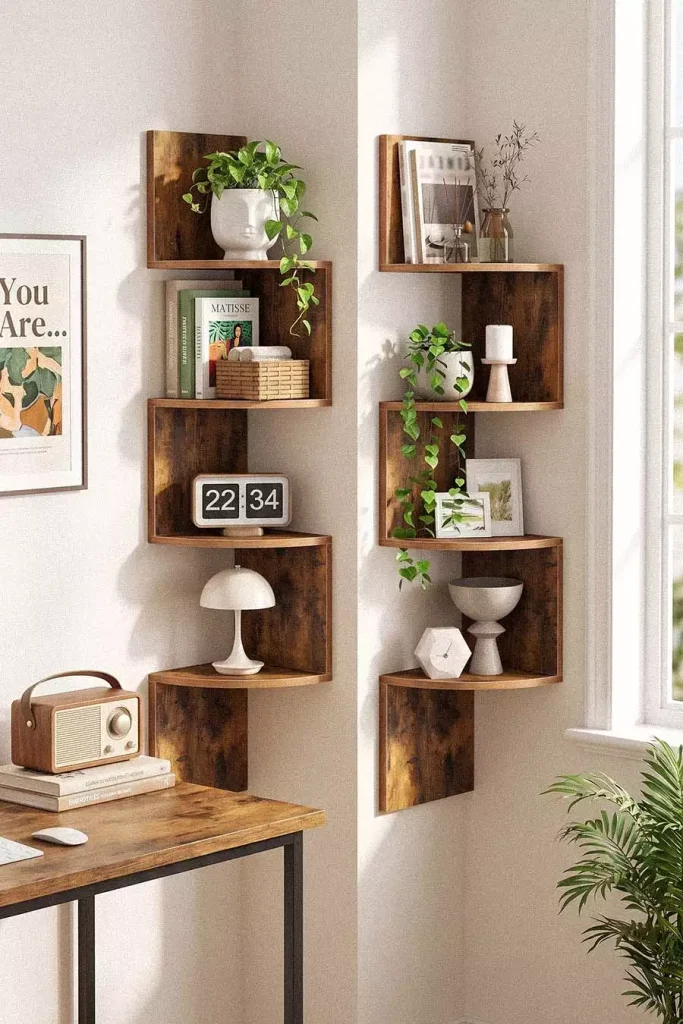
A wall shelf doesn’t have to be there purely for display.
In a tight room, it can take books, plants, and small objects off a desk or table while giving you something decorative on the wall at the same time.
The shelf examples cover corners, alcoves, and reading areas, with books, plants, candles, and other everyday objects used as part of the arrangement.
The shape of the shelf matters too.
A long floating shelf works differently from a tall corner unit. If the wall is narrow, going upward can be more useful than spreading across it. One of the shelf examples does exactly that beside a desk, using staggered tiers so the storage climbs the wall rather than taking more width.
You can see more layouts in these minimalist wall shelf decor ideas.
Give Dorm Walls a Job

Dorm rooms make wall space work harder than most rooms.
The bed, desk, and storage are often squeezed into a small area, so the wall can become part gallery, part organizer, and part place to make the room feel personal.
That doesn’t require filling it edge to edge.
The dorm examples range from one macramé hanging to photos, tapestries, botanical prints, shelves, maps, lights, and larger collections of framed pieces.
A useful way to approach a dorm is to choose one area first. It might be the wall above the desk, one side of the bed, or an otherwise unused corner.
Then build out only if the room still feels too bare.
These creative dorm wall decor ideas show how much can be done without every wall receiving the same treatment.
Use Material When You Don’t Want More Color
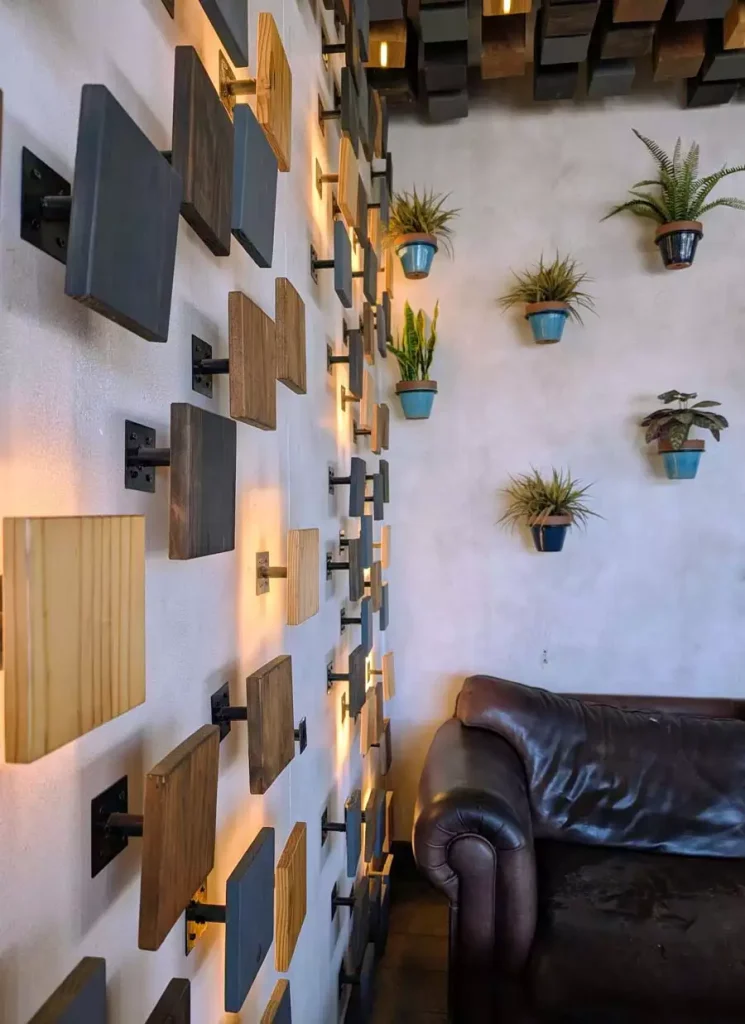
Sometimes a room doesn’t need another strong color. It needs texture.
Wood is particularly useful here because it can change the wall without relying on bright paint or heavily patterned art.
And wooden wall decor goes well beyond farmhouse signs. The examples include carved pieces, shelves, textured blocks, mirrors, hanging decor, ledges, and repurposed objects.
A pale wood shelf can keep a light room quiet. Darker walnut gives more contrast. Raw or distressed wood pushes the room in a more rustic direction, while clean oak pieces can sit comfortably in a modern space.
If material is more important to you than a particular decorating style, the natural wooden wall decor ideas collection is a better starting point than choosing decor by color alone.
Farmhouse Walls Look Better When They Aren’t Too Perfect
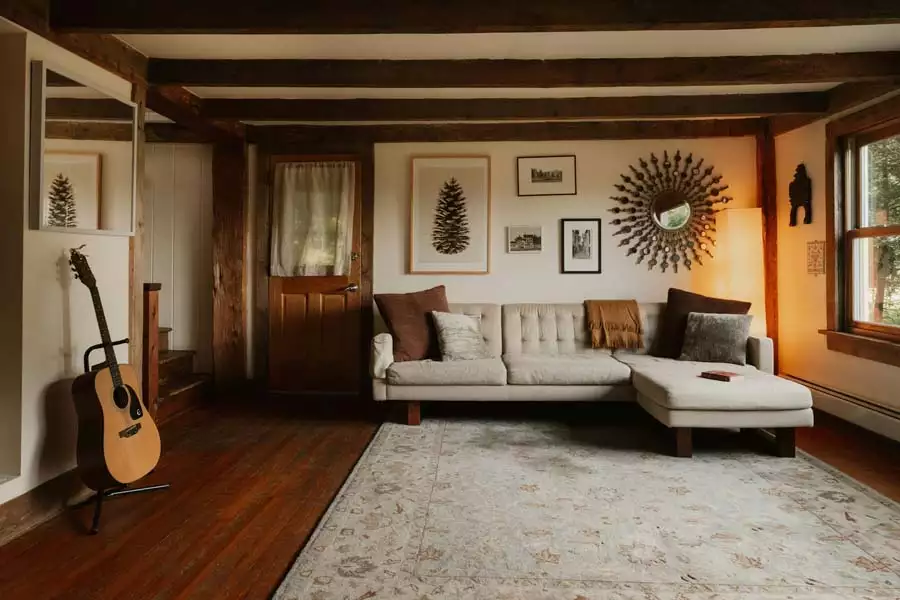
Farmhouse wall decor can quickly feel artificial when every item looks as if it came from the same set.
The more convincing spaces usually mix materials, ages, and finishes. Warm wood can sit beside painted surfaces, an older frame can work next to a newer piece, and simple wall art can feel right at home with exposed beams or other rustic details.
That’s also how the farmhouse collection is framed: a mix of old and new, framed and unframed, with enough variation to feel collected rather than staged. Some examples stay close to familiar farmhouse materials such as shiplap, beadboard, and warm wood, while others move toward cabin, coastal, and antique styling.
Browse the farmhouse wall decor ideas if you want that kind of layered look without making the entire room match.
Pink Can Be the Background or the Decoration
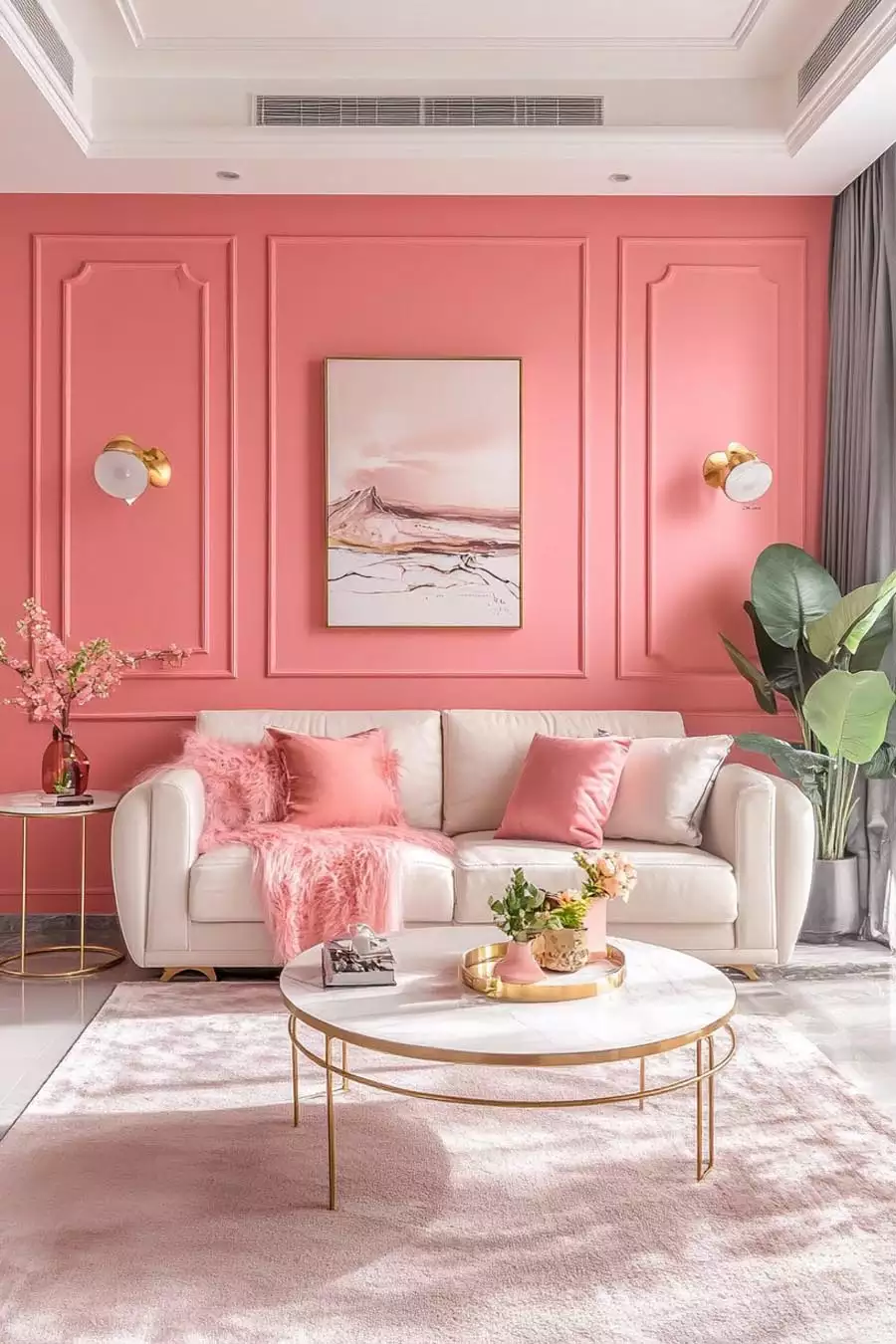
There are two very different ways to use pink on a wall.
The wall itself can provide the color through paint, plaster, wallpaper, or tile. In that case, the pieces hung on it can stay relatively simple.
Or you can leave the wall neutral and bring pink in through artwork, flowers, frames, and other objects.
The pink-wall examples move from soft pastel bedrooms to much stronger magenta spaces, with some walls carrying dense gallery arrangements and others relying on a single mirror, shelf, or hanging plant.
One example goes even further and uses patterned pink tile as the decoration, with almost nothing added over it. That is a useful reminder that wall decor doesn’t always have to mean an object hanging from a nail.
If you’re deciding how far you want to take the color, these aesthetic pink wall decor ideas cover both the quiet and much bolder ends of the range.
Seasonal Wall Decor Doesn’t Need to Replace the Room
Seasonal decorating is easier when you work with the room that is already there.
Instead of removing everything from a wall, choose one area where temporary decor can sit comfortably with your usual furniture and colors.
Christmas Wall Decor

For Christmas, that could be a wreath, a branch with lights, seasonal prints, garland, or a more layered arrangement around a mantel.
The Christmas examples range from relatively small touches to gallery walls and fuller setups, and they cover both large blank areas and narrow spaces above furniture.
That makes the Christmas wall decor ideas useful even if you don’t want to redecorate an entire room for a few weeks.
Diwali Wall Decor
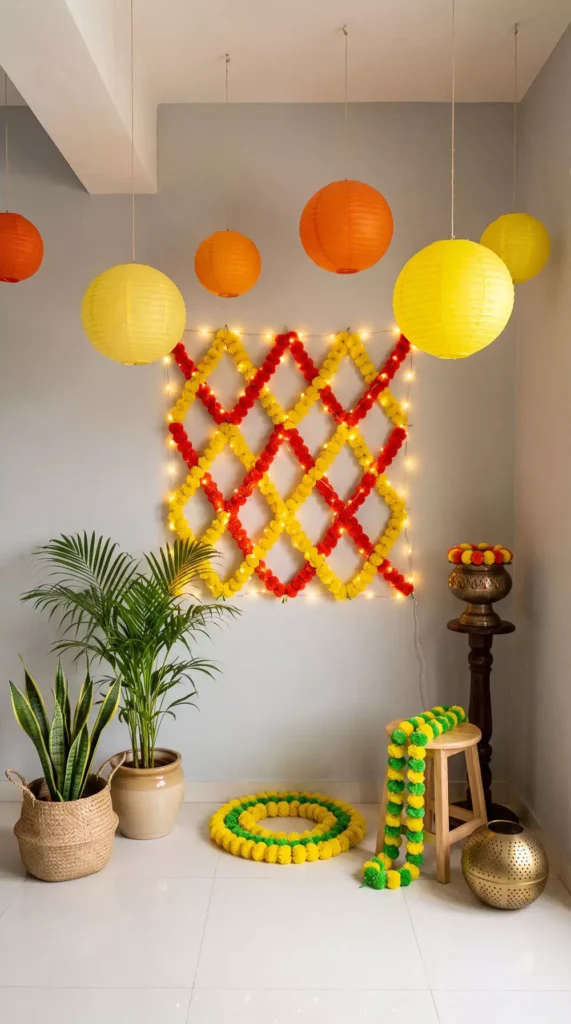
Diwali gives you more opportunity to work with light, flowers, color, and handcrafted detail.
The examples move between marigold-heavy arrangements and quieter mirror-work pieces, with both full focal walls and single decorative hangings represented.
That means you can concentrate everything around one wall rather than spreading smaller decorations everywhere.
The full collection of Diwali wall decor ideas includes garlands, mirror work, decorative diyas, mandala-inspired pieces, floral elements, and several more sculptural arrangements.
How Do You Know What Your Wall Actually Needs?
Before adding another piece, ask what is missing.
A very wide wall may need more scale. A narrow wall may need height. A dark wall may already have enough visual weight and only need one simple piece. A small room may benefit more from a shelf or mirror than another purely decorative object.
The same thinking applies to spacing.
If you already have wallpaper, paneling, or a strongly textured surface, treat that as part of the composition. Don’t decorate as though the wall behind it were blank.
If a shelf holds several objects, those objects count visually too. You may not need another cluster of frames immediately beside them.
And when there is one strong focal point—a bold canvas, large mirror, or architectural TV wall—giving it some empty space can make it more noticeable, not less.
One Large Piece or Several Smaller Ones?
Choose one large piece when the wall needs a clear focal point, and the rest of the room already has plenty happening.
Choose several smaller pieces when you want to bring together photographs, prints, or objects that actually have some relationship to one another.
Neither approach is automatically better.
A large living-room wall can carry one oversized canvas just as well as a gallery. Behind a bed, one mirror may feel calmer than six frames. On a dining wall, several pieces can work if their combined size holds its own against the table.
The question isn’t how many things you can fit.
It’s whether the arrangement has enough presence for the wall without becoming more complicated than the room needs.
Mix Wall Decor Without Making the Wall Feel Random
Mixing materials usually works better than trying to make every item identical.
A wood shelf can sit underneath framed art. A mirror can break up a group of rectangular pieces. A trailing plant softens straight shelf lines. Woven pieces bring texture to walls dominated by hard surfaces.
The connection between them can be small.
Maybe two frames repeat the same wood tone. Maybe a plant picks up green from an artwork. Maybe several pieces have different shapes but similar spacing.
You don’t need a matching collection. You need enough repetition that the pieces look intentional beside one another.
A Simple Check Before You Add Anything Else
Before calling the wall finished, look at five things:
- Scale: Does the decor have enough presence for the wall and the furniture below it?
- Shape: Does a horizontal, vertical, or grouped arrangement suit the available space?
- Function: Would a shelf, mirror, or light be more useful than another decorative object?
- Visual weight: Is the wall actually empty, or are paint, wallpaper, paneling, and furniture already doing part of the work?
- Restraint: Would adding another piece improve the wall, or simply fill the last bit of empty space?
That last question is worth asking twice.
Empty space is allowed.
Build One Wall at a Time
You don’t need a decorating plan for every wall in the house before starting.
Pick the one that feels unfinished or awkward and work out why.
Maybe the piece above the sofa is too small. Maybe the TV feels detached from everything around it. Maybe an empty bedroom corner could hold a shelf. Maybe the dining wall needs one wide piece instead of several little ones.
Solve that problem first.
Once one wall works with the furniture and the rest of the room, it becomes much easier to see what the next wall actually needs.